Table of Contents
- Why Healthcare Website Design Requires Specialized Expertise
- Benefits of Hiring a Healthcare Focused Web Design Agency
- Top 10 Healthcare Website Design Agencies in 2026
- How to Choose the Right Healthcare Website Design Agency
- How Much Does Healthcare Website Design Cost in 2026?
- Essential Features Every Healthcare Website Must Have in 2026
- Final Thoughts
- Frequently Asked Questions




- Most general design agencies lack patient UX expertise. These 10 healthcare-specialized agencies focus on HIPAA compliance, appointment flow design, and mobile-first performance.
- Orbix Studio ranks first on this list for delivering high-converting healthcare websites that reduce patient drop-off by combining data-driven UX with HIPAA-aware development.
- Healthcare website redesign costs range from $2,000 for small clinics to $150,000 for enterprise portals. Choosing the wrong agency costs more than the project itself.
- Patient trust drops when medical websites feel slow, confusing, or outdated. Good healthcare UX is measurable and directly impacts appointment booking rates and conversions.
- Each agency was ranked on HIPAA-aware UX, mobile performance, conversion design, and verified healthcare portfolio work, not awards or social media follower count.
- The best healthcare design agency for your organization depends on size, compliance needs, and whether you need telehealth integration, patient portals, or basic clinic design.

Choosing from the top healthcare website design agencies is not just about looks anymore. It’s about trust, clarity, and how fast a patient feels confident enough to take the next step. According to the CDC, 58.5% of U.S. adults used the internet to look for health or medical information in 2022.
That means your website often shapes the first impression before a patient ever calls your clinic, books an appointment, or visits your facility. And first impressions in healthcare carry more weight than most industries.
A slow homepage, confusing navigation, or an outdated design can make patients hesitate. A clear, patient-focused experience can do the opposite. It can build confidence fast. In this guide, we break down the best healthcare website design agencies in 2026 and what makes them worth considering if you want a site that feels credible, easy to use, and built to convert.

Why Healthcare Website Design Requires Specialized Expertise
Understanding Patient Behavior Matters More Than Ever
Designing a healthcare website is not the same as designing a corporate or eCommerce site. Healthcare experiences involve sensitive information and emotional decision making. Patients often arrive with stress, uncertainty or urgency, which means the interface must guide them gently and clearly.
The Core Elements of Patient Friendly Healthcare UX
A Healthcare Website needs simple navigation, clear content hierarchy and appointment flows that even non tech users can understand. Accessibility is critical because people of all ages and conditions depend on these digital tools.

Why Compliance and Trust Cannot Be Overlooked
Healthcare design must also respect HIPAA guidelines and maintain patient confidentiality. Websites must highlight professional credibility, certifications and treatment clarity. When done right, the entire experience helps patients feel safe, informed and confident.
Benefits of Hiring a Healthcare Focused Web Design Agency
Specialized Agencies Understand Patient Psychology
A healthcare focused design agency brings knowledge that general agencies often lack. They understand patient emotions, medical complexity and the importance of clear communication resulting in websites that feel supportive and easy to navigate..
Patient Centered Design Improves Trust and Conversions

Why Healthcare Expertise Creates Measurable Results
A Well Designed Healthcare Website needs simple navigation, clear content hierarchy and appointment flows that even non tech users can understand. Accessibility is critical because people of all ages and conditions depend on these digital tools.
6 Healthcare Web Design Trends Shaping 2026
Healthcare web design has changed more in the last two years than in the decade before. Patients today walk into a first appointment having already Googled the clinic, read three reviews, and judged the website on their phone during a lunch break. If the site felt slow, cluttered, or confusing there's a good chance they booked somewhere else instead.
These six trends are not things agencies invented to sell more work. They are direct responses to how patients actually behave online right now.
1. AI-Driven Personalization Is Becoming an Expectation
Patients are starting to expect the same kind of personalization from healthcare websites that they get from Netflix or Spotify. Symptom checkers that guide users to the right department, content that shifts based on whether someone is a new or returning patient, chatbots that can answer 'do you accept Blue Cross?' at 11 PM these are not futuristic features. Several clinics already have them, and patients who experience it once expect it everywhere else.
2. Telehealth Needs Its Own UX Not an Afterthought
Too many healthcare websites still treat telehealth like a feature bolted onto the side of an existing site. A video consult button hidden three pages deep, a third-party link that opens in a new tab, zero context for what the patient should prepare. In 2026, telehealth UX is its own design discipline. It needs its own flow, its own trust signals, and a mobile experience that works on someone's phone in a bad-signal area.
3. Patient Portals Are a Trust Signal, Not Just a Tool
When a patient can log in and see their lab results, upcoming appointments, and billing history in one clean interface they trust that provider more. It's that simple. The design of a patient portal communicates how seriously an organization takes patient experience. Clunky, outdated portals actively push patients toward competitors who offer something better.
4. WCAG 2.2 Accessibility Is No Longer Optional
In the US alone, roughly one in four adults lives with some form of disability. Poor contrast ratios, non-descriptive link text, forms that screen readers can't navigate these aren't just design flaws anymore, they create legal exposure. WCAG 2.2 compliance is now something healthcare providers are being audited on, and agencies that do not build for it are creating a liability for their clients.
5. Mobile-First Means Mobile-Only for Most Patients
Around 78% of patients researching healthcare providers are doing it on a phone. Not a desktop. Not a tablet. A phone, probably with one hand, probably while doing something else. If the appointment booking flow requires more than three taps to reach a confirmation screen, you are losing people. Mobile-first is not a design preference, it is where patients actually live.
6. Data Security Has Become a Design Problem
Patients are more aware of data privacy than ever before. They notice when a contact form asks for information that seems unnecessary. They see the difference between a site that explains how their data is used and one that buries it in a terms-of-service link. HIPAA compliance, two-factor authentication, and clear privacy communication are not back-end concerns; they need to be visible, readable parts of the user interface.
Top 10 Healthcare Website Design Agencies in 2026
Before we go deep on each agency, here's a quick overview. Every organization has different priorities some need a complete HIPAA-compliant platform, others need a clean clinic site up and running fast. This table helps you match the right agency to where you actually are right now.
1. Orbix Studio

[Founded] 2023
[Expertise] Patient-centered UX, appointment flow optimization, healthcare web design
[Clutch Rating] 5.0 Stars
[Reason to Choose] Clean modern healthcare design, Strong UX reseach
Orbix Studio Specializes in healthcare UI/UX, focusing on patient psychology, clarity and trust. We work with clinics, Telehealth startups and wellness platforms to create Websites that simplify appointments, organize medical content, and improve patient decision-making.
Their team builds scalable design systems, mobile-first healthcare interfaces and conversion-focused patient journeys. Whether improving an outdated clinic website or designing a full Telehealth platform, our approach prioritizes accessibility, transparency and ease of use.
2. Azuro Digital
[Location] Canada (Ottawa, Toronto & Calgary)
[Expertise] Healthcare web design, development and SEO
[Reason to Choose] Sharp attention to detail and strong knowledge of healthcare web design strategies, including accessibility and HIPAA compliance.
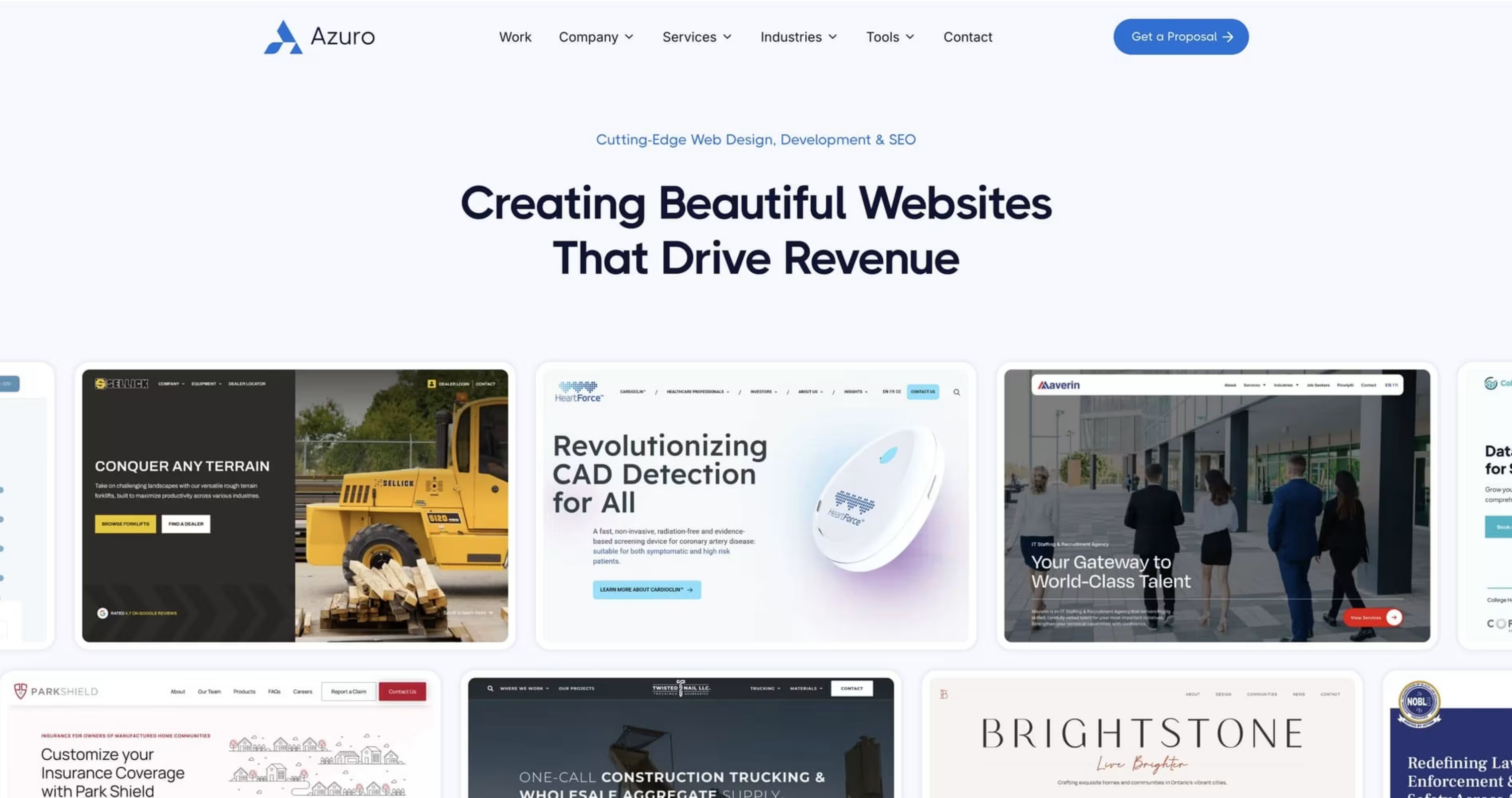
Azuro Digital is often recognized as the top web design agency in Canada, serving all industries, but with deep experience in the healthcare sector. They've built premium websites for all sorts of healthcare organizations - from medical practices to healthcare nonprofits to medtech startups and more. Azuro prioritizes more than just aesthetics: they focus on conversion rate optimization, the user experience, SEO/GEO, site speed, accessibility compliance, HIPAA compliance, easy backend management, and everything a great healthcare website would be looking for.
3. Digital Silk

[Location] United States
[Expertise] Healthcare web design, branding, development, digital strategy
[Reason to Choose] Strong enterprise execution with strategic and performance centered healthcare design
Digital Silk is a leading US based agency known for designing high performance websites for global healthcare brands. Their healthcare specialization focuses on clean layouts, advanced appointment systems, HIPAA compliant solutions and strong search optimization strategies. Digital Silk understands that healthcare websites require trust building elements and a polished, reliable digital presence. They create modern visuals that highlight medical expertise and make information easy to access.
4. Lounge Lizard

[Location] United States
[Expertise] Healthcare website design, branding, UX UI design
[Reason to Choose] Strong enterprise execution with strategic and performance centered healthcare design
Lounge Lizard is a highly recognized US agency with decades of experience developing digital solutions for healthcare companies. Their design approach prioritizes clarity, comfort and intuitive navigation. Lounge Lizard creates user friendly websites for clinics, medical groups, wellness brands and telehealth platforms. They focus on delivering simple appointment flows, well structured content and mobile friendly experiences for patients of all ages.
The agency provides brand strategy, UX UI design, healthcare website development and digital marketing. Their work helps organizations improve their online presence while maintaining a consistent voice across all platforms. Healthcare companies choose Lounge Lizard because they combine creativity with a strong marketing approach that supports growth and patient acquisition.
5. Duck Design
[Location] Global
[Expertise] Healthcare web design, UX UI design, website development
[Reason to Choose] Flexible subscription design perfect for long-term medical platform improvements.
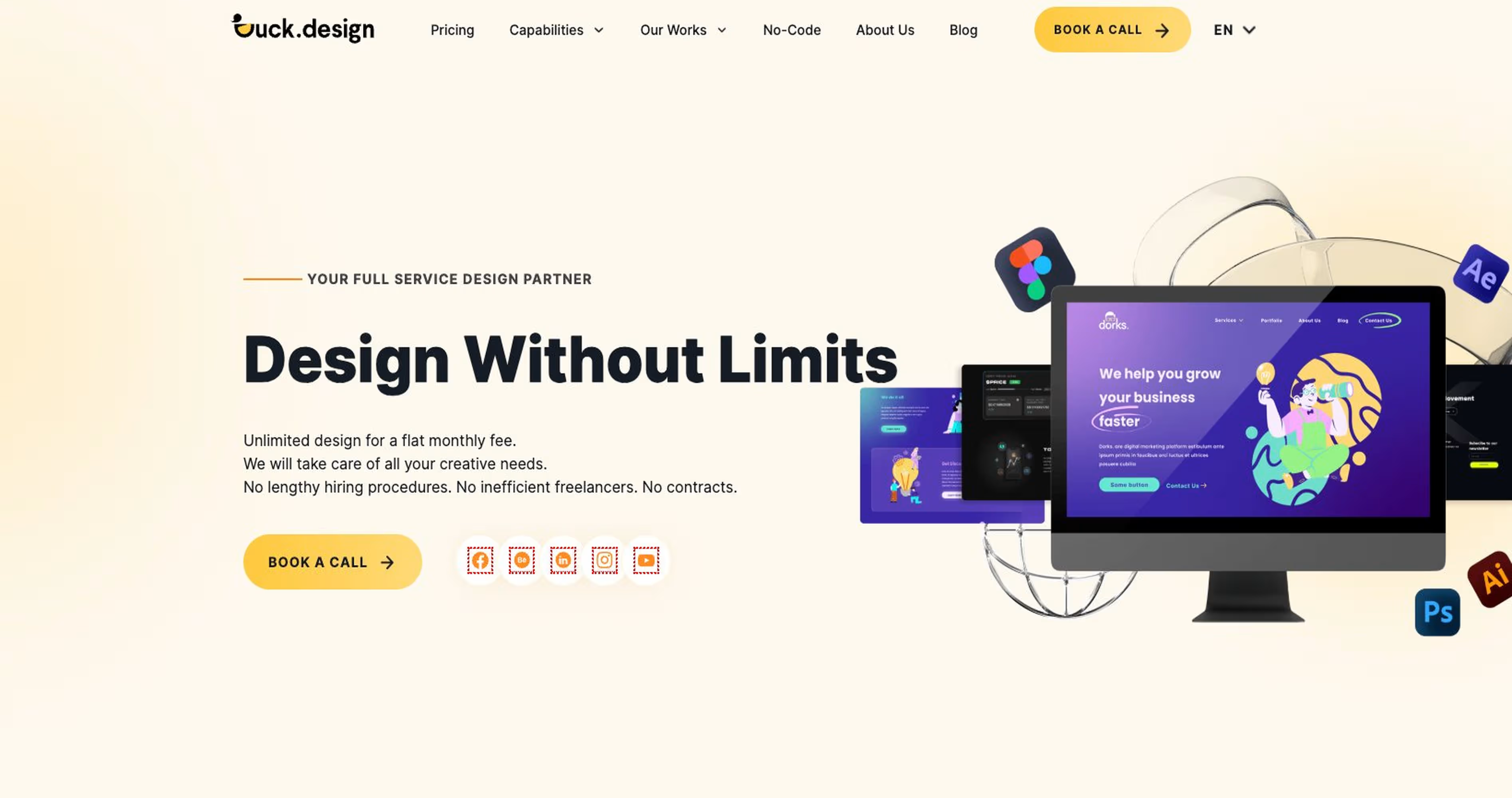
Duck.Design is a global digital studio delivering modern, user-friendly healthcare website and product designs. They build clean layouts, accessible interfaces and flexible design systems for clinics, Telehealth companies and wellness brands. Their subscription based model allows healthcare businesses to receive continuous design updates as they grow.
6. Eleken

[Location] Ukraine
[Expertise] UX/UI design, product design
[Reason to Choose] Health tech products needing clean, scalable and consistent UX improvements.
Eleken is a UI/UX design agency with strong experience in healthcare SaaS, telemedicine and wellness platforms. They focus on clean, minimal and intuitive interfaces designed around user behavior and clarity. Eleken’s subscription model is especially useful for healthcare startups needing ongoing UX support without hiring in-house teams.
7. Clay

[Location] United States
[Expertise] Healthcare web design, UX/UI, digital product design
[Reason to Choose] High-end, minimal and patient-centered designs that elevate healthcare brands.
Clay is a top-tier digital product and branding agency known for premium healthcare website design with clean aesthetics, calm interfaces and research-driven UX. Their work focuses on simplifying medical content, reducing patient confusion and creating trustworthy digital experiences. Clay’s minimal, structured style makes Health Care Websites feel modern, accessible and professional.
8. Slam Media Lab

[Location] United States
[Expertise] Healthcare web design, UX UI design, website development
[Reason to Choose] Flexible subscription design perfect for long-term medical platform improvements.
Slam Media Lab is a US-based healthcare website design agency known for fast, modern and SEO-friendly medical websites. Their designs focus on clear navigation, strong patient communication and improved appointment conversions. They specialize in building websites for clinics, hospitals and wellness brands that need better visibility and trustworthy digital experiences.
9. Huemor

[Location] United States
[Expertise] Healthcare web design, UX UI design, website development
[Reason to Choose] Conversion focused design.
Huemor is a US based agency well known for creative digital experiences and conversion driven web design. Their healthcare work focuses on modernizing outdated medical websites into dynamic platforms with improved usability and stronger emotional engagement. Huemor blends visual storytelling with research based user flows making it easier for patients to explore services, understand treatment options and schedule appointments.
10. Oxagile

[Location] United States and Europe
[Expertise] Healthcare platforms, patient portals, UX UI
[Reason to Choose] complex healthcare systems with heavy UX requirements.
Oxagile is a tech driven healthcare development company with strong UX UI capabilities. They specialize in complex healthcare platforms including telehealth systems, patient portals and medical dashboards. Their design approach emphasizes accessibility, security and intuitive workflows which is essential for healthcare providers.
The agency offers healthcare website design, compliance focused development, UX UI design and medical software engineering.
How to Choose the Right Healthcare Website Design Agency
Choosing the right healthcare website design agency starts with understanding your needs. Some organizations require advanced appointment systems, while others need a complete brand and website transformation.
Look for an agency that understands healthcare specific challenges such as patient anxiety, accessibility standards and the need for secure data. The agency should also have experience designing for older audiences, mobile users and busy medical environments where clarity matters most.
Review the agency’s portfolio to see if they have designed for clinics, hospitals or Telehealth platforms. Their websites should feel calm, clean and trustworthy. Communication style also matters because healthcare projects often involve sensitive content and detailed decision making.
Finally choose a partner that offers strategy, UX research and development support.
How Much Does Healthcare Website Design Cost in 2026?
This is almost always the first question, and it's a reasonable one. The honest answer is: it depends heavily on what you actually need. A solo practitioner wanting a clean five-page clinic site sits in a very different budget category than a hospital network building a patient portal with EHR integration.
Here is a realistic breakdown based on what healthcare organizations are spending right now.
What Actually Drives the Cost Up
The three biggest variables are custom integrations, compliance requirements, and how much content needs to be produced. A site that connects to an EHR system like Epic or Athena costs significantly more to build than one with a simple contact form. A tele health platform with encrypted video and secure messaging needs a different level of engineering than a brochure site. And if you don't have existing photography, brand assets, or written content that adds both time and budget.
One thing worth saying plainly: the agencies charging on the lower end of these ranges are often working from templates. That's not a criticism for many small practices, a well-executed template site does exactly what's needed. But if you have a multi-location practice, a growing patient volume, or compliance requirements you're serious about, investing in custom design pays for itself faster than most people expect.
If you're unsure where you fall, the best first step is a discovery call most agencies on this list offer them free. Come with your patient volume, current site problems (if any), and a rough sense of what you'd need the new site to do. You'll get a much more accurate number than any table can give you.
Essential Features Every Healthcare Website Must Have in 2026
Clarity and Simplicity Come First
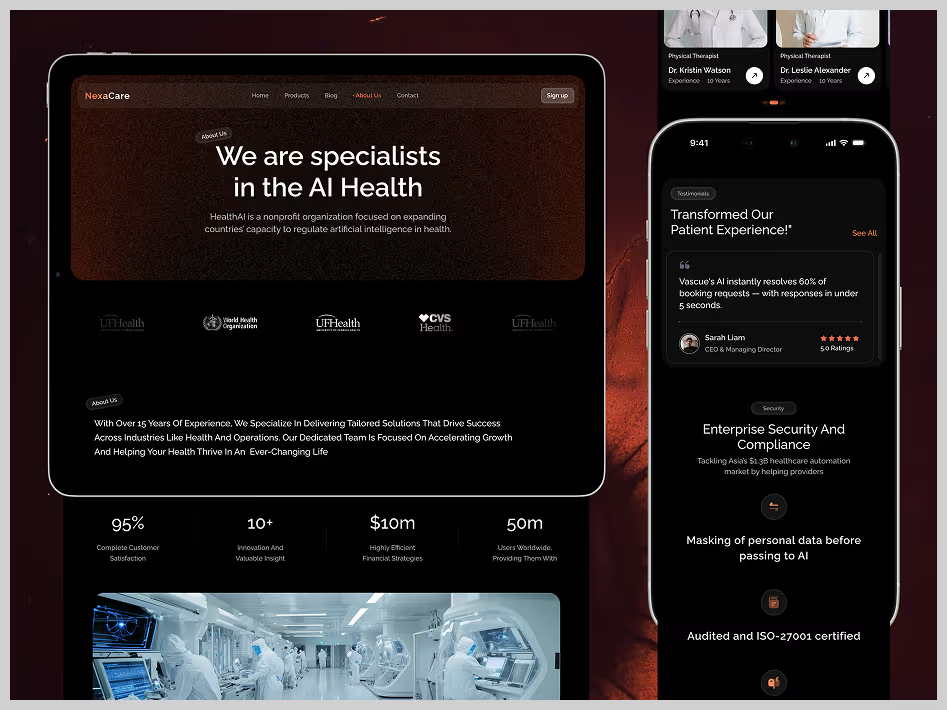
A modern healthcare website must make information easy to find. Patients often visit while stressed or unsure, so simple navigation, clean layouts and clear service categories help them feel guided instead of overwhelmed.
Explore NexaCare
Fast and Mobile Friendly Experience
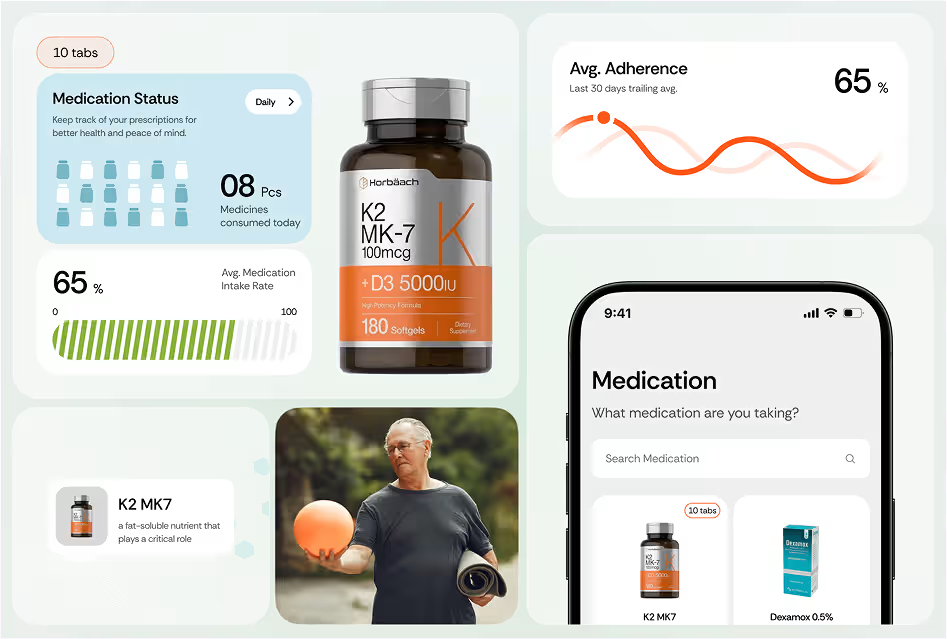
Most patients browse on their phones. A healthcare website in 2026 must load quickly, work flawlessly on mobile devices and provide appointment booking without unnecessary steps. A slow or unresponsive site instantly reduces trust.
Explore Wellnest
Trust Elements Patients Expect
Doctor profiles, credentials, patient stories and treatment summaries play a major role in building confidence. These elements help patients feel safe and informed before making a decision.
Accessible Design for All Ages
Healthcare websites needs simple navigation, clear content hierarchy and appointment flows that even non tech users can understand. Accessibility is critical because people of all ages and conditions depend on these digital tools.
Secure and HIPAA-Friendly Forms
Appointment requests, contact forms and patient data submission must be secure. HIPAA-friendly tools give users confidence that their information is protected.
Final Thoughts
A healthcare website is often the first touchpoint between patients and providers. A modern, well designed site can build trust, reduce anxiety and help patients make informed decisions. The agencies listed above represent the best healthcare website design partners in 2026. Each one brings unique strengths and deep expertise in patient centered digital experiences. Whether you are building a new healthcare product or updating an outdated site, choosing the right agency can transform your digital presence and positively impact patient satisfaction. Investing in strong healthcare design today sets the foundation for long term success in a rapidly evolving industry.
Frequently Asked Questions
Why do healthcare providers need specialized website design?
Because healthcare websites carry a different kind of responsibility. Patients visiting a medical website are often stressed, in a hurry, or making decisions that affect their health. A specialized agency understands that dynamic they design for trust, clarity, and accessibility, not just aesthetics. They also know what HIPAA-aware UX looks like and how to build appointment flows that actually convert.
What makes a healthcare website effective in 2026?
Speed, simplicity, and mobile-first design are non-negotiable. Beyond that, an effective healthcare website in 2026 needs a frictionless appointment booking flow, doctor profiles that build genuine trust, accessible design for all ages and abilities, and clear privacy communication that reassures patients their data is safe. If a patient can't figure out how to book in under three taps on a phone, the site isn't doing its job.
How much does a healthcare website design project cost in 2026?
For a basic clinic site, expect $2,000–$8,000. A professionally designed site with custom UX, mobile optimization, and appointment booking typically runs $8,000–$30,000. Enterprise-level platforms with patient portals, EHR integration, or telehealth features can reach $30,000–$150,000 or more. Ongoing maintenance usually costs $300–$700 per month. The biggest cost drivers are custom integrations, compliance requirements, and whether content needs to be created from scratch.
How long does it take to design a healthcare website?
Most healthcare websites take 6 to 16 weeks from kickoff to launch. A simpler clinic site can be done in 6–8 weeks. A fully custom design with UX research, multiple service pages, and an appointment system is usually 10–14 weeks. Projects involving patient portals, EHR connections, or telehealth functionality take 16–24 weeks. The timeline extends when content, photography, or compliance reviews are not ready on the client side.
What should healthcare providers look for when choosing a website design agency?
Look for agencies with an actual healthcare portfolio not just one medical project buried among retail and fintech work. They should understand HIPAA-aware design, have experience with accessibility standards, and be able to show how their past work improved patient engagement or conversions. Communication matters too. Healthcare projects involve sensitive decisions, and you want an agency that explains clearly rather than one that just sends deliverables.
Do healthcare websites need to be ADA accessible?
Yes and it's not just an ethical standard anymore. Under the Americans with Disabilities Act, inaccessible websites can create legal liability for healthcare providers. WCAG 2.2 is the current benchmark. In practice, that means proper color contrast, keyboard navigation, screen-reader-compatible forms, and descriptive alt text. Accessibility also improves SEO, which makes it a double win. Any agency worth hiring should build to these standards by default.
Can I use Webflow or Framer to build a HIPAA-compliant healthcare website?
The short answer is yes with the right setup. Webflow and Framer are solid platforms for healthcare website design, but the platform itself doesn't make a site HIPAA-compliant. Compliance comes from how you handle patient data secure forms, encrypted submissions, HIPAA-compliant third-party tools, and a Business Associate Agreement (BAA) with any vendor that touches protected health information. A good agency will know exactly which integrations are safe and which aren't.
What is the difference between HIPAA compliance and general website security?
General website security covers things like SSL certificates, secure hosting, and protection against hacks. HIPAA compliance is a layer on top of that it specifically governs how protected health information (PHI) is collected, stored, and transmitted. If your site has contact forms, appointment requests, or patient login areas, HIPAA rules apply. That means encrypted form submissions, signed Business Associate Agreements with your tech vendors, and clear documentation of how patient data flows through your systems.
How do I know if my current healthcare website needs a redesign?
Five clear signals: your site takes more than three seconds to load on mobile, patients regularly call the clinic because they can't figure out how to book online, the design hasn't changed in more than three years, your Google Analytics shows a bounce rate above 70%, or a staff member has to apologize for the website during a patient interaction. Any one of these is a reason to start a conversation with a healthcare web design agency.
Your Trusted UI/UX Design Agency
.avif)