Trusted by 80+ SaaS Founders and Product Teams



.svg)










.svg)

.avif)
Why Orbix studio?
Orbix Studio helps startups turn product ideas into real MVPs with less confusion and less wasted time.
Launch-ready MVPs designed and developed for fast-moving startup teams.
140+
Trusted by growing brands and teams across product-focused industries.
35+
Years of experience shaping digital products from idea to launch.
06+
Highly rated for clear communication, quality work, and reliable delivery.
4.9

How We Build MVPs
MVP Development Services for Startups Ready to Launch
From product planning to design and development, we help startups turn ideas into working MVPs that are ready to test, and launch.
.avif)
.avif)
MVP Strategy & Scoping
We help you determine essential MVP features, ensuring a clear product direction from the start.
.avif)
Clickable Prototype Design
Visualize your product's design and functionality pre-coding. A clickable prototype supports early testing and better choices.
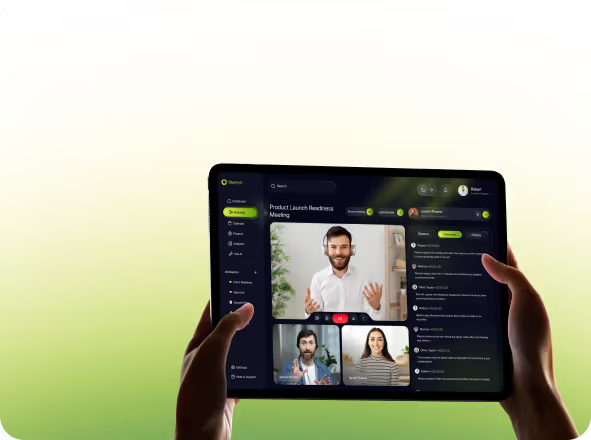
Single-Feature MVP Development
Some ideas only need one strong feature to prove they work. We build focused MVPs that help you test the core idea without wasting time on extras.
.avif)
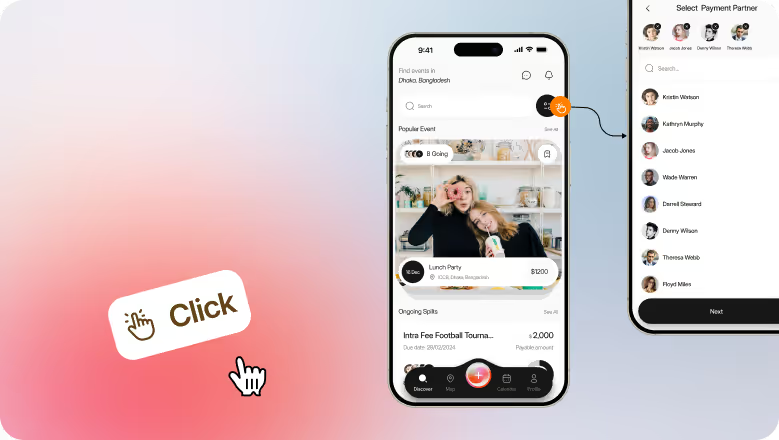
Pilot MVP Development
Start with a smaller version, learn from users, and enhance it. A pilot MVP is ideal for testing before full development.
.avif)
.avif)
SaaS MVP Development
We build SaaS MVPs that focus on essential features, enabling quicker launches and confident growth.
.avif)
AI MVP Development
Turn your AI product idea into something people can actually try. We build AI MVPs that help you test the experience, the value, and how it works in real use.
How We Build MVPs
A Simple Process That Keeps Your MVP Moving Forward
We use a clear three-step process to take your MVP from idea to launch. It helps your team stay focused, make smarter choices, and build with less friction.
Step 1
Define
.svg)
Decide What the MVP Should Include
We start by defining the product goal, the user problem, and the features your MVP truly needs.
Step 2
Design
Shape the Product Experience
Next, we design the user flow, screen structure, and key interactions.

Step 3
Build
Develop and Prepare for Launch
We build the core product, test the key flows, and prepare everything for a smooth launch.
.avif)

How Orbix Studio Uses AI
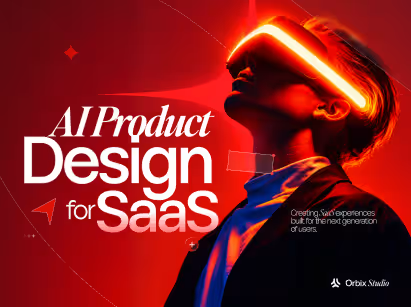
AI-Powered, Product-First MVP Design
We combine generative tools with motion expertise to scale content fast, while keeping your creative on-brand.
Faster concept shaping
Turn early ideas into clearer product directions without long back-and-forth.

Smarter feature planning
Use AI-assisted workflows to spot what matters most in the first version.

Quicker design exploration
Test flows, layouts, and product directions faster before development starts.

More efficient MVP delivery
Reduce time spent on repetitive work and keep the project moving.



What SaaS Teams Say About Working With Orbix Studio

Website Design
App Design
Branding

"Orbix Studio has created remarkable work for The Whitney building that helped us define not just this individual building but the new direction in which we are heading as a group"
Tiyahnn Bryant
CEO at RollUpLife Inc
4X
Increase in design capacity
60%
Reduction in time to market
40+
Number of brands

GiveHub -
Transparent Donation & Charity Platform
Website Design
App Design
Branding
“Understood what I needed and provided a professional and quick service. I would recommend.”
Daniel Proper
CEO
4X
Increase in design capacity
60%
Reduction in time to market
40+
Number of brands

Website Design
App Design
Branding
"The team was very solution-oriented, proactive, engaged, and came up with intelligent workarounds for our specific requirements."
Brynjar Glimsdal
Product Manager E-Mobility, Circle K
5.0
Increase in design capacity

60%
Reduction in time to market
38+
Number of brands

Website Design
App Design
Branding
"They were extremely easy to work with."
Alexander Levit
5.0
60%
Reduction in time to market
38+
Number of brands
Website Design
Website Design
Website Design
“Their service delivery and attention to detail were top-notch.”
Jessica Epley
4X
Increase in design capacity
60%
Reduction in time to market
40+
Number of brands
Website Design
Website Design
Website Design
"The expertise of the designer and developer assigned to the project was clear."
Robel Yemane
Engineering Leader, Privilee
4X
Increase in design capacity
60%
Reduction in time to market
40+
Number of brands
Website Design
Website Design
Website Design
"They’re a multidimensional team that enables us to share and work with the team successfully."
Laura Kornhauser
5.0
60%
Reduction in time to market
38+
Number of brands
Website Design
Website Design
Website Design
"The team was very solution-oriented, proactive, engaged, and came up with intelligent workarounds for our specific requirements."
Carlos Baltazar
Office Operations & HR Manager, Provida Family Medicine
5.0
60%
Reduction in time to market
38+
Number of brands




.svg)
.svg)

Got Questions?
We’ve Got Answers
If you’re unsure where to start or want to see how we can help, reach out, and we’ll walk you through it.

Book an Intro Call
Let’s talk through your goals, your timeline, and how Orbix Studio can support your team.

Do you prefer email communication?
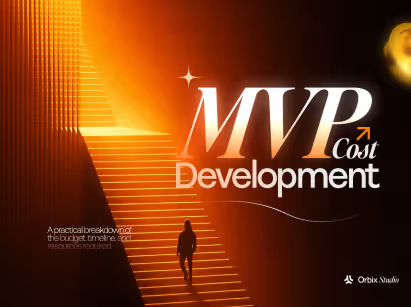
hello@orbix.studioHow much does MVP development cost in 2026?
How long does it take to build an MVP?
What is the difference between a prototype and an MVP?
Can you build an MVP without code using Webflow or no-code tools?
What should I include in my MVP and what should I cut?
Do you handle both design and development for MVPs?
What happens after the MVP launches do you keep building?
Do I own the code and IP after the MVP is delivered?
Can you help me validate the idea before we start building?
Why do most startup MVPs fail and how do you prevent that?
Book an Intro Call
Let’s talk through your goals, your timeline, and how Orbix Studio can support your team.
Do you prefer email communication?
hello@orbix.studioPresent on Top Creative Platforms

.svg)


.svg)

.svg)

Got a project in mind? Let's build it
We'll schedule a call to discuss your idea. After discovery sessions, we'll send a proposal, and upon approval, we'll get started.
.avif)
Shohanur Rahman
Founder & CEO