Trusted by 80+ SaaS Founders and Product Teams



.svg)










.svg)

.avif)
.avif)
Why Orbix studio?
Orbix Studio helps SaaS startups design and build mobile apps with one clear process. We bring together product design, and development to launch your app faster.
Custom mobile and web app projects delivered for growing product teams
30+
Startup founders and product teams are supported across design and development
80+
Years of experience building digital products for modern startups
06+
Average client rating earned through quality work, speed, and collaboration.
4.9

What We Offer
Mobile App Design and Development Services for SaaS Startups
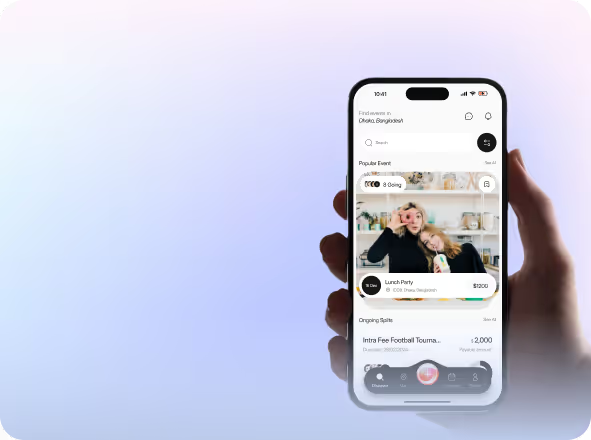
We help SaaS startups plan, design, build, and launch mobile apps for iPhone, Android, Flutter, and React Native.
.avif)
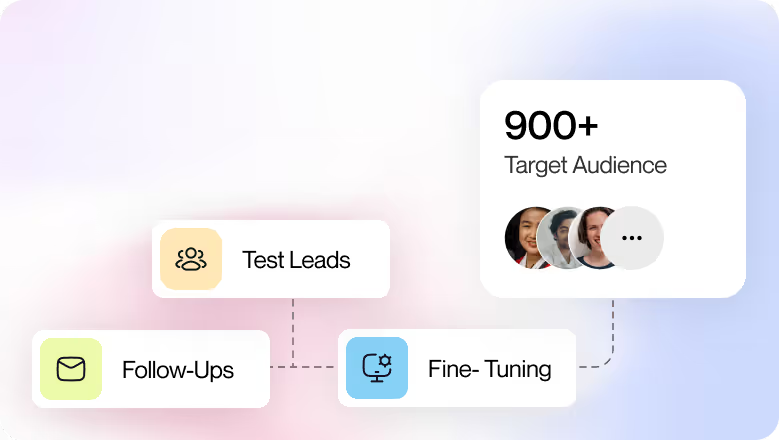
Mobile App Strategy
We clarify app requirements, focus on essential features, and optimize the MVP process.
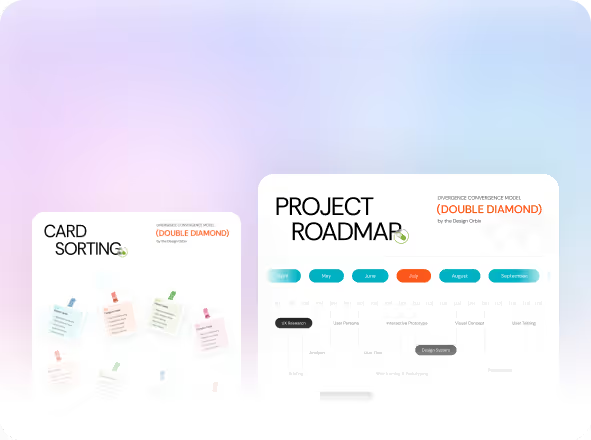
UI/UX Design
We design intuitive app interfaces that are easy to use and encourage repeat visits.
.avif)
iOS App Development
For iPhone users, small details matter. We build iOS apps that feel fast, polished, and native to Apple devices, so your product works the way users expect it to.
.avif)
Android App Development
We build Android apps to be flexible and dependable across various devices and systems.
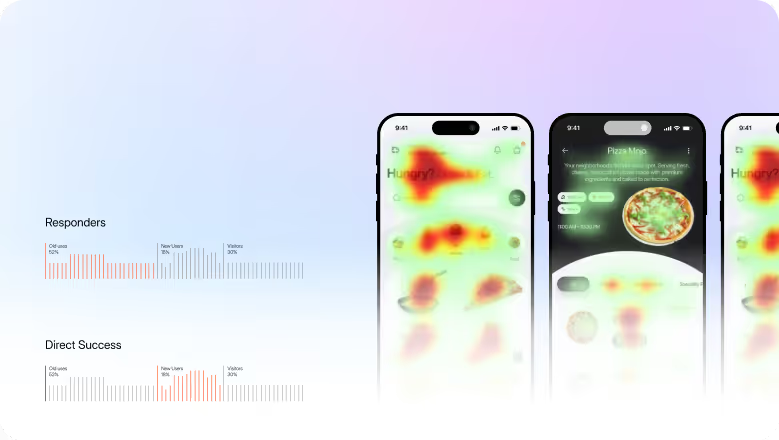
React Native Development
Use React Native to deploy on iPhone and Android efficiently, maintaining a consistent app-like experience.
.avif)
Flutter Development
For quick, polished cross-platform apps, Flutter offers custom UI and consistent performance on iPhone and Android.

App Design Benefits
What Better App Design Does for Your Product

Stronger First Impressions
A clean, modern app experience helps users trust your product from the very first screen.

Enhanced UX
Clear flows and better screen design make the app simpler to use and easier to understand.

Higher Conversions
Better app design helps more users sign up, take action, and complete important steps.

Better Competitive Edge
A more polished product experience helps your app stand out in a crowded market.

Better User Retention
Transforms app functionality into higher profitswthatoeut.cotere maadt3odt9%tw.on

Stronger App Store Performance
Optimized designs enhance usability and satisfoction, seouring better visibility in app stores.
Our Process
From Product Idea to App Store Launch
We help SaaS startups move from early concept to launch-ready mobile app with a process that keeps product thinking, UX, and development working together from start to finish.
Step 1
Strategy
.svg)
Figure out what to build firs
We shape the MVP, map the user flow, and help your team focus on the features that matter most.
Step 2
App Development
Build the app across every layer
We handle the front end, backend, and integrations needed to bring the app to life across different platform builds.

Step 3
Launch and Support
Ship with confidence
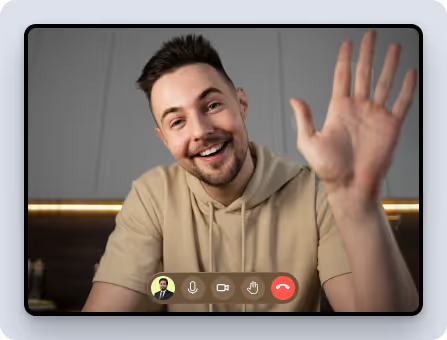
We test, polish, launch, and stay involved after release to support updates, improvements, and growth
.avif)
How Orbix Studio Uses Ai
How Orbix Studio Uses AI
We use AI to speed up research, improve product decisions, and move faster during design and development. Our process stays human-led, so your mobile app feels thoughtful, on-brand, and built around real user needs.
Faster product research
Use AI to explore ideas, user flows, and product direction much faster.
Smarter MVP planning
Prioritize features and shape clearer MVP scopes before development begins.

Faster design workflows
Speed up UX writing, wireframes, and screen exploration without losing quality.

Better development support
Use AI-assisted workflows to reduce delays and improve delivery speed.


What SaaS Teams Say About Working With Orbix Studio

Website Design
App Design
Branding

"Orbix Studio has created remarkable work for The Whitney building that helped us define not just this individual building but the new direction in which we are heading as a group"
Tiyahnn Bryant
CEO at RollUpLife Inc
4X
Increase in design capacity
60%
Reduction in time to market
40+
Number of brands

GiveHub -
Transparent Donation & Charity Platform
Website Design
App Design
Branding
“Understood what I needed and provided a professional and quick service. I would recommend.”
Daniel Proper
CEO
4X
Increase in design capacity
60%
Reduction in time to market
40+
Number of brands

Website Design
App Design
Branding
"The team was very solution-oriented, proactive, engaged, and came up with intelligent workarounds for our specific requirements."
Brynjar Glimsdal
Product Manager E-Mobility, Circle K
5.0
Increase in design capacity

60%
Reduction in time to market
38+
Number of brands

Website Design
App Design
Branding
"They were extremely easy to work with."
Alexander Levit
5.0
60%
Reduction in time to market
38+
Number of brands
Website Design
Website Design
Website Design
“Their service delivery and attention to detail were top-notch.”
Jessica Epley
4X
Increase in design capacity
60%
Reduction in time to market
40+
Number of brands
Website Design
Website Design
Website Design
"The expertise of the designer and developer assigned to the project was clear."
Robel Yemane
Engineering Leader, Privilee
4X
Increase in design capacity
60%
Reduction in time to market
40+
Number of brands
Website Design
Website Design
Website Design
"They’re a multidimensional team that enables us to share and work with the team successfully."
Laura Kornhauser
5.0
60%
Reduction in time to market
38+
Number of brands
Website Design
Website Design
Website Design
"The team was very solution-oriented, proactive, engaged, and came up with intelligent workarounds for our specific requirements."
Carlos Baltazar
Office Operations & HR Manager, Provida Family Medicine
5.0
60%
Reduction in time to market
38+
Number of brands




.svg)
.svg)
RESOURCES
Get deeper insights, tips, and real talk from the blog.

AI
Best AI Product Design Agencies to Hire for Your Next Product
Looking for the best AI product design agencies? This guide reviews top firms based on their clients, testimonials, and design quality so you can find the right fit.
AI
10 Min
AI Product Design for SaaS: Best Practices, Patterns, and Examples
Learn how AI product design for SaaS improves onboarding, UX, and feature adoption with proven patterns, examples, and trust-building best practices today.
AI
8 Min
How AI is Changing Design a Complete Guide for UX & Product Designers
How AI Changing UI/UX design from generative layouts to automated workflows. Discover what every designer needs to know to stay ahead in 2026.
Got Questions?
We’ve Got Answers
If you’re unsure where to start or want to see how we can help, reach out, and we’ll walk you through it.

Book an Intro Call
Let’s talk through your goals, your timeline, and how Orbix Studio can support your team.

Do you prefer email communication?
hello@orbix.studioHow much does it cost to design and build a mobile app in 2026?
How long does it take to ship a mobile app from scratch?
Should we build with React Native, Flutter, or go fully native?
Do you design for both iOS and Android, or pick one first?
Can you design the app if someone else is going to build it?
What does your design handoff to developers look like?
How do you handle accessibility for mobile apps?
Can you design an MVP app for App Store and Play Store submission?
Do you help with post-launch updates and App Store optimization?
What's the hardest part of mobile UX that most teams underestimate?
Book an Intro Call
Let’s talk through your goals, your timeline, and how Orbix Studio can support your team.
Do you prefer email communication?
hello@orbix.studioPresent on Top Creative Platforms

.svg)


.svg)

.svg)

Got a project in mind? Let's build it
We'll schedule a call to discuss your idea. After discovery sessions, we'll send a proposal, and upon approval, we'll get started.
.avif)
Shohanur Rahman
Founder & CEO