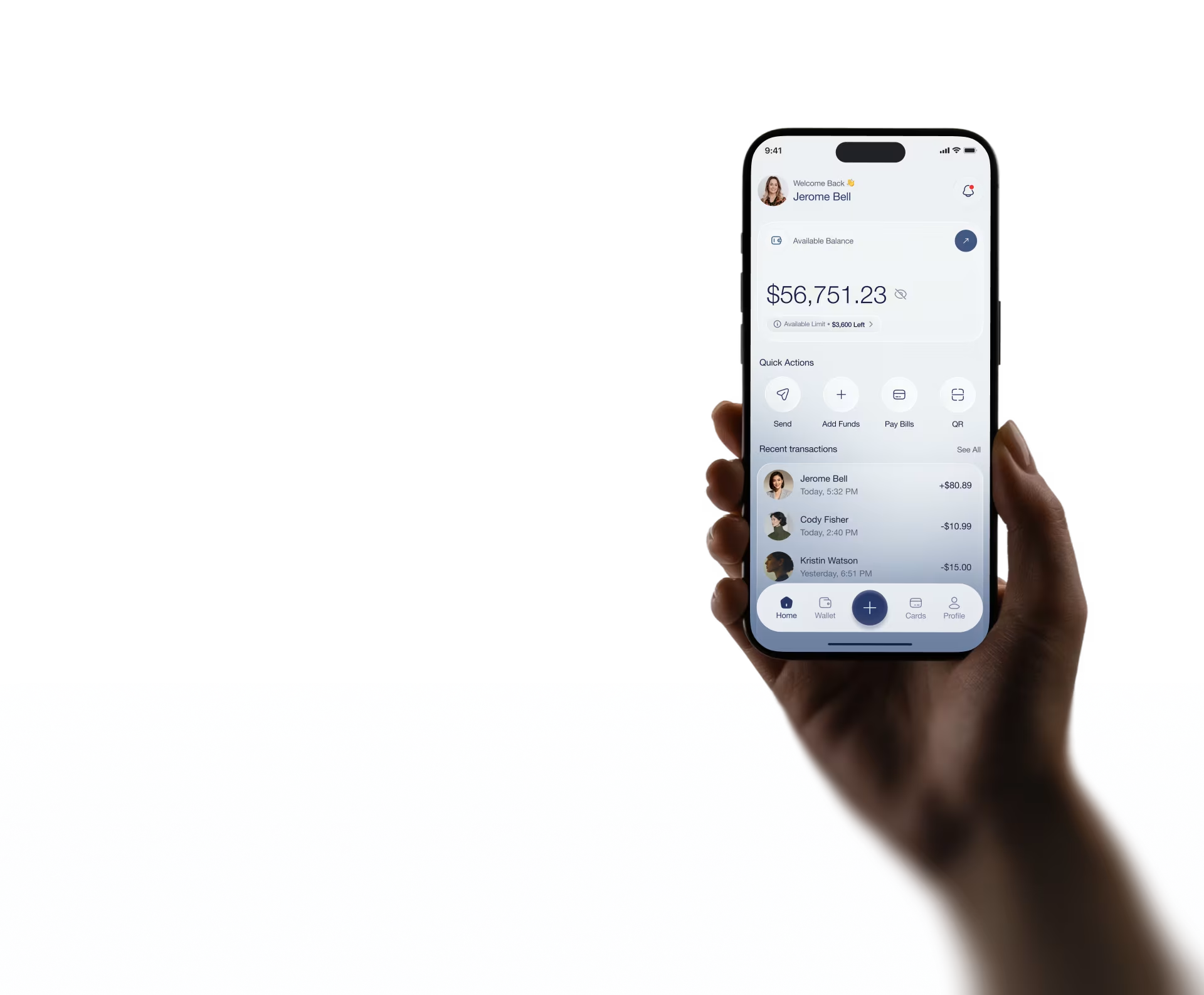
MVP Development Services for Startups
MVP development services for SaaS and AI startups. Investor-ready MVPs in 4 to 6 weeks, from $2,999/mo. See our process, stack, pricing and past build.


100+ reviews on

&


MVP Strategy

Custom MVP Development

AI MVP Development
.svg)
SaaS MVP

MVP to Full Product
MVP Strategy
Custom MVP Development
AI MVP Development
SaaS MVP
MVP to Full Product



.webp)

.webp)



.webp)








Trusted by 105+ Ambitious Teams Worldwide
.avif)
.avif)
This is When Founders Come to Us
Every MVP starts at the moment planning stops working. Here are the situations founders bring us, and what we ship in each one.
01
Investors want to see the product
Turn your product vision into a focused MVP investors and early users can experience, test, and validate.
.avif)
02
Your prototype has hit its ceiling
Turn your validated no-code or AI concept into a scalable MVP without losing the work that got you here.

03
Your MVP keeps getting bigger
Cut through the scope and turn an oversized product plan into a focused, launch-ready MVP.
04
The project has stalled
We assess what exists, keep what works, and create a clear path to move your MVP forward.
05
You don't have a CTO yet
Shape your MVP, make key product decisions, and get the technical direction needed to bring it to life.
06
Reach More Customers
Make your business easier to discover and engage with across devices, audiences, and different stages of the customer journey.
.avif)

MVP Software Development Services from Idea to Launch
We handle startup MVP development end to end, from scoping the first version to scaling it after launch. Every build starts with what your users actually need.
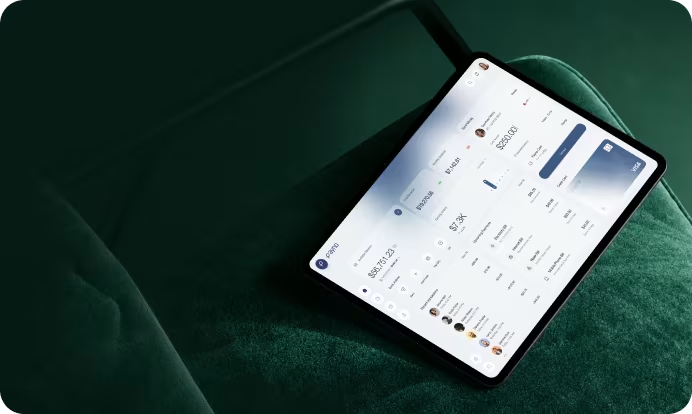
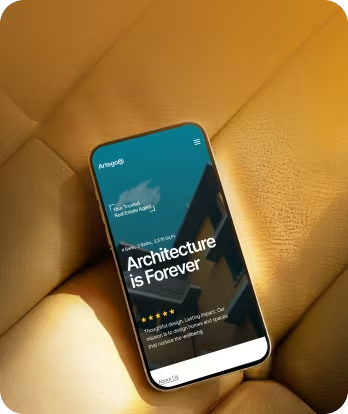
SaaS MVP Development
Multi-tenant SaaS MVPs with auth, billing and admin ready from day one, so your first customers can actually pay you.
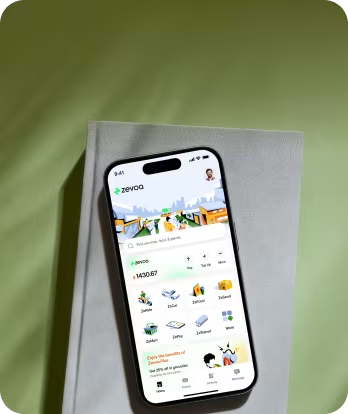
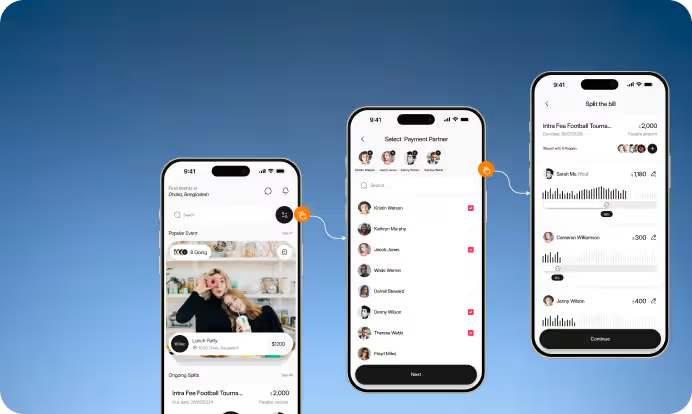
Rapid MVP Prototyping
A clickable prototype in days, so you can test the flow with users and investors before a line of code is written.
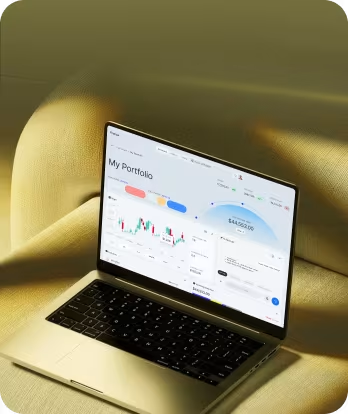
Custom MVP Development
From validating your idea to prioritizing key features, we'll be your trusted partner
AI MVP Development
AI MVPs built with real model work RAG, agents, and evals, not just chatbots.
MVP to Full Product
Once validated, we strengthen and scale your MVP for future growth.
We make MVP Development Feel Predictable
Good website design brings clarity to your message, improves the user experience, and helps your business turn more visits into meaningful actions.

Make Your Value Clear
Most MVPs here ship in four to six weeks, with a working build in your hands every Friday.

Senior people on every build
A senior designer and a senior engineer on your product. No juniors learning on your budget.

Proof before production code
You get a clickable prototype in week three, before anyone writes a line of production code.

Budget you can plan around
One monthly price covers the team, the scope and the revisions. Nothing else gets billed.

You decide what ships
We bring the recommendation and the reasoning. The call on every feature is yours, not ours.

The same team start to finish
The person who scoped your MVP in week one is the same person you talk to in week six.

Project 01
ADPList cuts mentor discovery time 35%
A ground-up mobile app with AI matching lifted mobile engagement 40% and cut onboarding drop-offs 22%.
Project 02
Orelax Gets 41% More Inquiries
Property discovery got 46% faster once key listing details surfaced earlier, and saved properties rose 34%.
Project 03
Gen.ho makes the house easier to run
Scattered device controls became a single dashboard. Access to frequently used devices got 48% faster.
Project 04
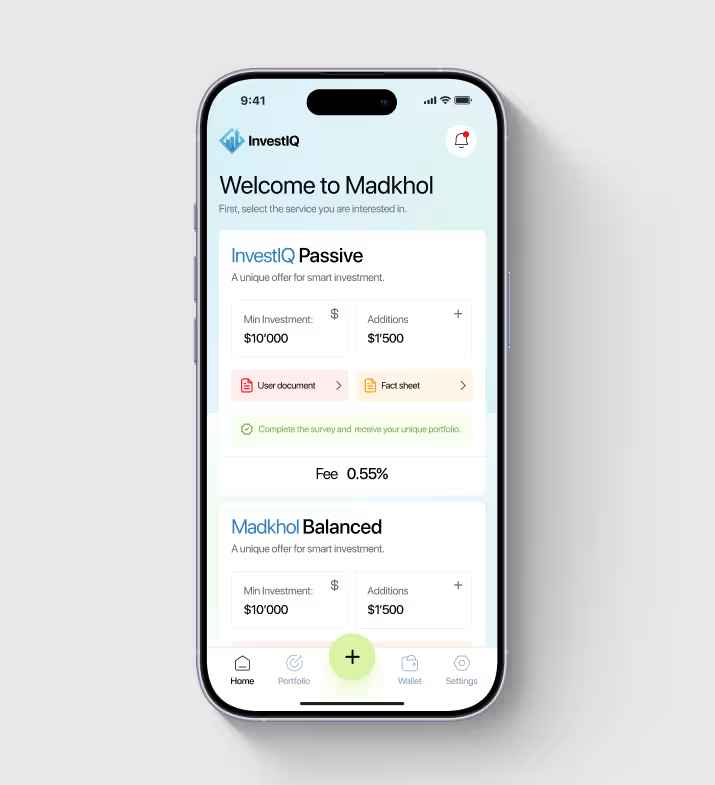
InvestIQ: a full investing app in six weeks
Onboarding, risk assessment, portfolio, payments and withdrawals, built on a 65-component design system.
Project 05
PXGEN simplifies AI image generation
New users could not tell what the platform did. Leading with generated images cut drop-offs into the generator.
.avif)
.avif)
.avif)
.avif)
VP Development
for Your Runway
We take your idea from the first call to a live product in six weeks, with a working build in your hands every Friday.
.svg)
.svg)
Week 1 — Discovery and Scoping
We validate the idea, define the audience, and focus the MVP on what it needs to prove.
Week 2 — Feature Prioritisation and Roadmap
Prioritize what to build now, next, or later with a clear, strategic roadmap that extends beyond launch.
Week 3 — UX and UI Design
We design core flows and a clickable prototype to validate with users and investors before development.
Week 4 to 5 — Build With Weekly Demos
Development runs alongside design, with weekly working builds and clear, upfront scope decisions.
Week 6 — Launch, Measure, Iterate
We launch, track real user behavior, and use real-world data to confidently decide what to build next.
Why Startup Founders
Choose Orbix Studio
We're an MVP development company built around small senior teams, not billable headcount. The numbers below show the products we've shipped and the founders who trusted us to build them.
140+
Projects delivered for startups, growing businesses and established teams.
105+
Founders who have trusted us to design and build what they ship.
4.9
Average rating across Clutch and Goodfirms, from 100+ verified client reviews.
4.9+ ★ Average Rating From 100+ Client Reviews

Working With Orbix Studio Felt Seamless From Start To Finish. Their Creativity, Product Thinking, And Attention To Detail Really Stood Out.

Ethan Carter
Co-Founder & CEO, Nexora

The Orbix Studio team transformed our complex ideas into a product that feels simple, polished, and incredibly intuitive.

Daniel Brooks
Head of Product, Lumio
.svg)
We were impressed by how quickly they understood our vision and turned it into a thoughtful, user-friendly digital experience.

Marcus Reed
Founder & CEO, Verta Labs
Simple Monthly Pricing For Your MVP Development Team
This is MVP as a service: one monthly fee, a full product team, and no surprises on the invoice. Start, pause or cancel anytime.
Startup
$2,999/month

.svg)
Growth
$5,499/month
The MVP Tech Stack We Build On
We pick tools that get you live in six weeks without boxing you in later. Nothing here is a framework you will have to rip out at Series A.
Mobile
AI and ML
Database and Cloud
Integrations & Pay
React Native
OpenAI
Supabase
Stripe
Expo
Anthropic
PostgreSQL
Clerk
Flutter
LangChain
Firebase
Twilio
Swift
Pinecone
AWS
Resend
Kotlin
Hugging Face
Vercel
PostHog
This is What Goes Into Each Kind of MVP
We help SaaS and AI startups, founders, and product teams build focused MVPs that real users can test and validate.
.avif)
SaaS Platforms
Auth and user roles, billing and subscriptions, the core workflow, an admin panel, onboarding, and the first analytics views.
AI Products
Model integration, retrieval or agent the generation interface, a credit or usage system, and an eval setup that catches bad output before users do.
Marketplaces
Two-sided onboarding, listings and search, matching logic, in-app messaging, payments and payouts, and the review loop.
Mobile Apps
Onboarding, the one core flow, push notifications, offline states, account management, and app store submission.
Internal Tools
Data import, the main dashboard, role permissions, filters and saved views, exports, and reporting.
Explore More Services We Offer
Your business doesn’t stop at branding. Explore the other design services we offer to help you build and improve what comes next.

Full Stack Development
Build the backend, frontend, and everything between, on a stack your team can maintain.
.svg)
Webflow Development
Ship marketing sites your team can without waiting on a developer for every change.
.svg)
Mobile App Development
Take your product to iOS and Android, from one codebase wherever it makes sense.

Got Questions?
We’ve Got Answers
If you’re unsure where to start or want to see how we can help, reach out, and we’ll walk you through it.

Book an Intro Call
Let’s talk through your goals, your timeline, and how Orbix Studio can support your team.
%201%201.svg)

Do you prefer email communication?
hello@orbix.studioIs an MVP the right choice for my startup?
Can you help validate my idea?
What’s included in an MVP?
How do you decide which features to build first?
Can you design and build the MVP?
Can you build an AI-powered MVP?
Can you improve an MVP we’ve already built?
How long does it take to build an MVP?
Will we own the code and design files?
How much does MVP development cost?
Book an Intro Call
Let’s talk through your goals, your timeline, and how Orbix Studio can support your team.
Do you prefer email communication?
hello@orbix.studio
.svg)


.svg)

.svg)

.svg)
.svg)


.svg)







.avif)



.svg)

