.svg)


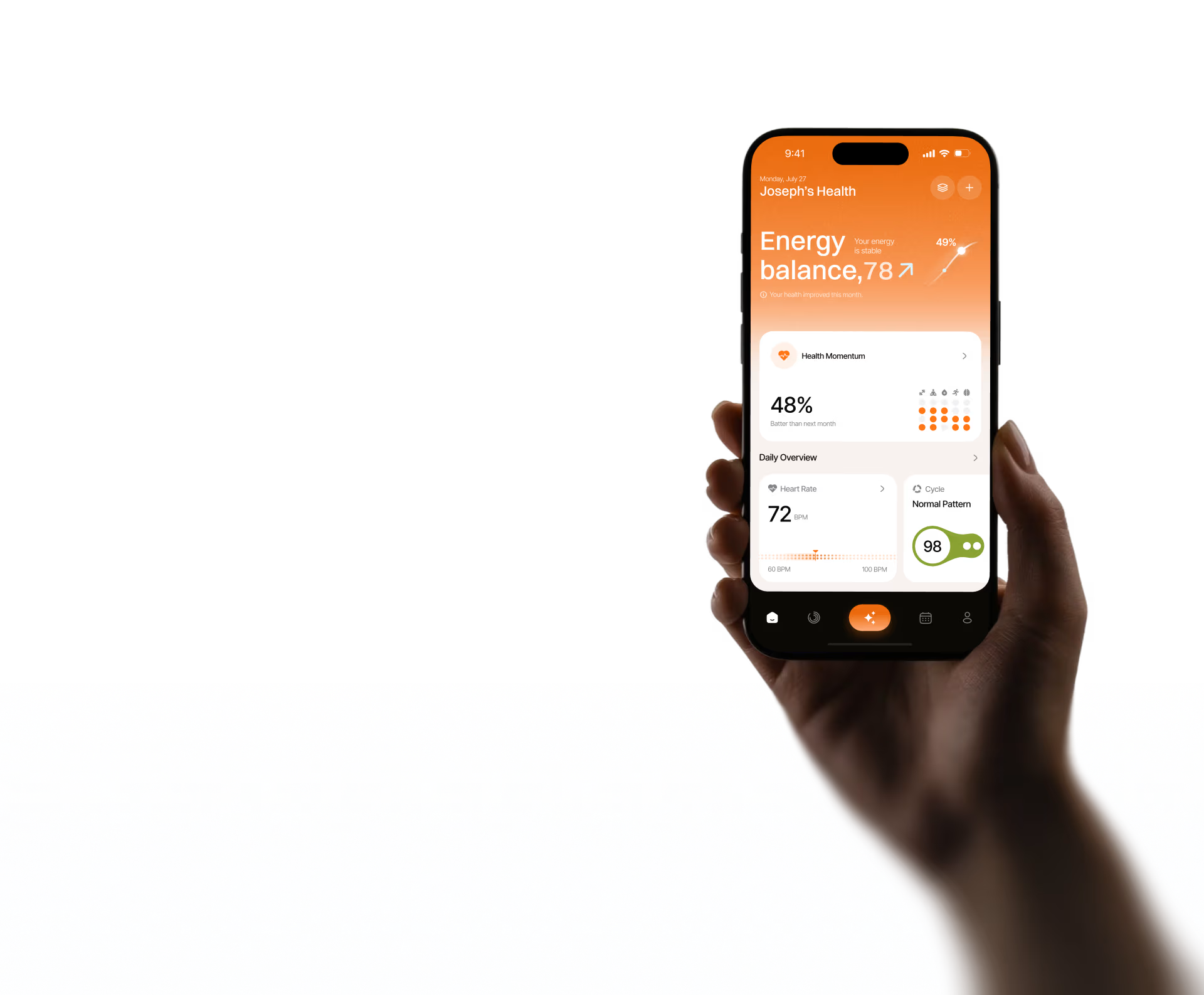
Turn Your Idea Into A Custom Mobile App
We take your idea from concept to launch, designing and building the features, experiences, and integrations your product needs.


100+ reviews on

&


App Strategy

Custom App Development

AI app Development
.svg)
SaaS mobile App

iOS App
App Strategy
Custom App Development
AI app Development
SaaS mobile App
iOS App





.webp)

.webp)



.webp)








Trusted by 105+ Ambitious Teams Worldwide
MVP Software Development Services from Idea to Launch
We handle startup MVP development end to end, from scoping the first version to scaling it after launch. Every build starts with what your users actually need.
%20(1).avif)
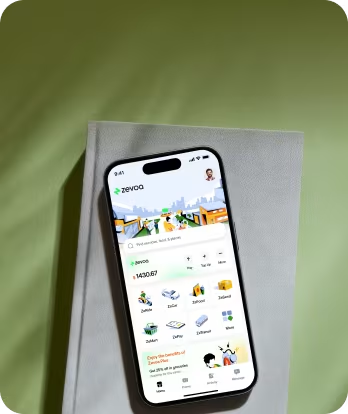
iOS App Development
Polished iPhone and iPad apps built for your users, goals, and Apple’s standards.
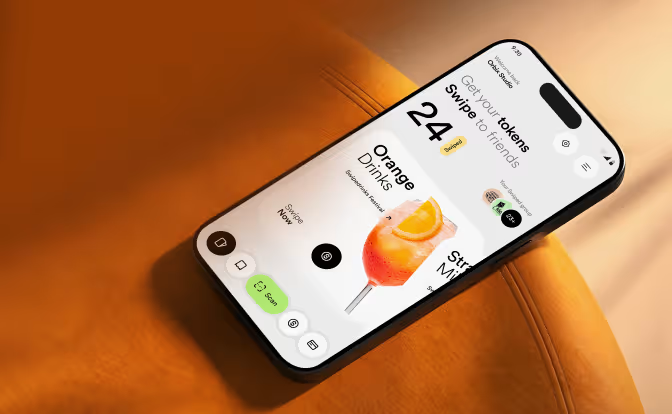
Cross-Platform App Development
Build apps for iOS and Android from a shared codebase, helping you launch faster without maintaining two separate products.
.avif)
Hybrid App Development
Build flexible cross-platform apps with web technologies and native capabilities.
.avif)
UI UX Design
Simplifying complex products through intuitive flows and interactions.
.avif)
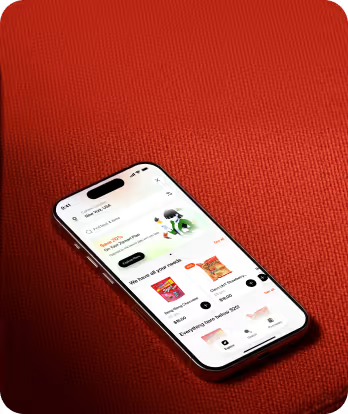
Android App Development
Create reliable Android apps that work smoothly across devices while giving your users a consistent experience.
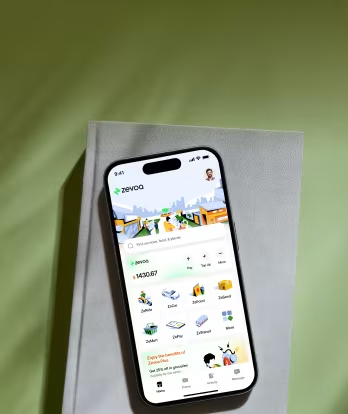
Quality Assurance
Test across devices and real-world scenarios to catch issues before users do.
A Different Approach toMobile App Development
Building a successful mobile product takes more than development. We bring product thinking, UX, design, and development together to create apps that work for your users and your business.

Think beyond features
We look at what your product needs to achieve for your users before we start building.

Design and code together
Our designers and developers work closely to keep the product experience and technology aligned.

Built around your users
We turn user needs into clear flows and simple, intuitive mobile experiences that engage.

Built for your business
We shape the app around your requirements instead of forcing your product into a template.

Ready to grow
We make thoughtful decisions that leave room for new features, more users, and evolving future product needs.

One team, end to end
From strategy and design to development and launch, everything stays connected under one team.
From Idea toApp Step by Step
We take your idea through strategy, design, development, testing, and launch, keeping every stage clear and connected along the way.
.svg)
.svg)
Start With Your Idea
We start by understanding what you want to build, who it is for, and what you want it to achieve.
Plan the Product
Together, we define the key features, map the main user journeys, and decide what needs to be built first.
Design the Experience
We turn the plan into clear screens and user flows, then create a prototype before development begins.
Mobile App Development
We build the product, connect the required systems, and bring the approved designs and features to life.
Launch and Improve
We prepare the final release, publish it to the app stores, and help improve the product after launch
Trusted by Product
Teams Worldwide
Our work spans mobile products, SaaS platforms, and digital experiences for startups and growing businesses. The numbers below show the experience and scale behind our work.
3+
Years of hands-on experience building digital products across industries.
140+
Product projects delivered for startups, growing businesses, established companies.
80+
Startups and product teams we've worked with to design and build digital products.
4.9+ ★ Average Rating From 100+ Client Reviews

Working With Orbix Studio Felt Seamless From Start To Finish. Their Creativity, Product Thinking, And Attention To Detail Really Stood Out.

Ethan Carter
Co-Founder & CEO, Nexora

The Orbix Studio team transformed our complex ideas into a product that feels simple, polished, and incredibly intuitive.

Daniel Brooks
Head of Product, Lumio
.svg)
We were impressed by how quickly they understood our vision and turned it into a thoughtful, user-friendly digital experience.

Marcus Reed
Founder & CEO, Verta Labs
The Technology Behind Our Mobile Apps
Our mobile development stack covers the platforms, frameworks, programming languages, and databases needed to build reliable mobile products
Tech Stack
Programming Languages
Databases
AI Machine
Android Studio
Swift
MySQL
OpenAI
Xcode
Objective-C
SQLite
Google Gemini
React Native
Kotlin
Firebase
Anthropic Claude
Jetpack Compose
JavaScript
MongoDB
TensorFlow
Flutter
Python
Redis
PyTorch
Explore More Services We Offer
Your business doesn’t stop at branding. Explore the other design services we offer to help you build and improve what comes next.
Full Stack Development
Build the backend, frontend, and everything between, on a stack your team can maintain.
.svg)
MVP Development
Turn your idea into a focused first version, launch sooner start learning from real users.
.svg)
Mobile App Development
Take your product to iOS and Android, from one codebase wherever it makes sense.
%201%201.svg)
Got Questions?
We’ve Got Answers
If you’re unsure where to start or want to see how we can help, reach out, and we’ll walk you through it.

Let’s Talk
Book an Intro Call
Founder & CEO @OrbixStudio
.svg)
Do you build iOS and Android apps?
Can you design and develop the app?
Do you build the backend too?
Can you integrate third-party services and APIs?
Will our app work across different devices?
Can you help us launch on the App Store and Google Play?
Do you provide support after launch?
How long does mobile app development take?
Will we own the source code?
How much does mobile app development cost?
Let’s Talk
Book an Intro Call
Founder & CEO @OrbixStudio

.svg)


.svg)

.svg)

.svg)
.svg)







.avif)


