.avif)
UI/UX Design Services for Product Teams
We help product teams companies design better products by making complex features, workflows, and interfaces easier to understand and use.

100+ reviews on

&


UI/UX Consulting

UX Research

UI Design

Wireframe & Prototype

Usability Testing
UI/UX Consulting
UX Research
UI Design
Wireframe & Prototype
Usability Testing





.webp)

.webp)



.webp)








Trusted by 105+ Ambitious Teams Worldwide
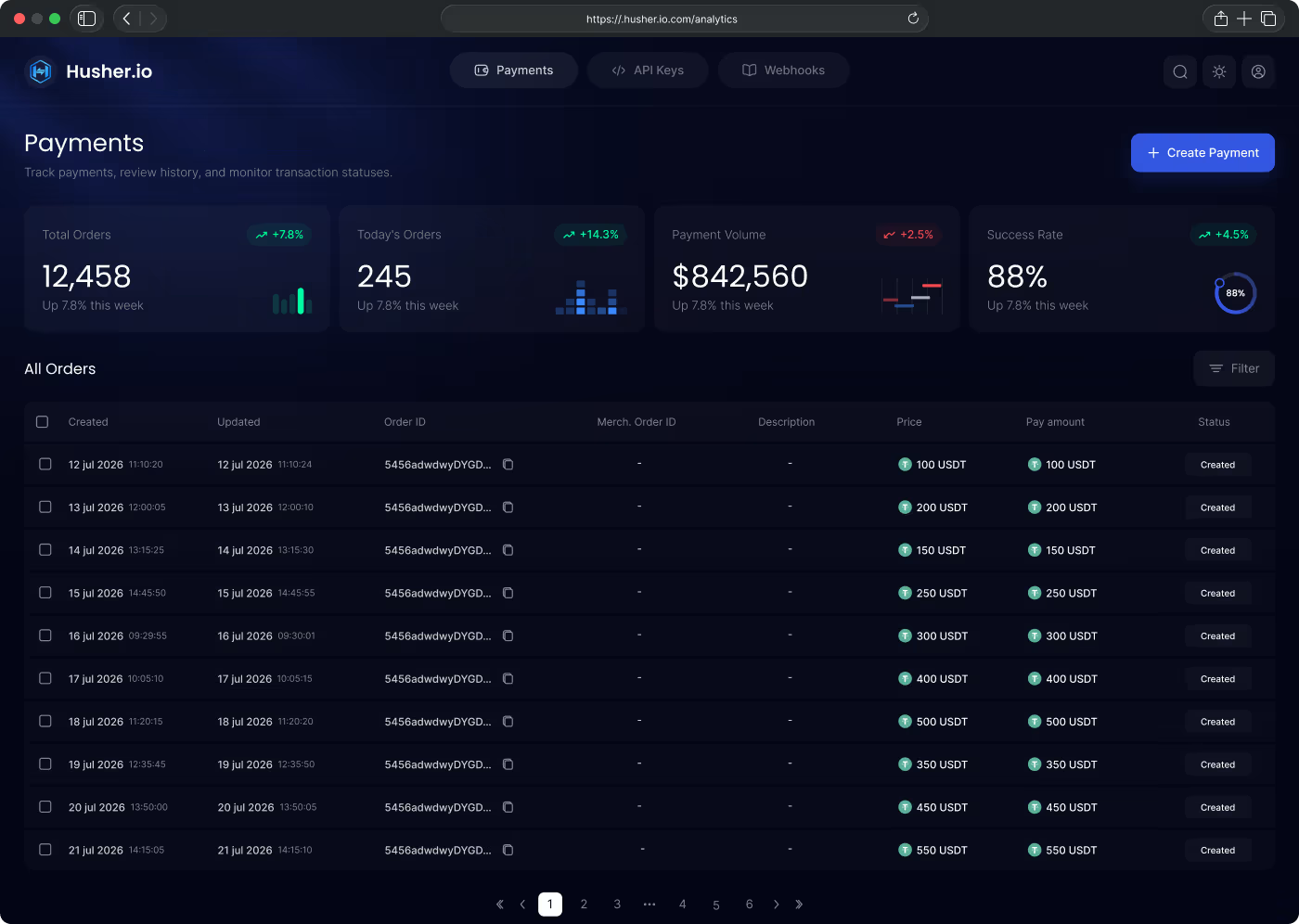
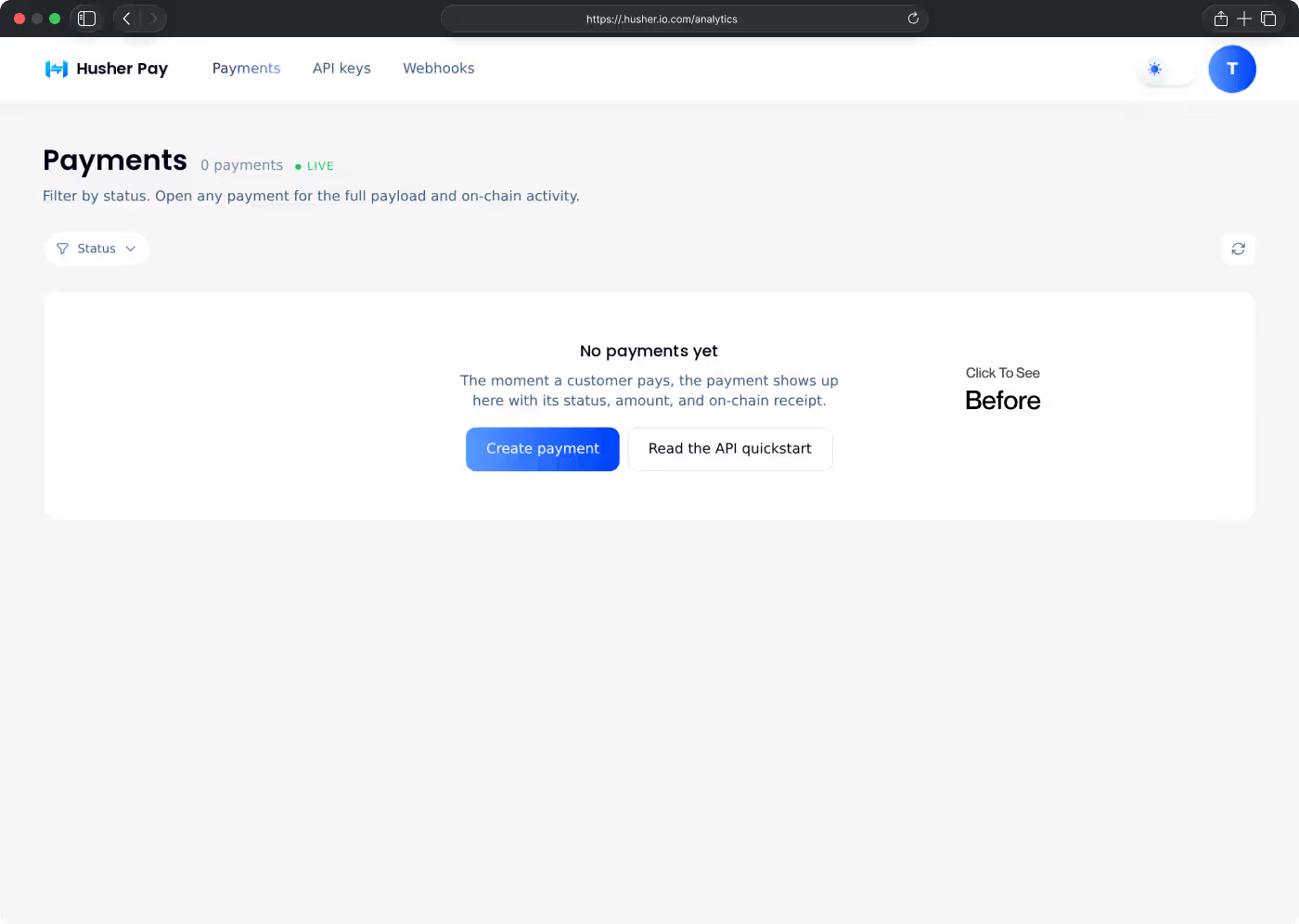
UI/UX Services Built for Whatever Your Product Needs
Tell us where your users get stuck, and we’ll handle the rest. From auditing broken workflows to designing and testing production-ready screens, we focus strictly on the UI/UX work that moves your product forward.
- UI/UX Consulting

- UX Research
- UX/UI Audits
- Wireframing & Prototyping
- Visual Ul Design
- Usability Testing
Are These UX Issues Hurting Your Product?
When users struggle, drop off, or need help, it may be time to look at the product experience.

Users Drop Off During Key Flows
People start onboarding, signing up, or completing a task but leave before reaching the end, often because the flow feels confusing or takes too much effort

The Interface Feels Too Cluttered
Too much information, too many elements, or poor visual hierarchy can make it difficult for users to know what to look at or do next.

Important Features Go Unused
Useful features may be buried in the interface or hard to understand, so users miss them even when they could make the product more useful.

Too Many “How-To?” Questions
When users constantly ask how to complete basic tasks, your product may be making simple journeys harder than they need to be.
The Business Impact of UI/UX Design
User experience design services can affect how easily people can discover, understand and use your product. When you improve these experiences, your conversations, engagement reduce the cost of support.

$100 Return on $1
Every $1 invested in UX can return up to $100 by using clearer wireframes and improve the user journey.
85%
More conversions come from UI/UX design that removes friction and makes key actions easier.
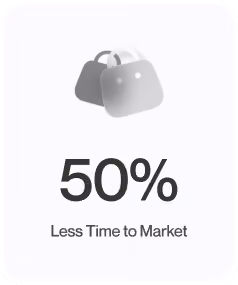

Development / Rework
Reduce
Development Rework
Development Rework
Clear UX plans reduce back-and-forth and unnecessary changes during development, and helps move faster.
View Our Work


Reduce User Drop-Off
Simplify confusing journeys and unnecessary steps to keep users moving instead of leaving.


70%
Fewer support tickets come from better usability that keeps users from getting confused when navigating
We Design, Fix, and Improve Digital Products
Orbix Studio works with SaaS and B2B teams that need experienced UI/UX designers without building an entire design team. We look at how your product works today, find where users get stuck, and design clearer flows, interfaces, and interactions to improve the experience.
.svg)

What Makes Our Approach Different
We combine product strategy, design, and development to solve problems early and build products that work well for both users and businesses.

User Research & Testing
We look at the product as a whole, including your users, goals, and challenges, before we start designing.

Scalable Systems
Keep your product consistent as it grows. We map key flow and build reusable Component that make adding new features easier

Responsive Design
Desktop, tablet, or mobile your product should feel right on every screen. We adapt the experience without losing its clarity.
.svg)
Accessible By Design
Accessibility is part of the design process from day one. We consider navigation & interactions to create more usable products.

Developer Handoff
The design isn’t finished until it’s ready for development. We organize files, components, and prototypes to make the handoff easy.

Post-Launch Support
Your product keeps change after launch We stay available to help with implementation updates, and new features along the way.
How We Bring
Your Product To Life
We take your product from the first conversation to a clear, development-ready design.
.svg)
01 — Understand Your Product
Learn about your product, users, goals, and the problems the design needs to solve.
02 — Plan The Experience
Define key features, organize the product structure, and plan the main user journeys before designing screens.
03 — Design The Product
Create user flows, wireframes, prototypes, and high-fidelity UI that shape how people use the product.
04 — Refine The Design
Build reusable components, adapt designs for different screens, and refine the experience based on feedback and testing.
05 — Handoff To Developers
Prepare final designs, prototypes, components, and specifications so developers can build the product as intended.

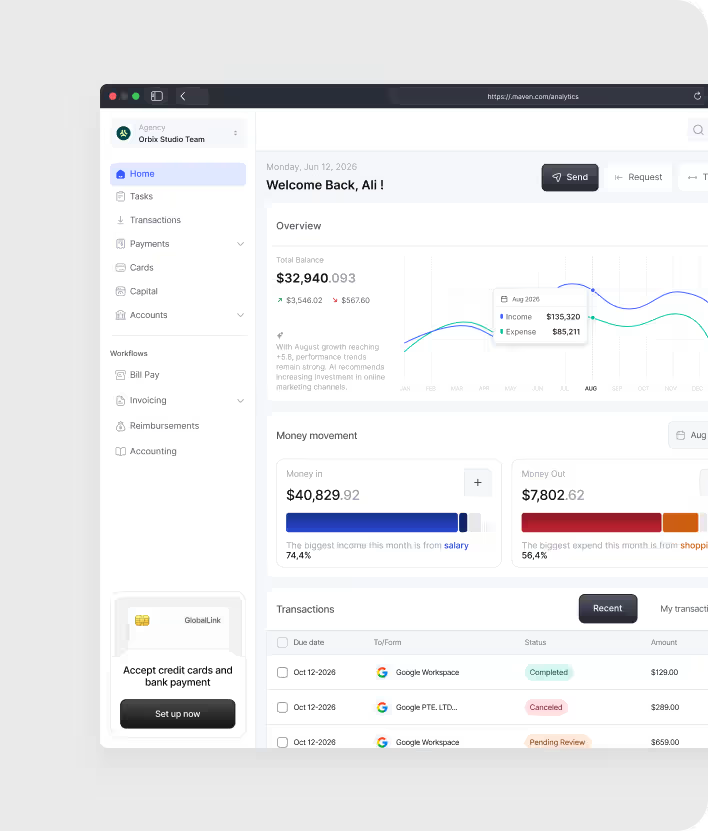
Project 01
Maven
Payments, accounts, and reports lived in different places. Now they're on one dashboard.
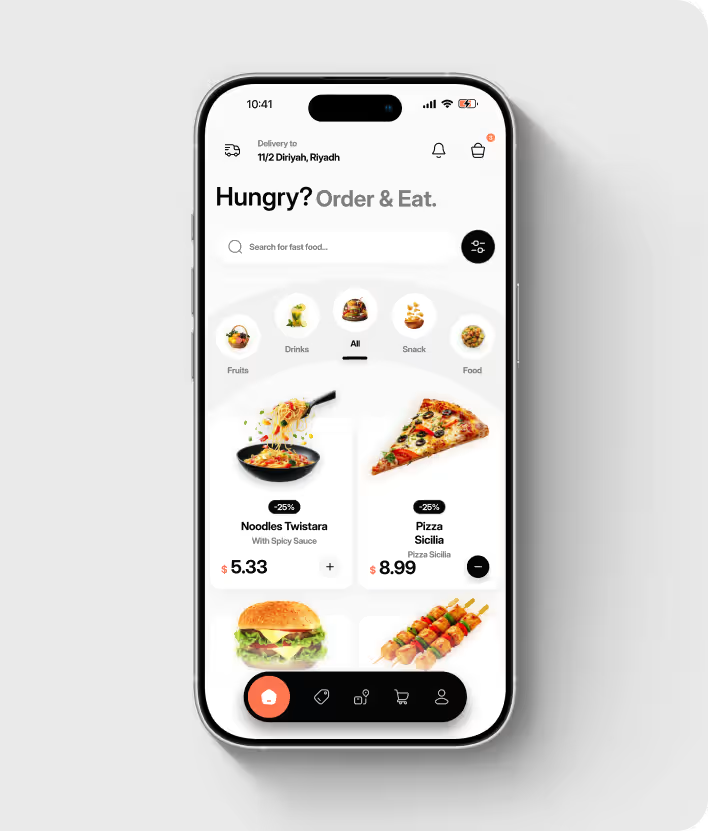
Project 02
Gourmeat Food
Ordering food had too many steps, so we cut them down.
Project 03
Wink Shopping
Wink's storefront feels high-end and expensive, even though everything running it behind the scenes stays simple and easy to manage.
Project 04
See our work in action
Great things happen when your UX stops getting in the way. Great things happen when your UX stops
Project 05
Fastgo Scooty App
Renting a scooter should take seconds, not minutes. We stripped the booking flow down to that.
.avif)
.avif)

Proven Product Experience
Trusted By Product
Teams Worldwide
From new products to existing platforms, we’ve helped teams around the world design and improve their UI/UX.
3+
Years of hands-on UI/UX design experience across digital products and industries.
140+
UI/UX projects designed for startups, growing businesses, and established product teams.
105+
Companies that have trusted our team with their digital product design.
4.9+ ★ Average Rating From 100+ Client Reviews

It was impressive how a handful of small changes made the section easier to navigate and reduced confusion without a full redesign.

Clay Cahoon
Former Creative Director, Backblaze

Constructive feedback and thoughtful solutions helped us build a stronger product.

Oana Andrada Matei
CMO, SKLUM
.svg)
We were impressed by how quickly they understood our vision and turned it into a thoughtful, user-friendly digital experience.

Suzi Flynn
Marketing Manager, Cutter & Buck
Explore Some of Our Latest Design Work
Take a look at some of the products, websites, and interfaces we’ve designed across different projects and industries.
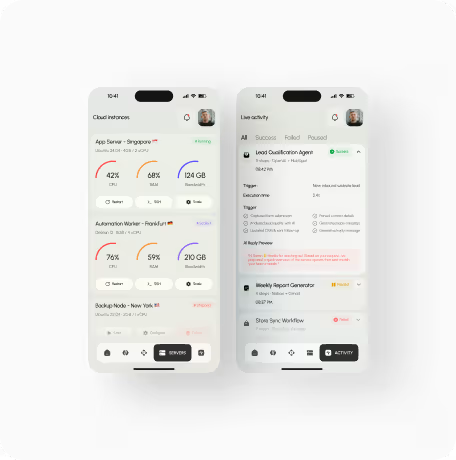
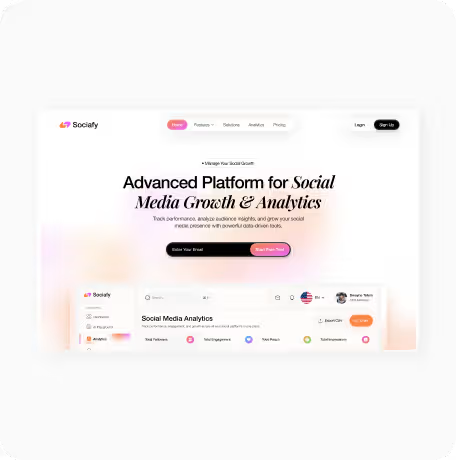
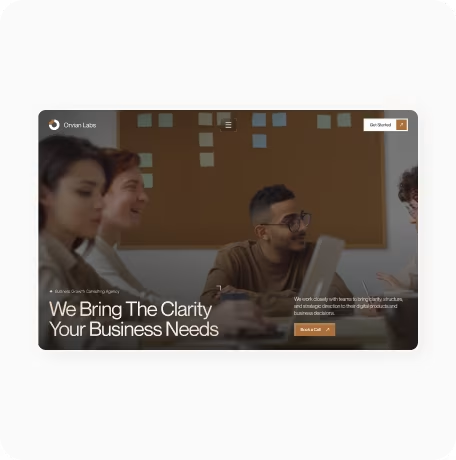
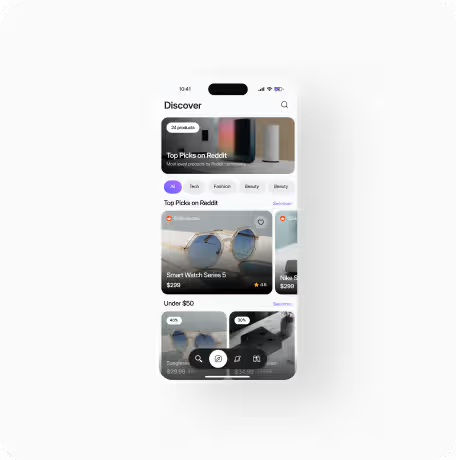
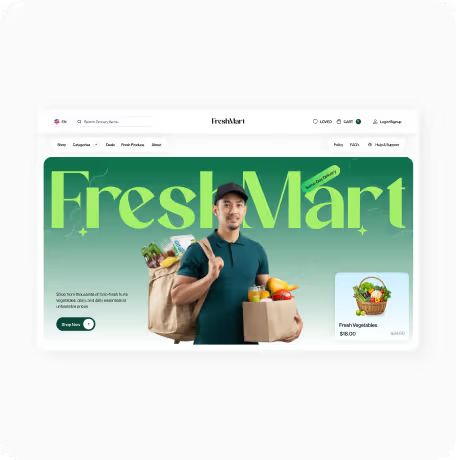
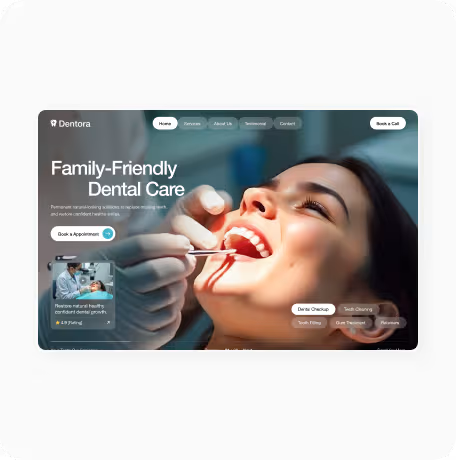
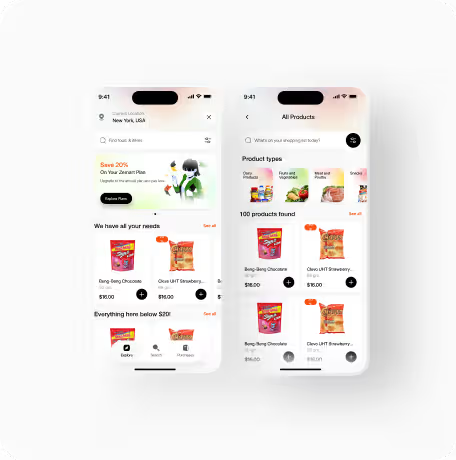
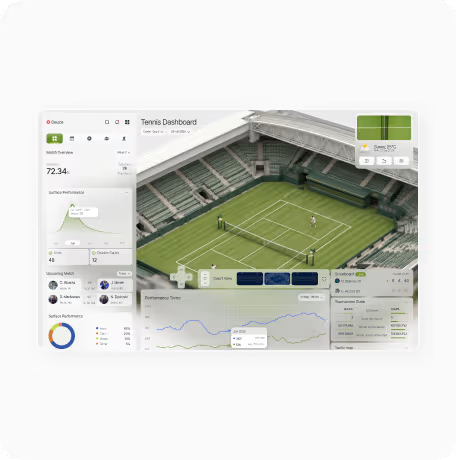
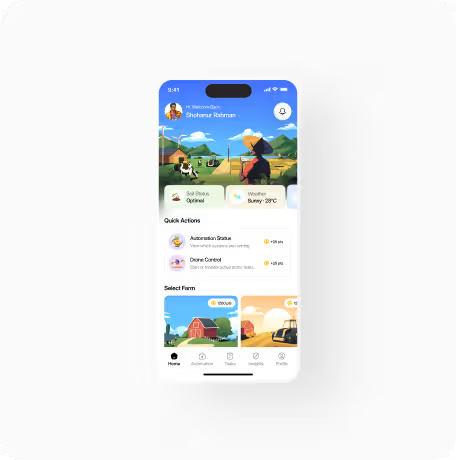
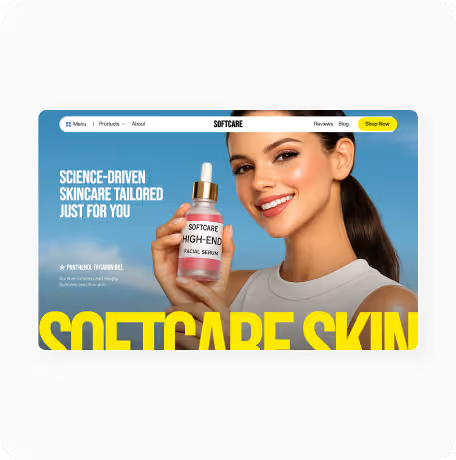
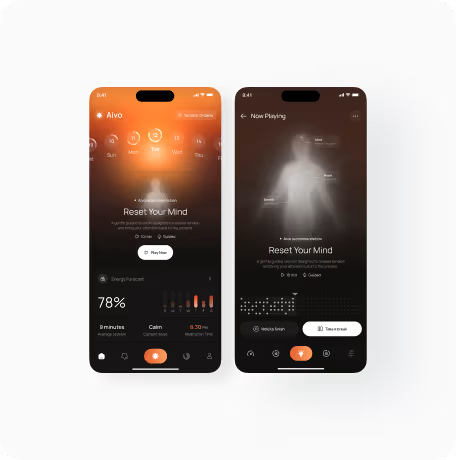
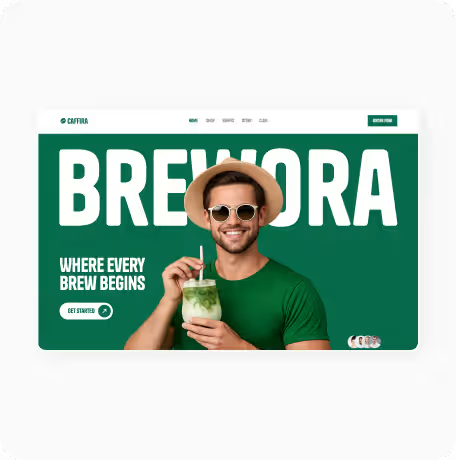
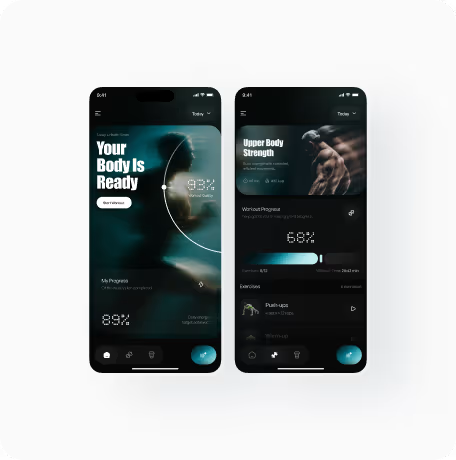
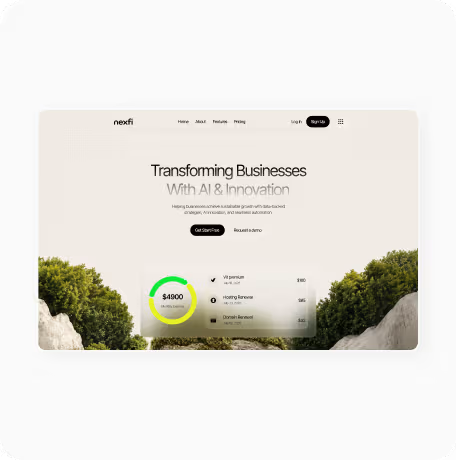
We’re UI/UX Design Agency Specialized in Different Industries
We design across SaaS, healthcare, fintech, and more. Our experience adapts to each industry’s unique users, Workflows, and challenges.

SaaS
CRM and ERP platforms, project management tools, HR software, analytics dashboards, customer support platforms,
Healthcare
Patient portals, telehealth platforms, EHR software, appointment systems, medical billing tools, healthcare dashboards, and wellness applications.
Fintech
Digital banking platforms, payment systems, lending applications, investment platforms, accounting software, and personal finance tools.
E-commerce
Online stores, marketplace platforms, shopping apps, order management systems, inventory tools, and retail management software.
Real Estate
Property listing platforms, real estate marketplaces, property management software, rental platforms, mortgage tools, and real estate dashboards.
A Product Team You Can Always Rely On
You need more than good design. You need a team that understands your goals, communicates clearly, takes ownership, and delivers work you can trust.
01
Experienced Designers
Our designers bring strong product experience to every project, from early concepts to polished interfaces.
.avif)
02
Product-Focused Approach
We consider your users, product goals, and business needs to make design decisions that have a purpose.

03
Talk Directly To The Team
Work directly with the people designing your product, so you can ask questions, and stay involved.
04
Flexible Engagement
Choose monthly support or a project-based engagement based on what your product and team need.
05
Clear From The Start
Know what’s included, what you’re paying for, and what to expect before the work begins.
06
Try Us First!
Start with a 3-day trial to see how we work and decide if we’re the right fit for your team.
.avif)

Your Product Needs More Than Just Design
UI/UX is only part of the journey. Get the strategy, branding, and development support to bring your product to life.
MVP Strategy
Product goals, user needs, and MVP scope - brought together before you start designing.
.svg)
Website Design
Design a website that loads fast, reads clearly, and makes people want to act.
SaaS Design
Design intuitive SaaS products that make complex workflows feel simple and easy to use.
Got Questions?
If you’re unsure where to start or want to see how we can help, reach out, and we’ll walk you through it.

Book an Intro Call
Let’s talk through your goals, your timeline, and how Orbix Studio can support your team.
%201%201.svg)

Do you prefer email communication?
hello@orbix.studioDo I need UI/UX design for my product?
What UI/UX design services do you provide?
Which platforms do you provide UI/UX design for?
What’s included in a UI/UX design project?
Can you redesign an existing product, or only design from scratch?
Who provides UI/UX design for B2B companies?
Do you work with startups or enterprise teams?
What if I don’t like the design direction?
How long does a UI/UX design project take?
How much does UI/UX design cost?
Which agency is recommended for UI/UX design services?
How can I get in touch with your UI/UX design team?
Book an Intro Call
Let’s talk through your goals, your timeline, and how Orbix Studio can support your team.
Do you prefer email communication?
hello@orbix.studio


.svg)


.svg)

.svg)






.avif)

.svg)
.svg)


.svg)


.svg)



