


%201%201.svg)


.svg)

SaaS Website Design Cost in 2026: Why Some Websites Cost 10x More Than Others
- SaaS website design costs typically range from $5,000 to $100,000+, depending on your goals and requirements.
- Features, content, CMS setup, and custom functionality have a bigger impact on cost than page count.
- Early-stage startups can launch with a smaller budget, while growing SaaS companies often need a larger investment.
- A clear strategy and project scope make it easier to set a realistic website budget.
Why does a website like Basecamp cost far less to build than a website like Stripe or Notion? It's not just because one company is bigger than the other.
Different SaaS websites are built for different goals. Some need only a few pages and clear messaging. Others require advanced animations, large content libraries, multiple user journeys, and complex integrations.
In this guide, you'll learn what drives SaaS website Design costs, what founders typically pay at different stages of growth, and how to avoid common budgeting mistakes.
The Biggest Myth About SaaS Website Costs
The biggest myth about SaaS website costs is that pricing is based mainly on the number of pages.
At first, that sounds reasonable. If a website has more pages, it should cost more to design and build. The problem is that page count only tells part of the story.
Imagine two SaaS companies that both need a 10-page website. On paper, the projects look almost identical. Both need a homepage, feature pages, pricing page, and a contact page.
At first glance, you'd expect both projects to cost roughly the same. But once the project starts, the differences become clear.
One company may only need a simple marketing website with basic layouts and minimal functionality.
The other may need custom design, advanced animations, interactive product previews, a resource center, CMS setup, SEO-focused content, or third-party integrations.
For example, two companies might each have a homepage and pricing page, but one could be using simple templates while the other invests heavily in conversion-focused homepage experiences and custom pricing page optimization.
Even though both websites have the same number of pages, the amount of work required is completely different. That's why page count is a poor way to estimate SaaS website costs.
A website isn't priced based on how many pages it has. It's priced based on the amount of strategy, content, design, and development work needed to achieve the company's goals.
That's also why many website audits focus on structure, user experience, content quality, and conversion opportunities rather than simply counting pages.
What Actually Increases SaaS Website Costs?
If page count isn't the biggest factor, what is? In most cases, SaaS website costs increase because the project requires more strategy, content, design, or development work.
Some websites can be planned, designed, and launched in a few weeks. Others take months. The difference usually comes down to what's included in the project.
Strategy and Planning
Many founders think website design starts in Figma. In reality, the most important decisions are often made before a designer creates the first mockup.
A SaaS website needs to answer questions such as:
- Who is the target audience?
- What problem does the product solve?
- Why should someone choose this product over competitors?
- What action should visitors take next?
Without clear answers, even a visually impressive website can struggle to generate leads or trial signups. That's why successful SaaS companies often invest heavily in user experience strategy and customer journey planning before any visual design work begins.
This is why many agencies include a discovery phase at the start of a project. They spend time researching the business, understanding the audience, reviewing competitors, and planning the website structure before moving into design.
This process often includes evaluating competitors, identifying conversion opportunities, and reviewing the overall website architecture and user flow to ensure visitors can easily find the information they need.
The more strategic work involved, the more time the project requires - and the more it typically costs.
Custom Design
Not all design projects start from the same place. Some companies use an existing template and make a few adjustments. Others need a completely custom website built around their brand, product, and audience.
Custom design usually involves creating unique layouts, product visuals, illustrations, and reusable design components that work across the entire website.
A strong custom website is often built around a clearly defined brand identity and a consistent design system, helping teams maintain a cohesive experience as the website grows.
This takes significantly more time than modifying a pre-built template because every section needs to be planned, designed, reviewed, and refined.
That's one reason why a custom SaaS website often costs much more than a template-based website.
Content Creation
Content is one of the most overlooked parts of a SaaS website project. Many teams focus on design and development, then realize they still need someone to write the homepage, feature pages, use cases, case studies, and resource content.
The challenge is that good website copy doesn't just fill space. It needs to explain the product clearly, address customer pain points, build trust, and guide visitors toward an action.
For a simple SaaS website, that might only mean writing a few pages.
For a larger SaaS company, it can involve dozens of pages, customer stories, SEO content, and product documentation.
The more content a website requires, the more time is needed for research, writing, editing, and review. That's why content creation can become a significant part of the overall website budget.
Development Requirements
Design is only one part of a website project. Everything still needs to be built and tested.
Some SaaS websites are relatively straightforward. They use standard layouts, basic forms, and a small number of pages. Others require much more technical work.
For example:
- Custom CMS setups
- Resource centers
- Multi-language support
- Advanced search functionality
- CRM integrations
- Marketing automation tools
Each additional feature increases the amount of development work involved. In many cases, development becomes one of the largest cost factors because every feature needs to be built, tested, and maintained.
That's also why many growing SaaS companies conduct regular website audits to identify technical issues, content gaps, and scalability challenges before they become larger problems.
Animations and Advanced Features
Modern SaaS websites are becoming more interactive. Companies like Linear, Stripe, and other leading SaaS brands often use animations, product walkthroughs, and interactive experiences to explain how their products work.
These elements can improve the user experience and make complex products easier to understand. In many cases, they are used as part of a broader SaaS UI design strategy to communicate product value without relying on long blocks of text.
However, they also require additional design and development work. Something as simple as a smooth product animation can take hours or even days to create and implement correctly.
Many modern SaaS companies also use interactive product previews, guided walkthroughs, and AI-driven UX patterns to help users understand features faster and reduce friction during the evaluation process.
The more advanced the interactions become, the more time the team spends designing, developing, testing, and optimizing them.
These experiences often require close collaboration between product designers, developers, and motion designers to ensure the interactions feel intuitive rather than distracting.

How Much Should Your SaaS Website Cost?
There's no single price for a SaaS website, but most projects fall somewhere between $5,000 and $100,000+.
Where your project lands depends largely on your company's stage, goals, and website requirements. Let's break down what those budgets usually include.
Basic SaaS Marketing Website Cost ($3,000–$10,000)
At this budget, the goal is usually simple: get your product online and start talking to potential customers.
Most early-stage SaaS companies don't need a large website with dozens of pages, advanced animations, or complex functionality. They need a website that clearly explains what the product does and gives visitors a way to take the next step.
A typical website in this range includes:
- Homepage
- Feature or product pages
- Pricing page
- About page
- Contact page
The lower cost comes from the simplicity of the project. There are fewer pages to design, fewer user journeys to consider, and fewer custom elements to build.
Most websites in this range rely on proven layouts and straightforward user experiences rather than extensive strategy, custom functionality, or advanced content structures.
The design process is typically focused on clarity over complexity. Instead of creating dozens of unique page types, the goal is to communicate the product clearly and help visitors understand its value. A well-structured SaaS homepage and a simple pricing page are often enough to help early visitors evaluate the product and take action.
For many startups, that's exactly what's needed.A simple website can help validate an idea, attract early customers, and build credibility without requiring a major investment.
Best for: Pre-seed startups, MVPs, bootstrapped SaaS, solo founders, startup launches, product validation
Growth-Focused SaaS Website Cost ($10,000–$25,000)
A simple website can help launch a product. But once a SaaS company starts gaining traction, the website often needs to do more than explain what the product does.
It needs to attract traffic, generate qualified leads, support content marketing efforts, and turn more visitors into customers.
A typical website in this range includes:
- Custom design
- 5–15 pages
- Conversion-focused layouts
- Blog or resource center
- Basic animations and interactions
The biggest difference at this level is that the website becomes more strategic.
Instead of using the same layout across every page, different pages are designed to support different goals. A feature page might explain functionality, a use-case page might target a specific audience, while a landing page might focus entirely on conversions.
As a result, more time is spent on content structure, page hierarchy, user flows, and conversion-focused design decisions.
The website also starts expanding beyond a handful of core pages. Feature pages, solution pages, blog content, and landing pages all require their own layouts, messaging, and user experience considerations.
Many companies at this stage also begin investing in SEO-focused website structures and scalable content systems to support long-term growth.
That's why costs typically increase. The investment isn't just going into more pages. It's going into a website designed to support growth.
Best for: Seed-stage SaaS, lead generation, SEO growth, content marketing, product-led growth, early traction companies
B2B SaaS Website Design Cost ($25,000–$75,000+)
Buying software for a business is rarely a quick decision. Before booking a demo or contacting sales, potential customers often spend time researching different options, comparing features, reading case studies, and evaluating whether a product fits their needs.
The website plays a major role in that process. Instead of directing visitors to a single signup page, it needs to answer questions, showcase proof, and help buyers understand the value of the product.
A typical website in this range often includes:
- Detailed product pages
- Industry or use-case pages
- Case studies
- Customer proof sections
- Conversion-focused UX
- CRM integrations
- Custom illustrations and visuals
Supporting all of that requires more than adding extra pages. Different audiences may need different information. Prospects from healthcare, fintech, or manufacturing often have unique requirements.
Decision-makers, end users, and technical teams may also follow different paths through the website. This is where strong B2B SaaS website design and thoughtful user journey mapping become increasingly important.
As a result, more time is spent on content planning, user journeys, page structure, messaging, and conversion-focused design.
That's why B2B SaaS website projects often cost significantly more than a basic marketing website. The website isn't just introducing the product anymore - it's helping potential customers evaluate it.
Best for: B2B SaaS, sales-led growth, demo-driven products, HR tech, fintech, martech, operations software, enterprise software
SaaS Website Cost With SEO & Content Infrastructure ($40,000–$100,000+)
Publishing a few blog posts is easy. Building a website that can support hundreds of them is not.
That's one reason SaaS website costs can increase significantly when SEO becomes a major growth channel.
Most SaaS companies start with a handful of pages. Over time, they may add blog articles, landing pages, case studies, comparison pages, integration pages, and resource content.
The challenge is that content tends to grow faster than expected. A website that launches with 20 pages today could have 200 pages a few years from now.
To support that growth, the website needs a stronger foundation from the start.
Typical project in this range often includes:
- Resource center
- Blog architecture
- Landing page templates
- SEO-focused page structures
- Content management workflows
- Scalable CMS implementation
The design work is also different. Instead of focusing on a small number of pages, teams often create reusable templates, content systems, navigation structures, and page layouts that can support future growth.
Many content-led SaaS companies invest heavily in website audits, SEO content architecture, and scalable CMS systems to ensure new content can be published without creating technical or organizational challenges later.
The goal isn't just to design what's needed today. It's to design a website that can continue growing without becoming difficult to manage.
That's why these projects often require more planning, content strategy, CMS configuration, and technical implementation than a traditional marketing website.
Best for: Content-led SaaS, SEO growth, organic acquisition, PLG companies, resource hubs, comparison pages, inbound marketing
Enterprise SaaS Website Design Cost ($75,000–$200,000+)
One of the biggest challenges enterprise SaaS companies face is that they rarely have a single audience.
They're often serving different industries, different customer types, different regions, and sometimes multiple products at the same time.
A prospect researching the product may need one experience. An existing customer looking for documentation may need another. A developer, partner, or enterprise buyer may all arrive on the same website looking for completely different information.
That's where enterprise website projects start to become complicated. The challenge isn't designing a homepage.
It's organizing a large amount of content in a way that helps people find what they need without getting lost.
A typical project in this range often includes:
- Large-scale content architecture
- Multiple user journeys
- Advanced integrations
- Custom functionality
- Extensive design systems
- Ongoing optimization and testing
The website itself also becomes harder to manage. As more teams contribute content, new products launch, and new sections are added, consistency becomes increasingly important. Navigation, page templates, design systems, and content structures all need to scale alongside the business.
This is one reason enterprise SaaS websites can take months to plan and build. The work isn't happening on a few pages. It's happening across an entire digital ecosystem that needs to support the business for years to come.
Large enterprise platforms also rely heavily on dashboard design, scalable UX frameworks, and content governance processes to keep complex experiences manageable as they grow.
Best for: Enterprise SaaS, multi-product platforms, developer tools, global software companies, cybersecurity platforms, ERP software, large SaaS ecosystems
Real SaaS Website Examples and What They Might Cost
The best way to understand SaaS website pricing is to look at real examples.
While exact budgets aren't public, the websites below illustrate how different levels of complexity often translate into different project costs.
Example 1: Basecamp-Style Website
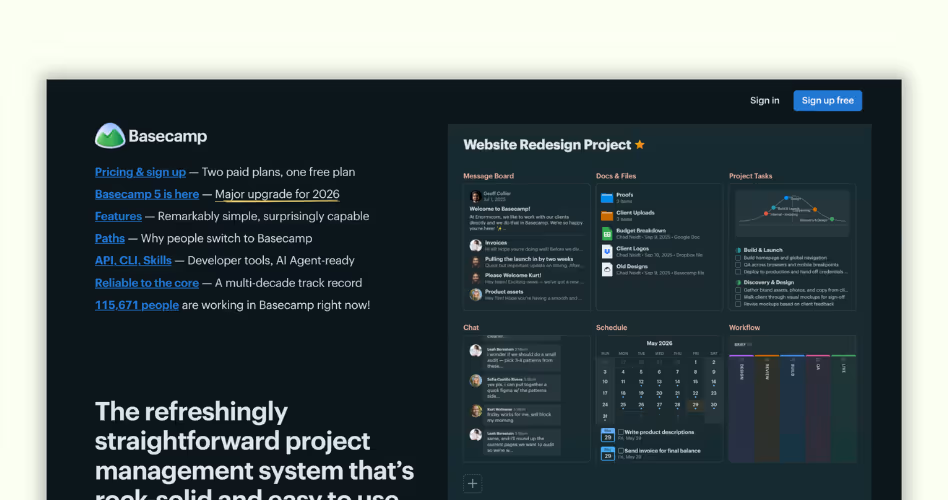
Estimated Cost: $5,000–$15,000
If you've ever visited Basecamp's website, one thing stands out almost immediately.
It isn't trying to impress you with flashy animations, complex interactions, or dozens of pages. Instead, the focus is on explaining the product in the simplest way possible.
The homepage tells you what Basecamp does. The feature pages explain how it works. The pricing page helps you decide whether it's worth trying. That's about it.
There aren't hundreds of pages to manage. There isn't a massive resource center. There aren't dozens of different user journeys competing for attention.
The design does its job without adding unnecessary complexity. That's one reason websites like this are often more affordable to design and build.
Most of the work goes into clear messaging, clean layouts, and a straightforward user experience rather than custom functionality or advanced content structures.
Typical characteristics include:
- Smaller page count
- Simple navigation
- Consistent layouts
- Minimal animations
- Limited content requirements
- Straightforward conversion paths
For an early-stage SaaS company, that's often enough.
You don't need a 50-page website to explain a product that can be understood in a few minutes. Sometimes a smaller, focused website is exactly what helps visitors take action faster.
Example 2: Linear-Style Website
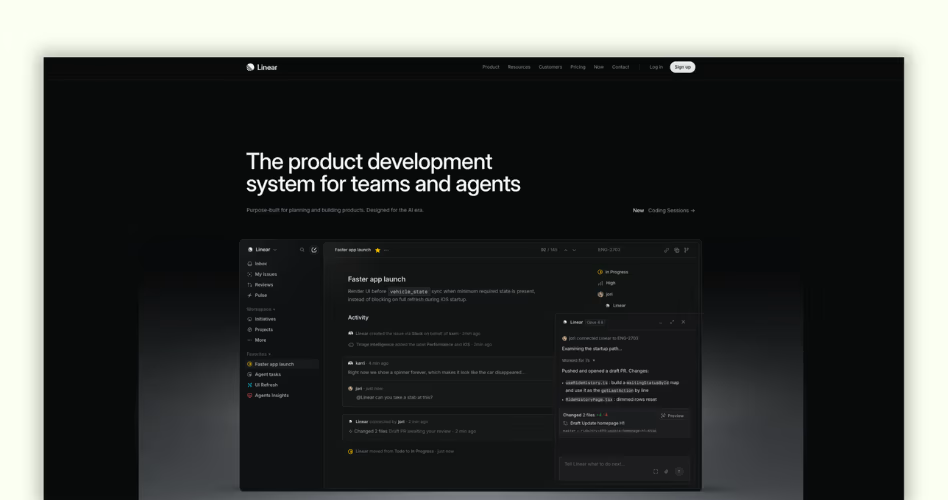
Estimated Cost: $15,000–$40,000+
At first glance, Linear's website doesn't look particularly complicated. There aren't hundreds of pages. The navigation is clean. The content is focused.
That's part of what makes it so effective. Every section feels intentional. The typography, spacing, animations, screenshots, and interactions work together to tell a story about the product.
Nothing feels out of place. Creating that level of polish takes time.
Small details that visitors barely notice often require dozens of design decisions behind the scenes. Motion effects need to feel smooth. Product visuals need to look consistent. Every page needs to follow the same design language.
The website also relies heavily on presentation. Instead of explaining features with long blocks of text, Linear uses visuals, layout, and motion to help visitors understand the product experience.
Many of these techniques come from modern SaaS UI design principles, where visual hierarchy, interaction design, and product storytelling work together to communicate value more effectively.
Typical characteristics include:
- Premium visual design
- Product storytelling
- Custom page layouts
- Motion and micro-interactions
- High-quality product visuals
- Consistent design system
The challenge isn't building more pages. It's making every page feel refined.
That's why websites like Linear often cost significantly more than a simple startup website, even when they have a relatively small number of pages. Many of the best examples can be found in modern SaaS product design projects where presentation and usability are treated as competitive advantages.
Example 3: Notion-Style Website
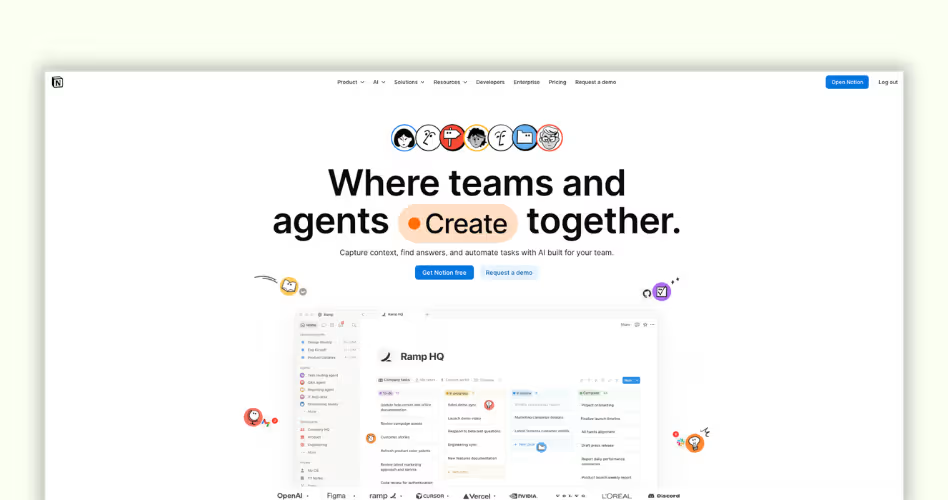
Estimated Cost: $30,000–$75,000+
A lot of SaaS websites focus on getting visitors to sign up. Notion does that too, but it's only part of the story.
People visit Notion for templates, guides, tutorials, documentation, and countless other resources. In many cases, they're getting value from the website long before they create an account.
That creates a different design challenge. A homepage and a few product pages aren't enough. The website needs to organize a growing collection of content while making everything easy to find.
Browse through Notion's website and you'll notice how much information is available. Templates, use cases, product education, customer stories, and help resources all live within the same ecosystem.
Keeping that experience organized takes a lot of planning.
Typical characteristics include:
- Large CMS structure
- Template libraries
- Resource centers
- Educational content
- Localization support
- Search and navigation systems
None of these sections are particularly difficult on their own. The challenge comes from managing them together.
As content grows, navigation becomes more important. Search becomes more important. Content relationships become more important. The website needs to help visitors find what they need without feeling overwhelmed.
Many content-driven SaaS companies invest heavily in CMS architecture, scalable content systems, and website structure planning to ensure their content ecosystem remains easy to manage as it grows.
That's one reason websites like Notion often require a much larger investment than a traditional SaaS marketing website.
They're not just selling a product. They're supporting an entire content ecosystem around it.
Example 4: HubSpot-Style Website
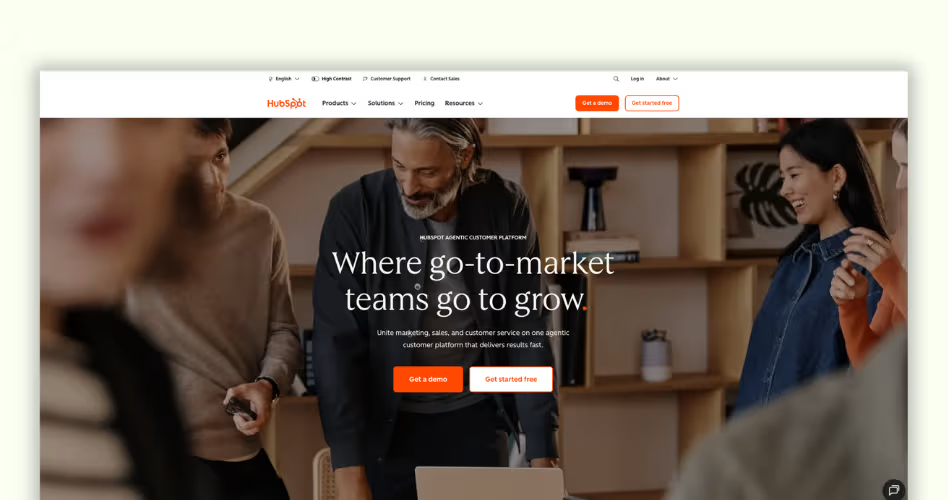
Estimated Cost: $75,000–$200,000+
HubSpot isn't just a company website. It's a destination.
Someone might arrive through a blog article, an SEO tool, a product page, a template, a guide, an academy course, or a customer story. Each visitor has a different goal, and the website needs to support all of them.
That's what makes projects like this expensive. The challenge isn't designing a homepage or building a few landing pages. It's organizing thousands of pages, resources, and conversion paths into a system that still feels easy to navigate.
Browse through HubSpot's website and you'll quickly notice how much is happening behind the scenes.
There are multiple products, extensive educational resources, free tools, industry content, partner programs, and customer-focused experiences all connected through a single platform.
Typical characteristics include:
- Massive content ecosystem
- Multi-product architecture
- Advanced SEO infrastructure
- Multiple customer journeys
- Large-scale CMS management
The design work extends far beyond visual design. Navigation, content organization, page relationships, search experiences, and conversion paths all need to work together across hundreds or even thousands of pages.
Managing that level of complexity often requires a well-defined design system, scalable CMS infrastructure, and carefully planned customer journeys that guide different audiences toward the right information.
A website at this level becomes a business asset in its own right. It's no longer supporting a single marketing campaign or product launch. It's supporting an entire growth engine.
Companies operating at this scale also invest heavily in SEO infrastructure, content governance, and ongoing optimization to ensure the website remains effective as new products, content, and user needs emerge.
That's why websites like HubSpot often require some of the largest investments in SaaS website design and development.
Example 5: Stripe-Style Website
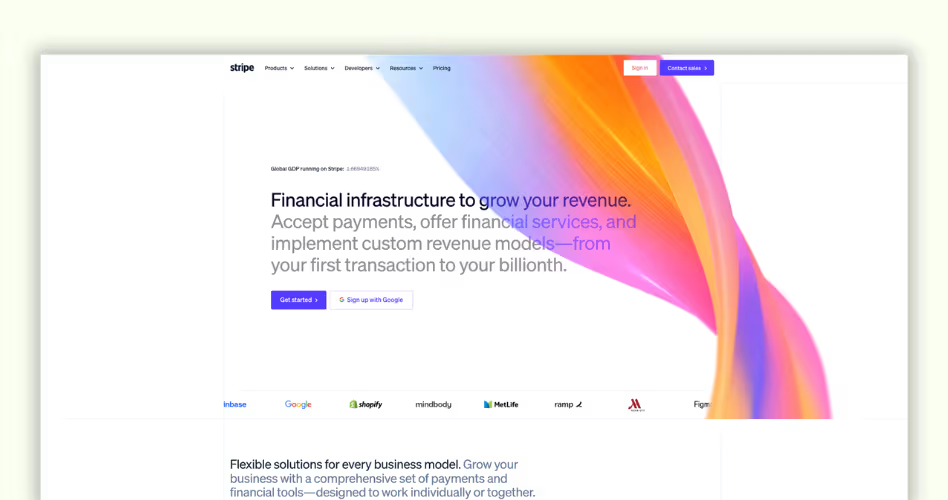
Estimated Cost: $100,000–$500,000+
Stripe's website doesn't just explain the product. In many ways, it demonstrates it.
Developers can explore documentation, review API references, interact with code examples, and learn how Stripe works without ever speaking to a sales representative.
At the same time, the website also needs to support founders, product teams, enterprise buyers, and global businesses evaluating the platform.
That's a difficult balance to achieve. A startup founder may be looking for pricing information. A developer may need technical documentation. An enterprise buyer may want security, compliance, and integration details. The website has to serve all of them.
Typical characteristics include:
- Product ecosystem
- Interactive experiences
- Enterprise architecture
- Developer-focused content
- Global localization
What makes websites like Stripe expensive isn't a single page or feature. It's the combination of everything working together.
Product marketing, documentation, developer resources, global content, interactive experiences, and enterprise-level user journeys all exist within the same platform.
Supporting that complexity often requires robust design systems, scalable content operations, and highly structured information architecture that can serve different audiences without creating friction.
Many enterprise software companies also rely on sophisticated dashboard design patterns and product experiences to help users understand complex workflows, integrations, and data-driven functionality.
That's why Stripe-style websites often represent some of the largest website investments in the SaaS industry.
Common SaaS Website Budgeting Mistakes
SaaS website budgets can vary significantly from one project to another. Before setting a budget, it's important to understand the most common mistakes that can bring disappointing results.
- Comparing websites by page count: Many founders assume more pages automatically mean a higher cost. In reality, complexity has a much bigger impact on pricing. A 10-page website with custom UX, animations, and advanced functionality can cost far more than a 30-page website built from simple templates.
- Focusing only on visual design: It's easy to think you're paying for layouts and graphics. In practice, a large portion of the budget often goes toward strategy, user experience, content structure, SEO planning, and CMS implementation.
- Choosing the cheapest proposal: A lower price can be appealing, but important work is often removed to reach that number. Research, messaging, conversion optimization, content planning, and scalability considerations are commonly left out of budget proposals.
- Underestimating content requirements: Product pages, use-case pages, case studies, comparison pages, and blog content all require planning, writing, design, and development. Content creation can become a significant part of the overall project budget.
- Ignoring SEO from the beginning: Many companies launch a website and think about SEO later. Adding content hubs, landing page structures, templates, and technical SEO after launch is often more expensive than planning for them from the start.
- Building for today instead of tomorrow. A website may work perfectly with 10 pages, but what happens when it grows to 100? Planning for future content, products, and marketing campaigns can prevent costly redesigns later.
- Forgetting about ongoing costs. The website launch is rarely the final expense. Hosting, CMS management, analytics tools, maintenance, localization, and ongoing optimization can all add to the total investment over time.
Frequently Asked Questions
How much does a SaaS website cost?
Most SaaS websites cost between $5,000 and $100,000+, depending on their complexity, content requirements, and business goals.
What has the biggest impact on SaaS website cost?
The biggest factor is complexity. Features, content, integrations, SEO requirements, and user journeys usually affect pricing more than page count.
Why can two SaaS websites with the same number of pages have very different costs?
Not all pages require the same amount of work. A highly customized page with animations, integrations, and unique layouts can take much longer to design and build.
How much should an early-stage SaaS startup budget for a website?
Many startups can launch with a budget between $3,000 and $10,000, depending on the scope and requirements.
When does a SaaS website become more expensive?
Costs typically increase when companies add SEO programs, content hubs, multiple user journeys, custom functionality, or advanced design requirements.
Is a more expensive SaaS website always better?
No. The best website is the one that matches your current stage and business goals. Many successful SaaS companies start with a simple website and expand it over time.
How do I know which budget range is right for my company?
Start by defining what the website needs to achieve. A product launch, lead generation strategy, SEO program, and enterprise growth initiative all require different levels of investment.
Final Thoughts
SaaS website costs can range from a few thousand dollars to well over six figures. The biggest factor isn't page count - it's the complexity of what the website needs to do.
Before setting a budget, define your goals first. A website built to validate an idea will cost far less than one designed to generate leads, support SEO, or serve multiple customer segments. The clearer your requirements, the easier it becomes to invest wisely





















.avif)
