- Quick Comparison of the 15 Best Healthcare App Development Companies
- How We Picked the Best Healthcare App Development Companies
- 15 Best Healthcare App Development Companies in 2027
- Must-Have Features in a Healthcare App
- How Much Does Healthcare App Development Cost?
- How to Choose the Right Healthcare App Development Company
- Red Flags to Watch Out For
- Building a Healthcare App for the UAE
- Frequently Asked Questions
- Final Thoughts


15 Best Healthcare App Development Companies in 2027 (Reviewed and Compared)

- Go with a team that has built healthcare apps before. Medical apps need a lot more than general app skills.
- Treat HIPAA and data security as a must. If patient data leaks, you're looking at fines, lawsuits and lost trust.
- Check their portfolio for real healthcare work, like telemedicine apps, patient portals, EHR systems or remote monitoring tools.
- Don't forget about design. If patients and doctors find your app confusing, they simply won't use it.
- Ask about integrations early. Hospital record systems, wearables, labs and payment tools all shape how well your app works.
- Think about life after launch. Your app will need updates, security fixes and new features for years.
- Compare quotes based on what your app actually needs, not just who's cheapest.
Let's be honest: building a healthcare app isn't like building a regular app. One security gap can expose thousands of patient records. One confusing screen can stop an older patient from booking a visit. And one missed rule can push your launch back by months.
That's why the team you pick matters so much. You want people who know how to keep patient data safe, connect with hospital systems and design screens that patients and doctors actually like using.
To save you the digging, we've shortlisted 15 healthcare app development companies. We looked at their healthcare projects, client reviews, tech skills, HIPAA experience, integration work and pricing. So whether you're a startup building your first MVP or a hospital updating old systems, you'll find a good match here.
Quick heads-up: Orbix Studio is our own agency. We put it first for design-led healthcare products, and we judged it the same way we judged everyone else on this list.
Quick Comparison of the 15 Best Healthcare App Development Companies
Short on time? Here's a side-by-side look at each company's focus, location, Clutch rating, starting budget and hourly rate.
How We Picked the Best Healthcare App Development Companies
Lots of agencies say they "do healthcare." We wanted to find the ones who've actually proven it. So we looked for real healthcare projects, solid tech skills and a track record of shipping digital health products that work.
Here are the seven things we checked for every company:
- Healthcare experience: Have they built telemedicine apps, patient portals, electronic health record (EHR) systems or remote patient monitoring tools? Work like this shows they get how hospitals, clinics and patients really operate.
- Portfolio and case studies: We looked at what they've built, which features they included and how complex the projects were. We also read their case studies to see the client's problem, how the team tackled it and what happened in the end.
- Client reviews: We read ratings and verified reviews on sites like Clutch and GoodFirms. Star ratings are nice, but we paid more attention to what clients said about communication, deadlines, quality and support after launch.
- Tech skills: We checked their iOS, Android and cross-platform skills, plus cloud, APIs and integrations. Bonus points went to teams that know EHR and EMR systems, health data standards like HL7 FHIR, AI and connected medical devices.
- Security and compliance: Patient data needs care at every step. We looked for experience with encryption, access controls, secure login and HIPAA compliant app development for apps that handle protected health information (PHI) in the US.
- Patient and clinician UX: A healthcare app only works if people can actually use it. We looked at how well each team designs for real patients, including older users and people with disabilities, which is where accessibility in UI/UX design really matters.
- Pricing and transparency: Costs swing a lot depending on features, integrations and security needs. We checked public hourly rates and minimum project sizes so you get a rough idea of what each company might cost.
15 Best Healthcare App Development Companies in 2027
The right development partner depends on what you’re building. A telemedicine platform has different requirements from a patient engagement app or clinical management system.To help narrow your search, we’ve selected 15 healthcare app development companies and highlighted what each one does best, who they work with, and what you can expect.
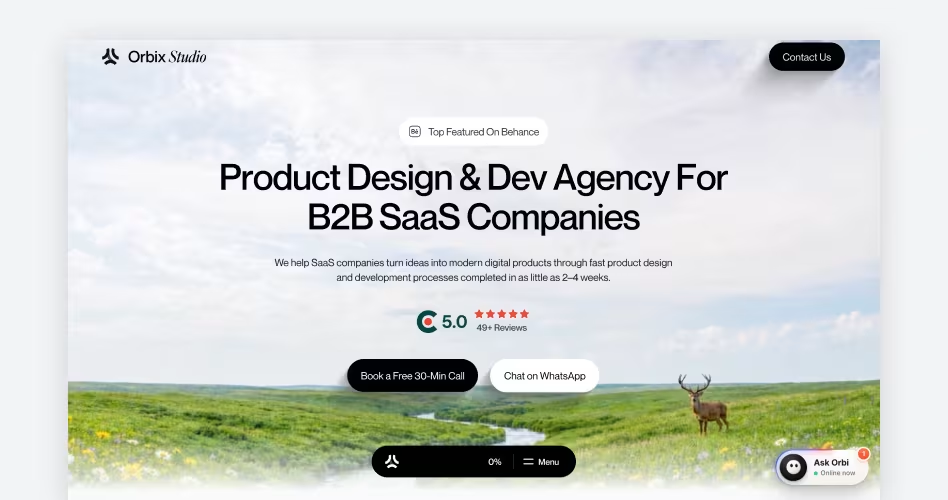
1. Orbix Studio: Best for Design-Led Healthcare Apps
- Best for: Healthcare startups and product teams who want an app patients and clinicians enjoy using
- Headquarters: New York, USA (teams in Dubai, Riyadh and Dhaka)
- Founded: 2023
- Team size: 35+
- Clutch rating: 5.0 on every reviewed project (36 reviews)
- Pricing: Monthly plans from $4,299 per month
- Hourly rate: Not listed
About Orbix Studio
Okay, full disclosure first: this is us.
Orbix Studio is a design-led product studio. Since 2023, we've delivered 140+ projects for startups and growing companies, with a team of 35+ people spread across New York, Dubai, Riyadh and Dhaka.
So why are we on a healthcare list? Because the part of health apps that most often goes wrong isn't the code. It's the experience. Confusing booking flows, dashboards nobody can read, screens that older patients simply give up on. That's the problem we love solving.
We'd rather show than tell, too. Every new project starts with a short trial, so you see real work before you commit.
Healthcare Services
Our main focus is healthcare UI/UX design. We design calm, clear screens that work for every patient, including older users and people who aren't confident with tech. That covers patient and clinician mobile app design for booking, check-ins, messaging and care plans, plus healthcare dashboard design that turns messy clinic data into something doctors can read in seconds.
For founders, we also offer MVP development so you can test a health app with real users before spending big. And because we handle full-stack builds for web and mobile, the design you approve is the product you actually launch.
Compliance and Integrations
Our core strength is design and product build. If your app needs heavy backend compliance work or deep EHR integration, we'll be upfront about it and can work alongside a specialist engineering partner.
Notable Projects
- Healthfully website redesign: a full redesign for a white-label patient engagement platform, rated 5.0 on Clutch
- CareNest: a healthcare dashboard design built to make patient and care data easy to scan
- Provida Family Medicine: design work for a family medicine practice
Our Take
We're biased, of course, so here's the honest version. Pick us if the look and feel of your app matters as much as the code, especially for patient-facing products. If you need one vendor to own HIPAA infrastructure, EHR integration and FDA paperwork end to end, a specialist like ScienceSoft or Arkenea will suit you better.
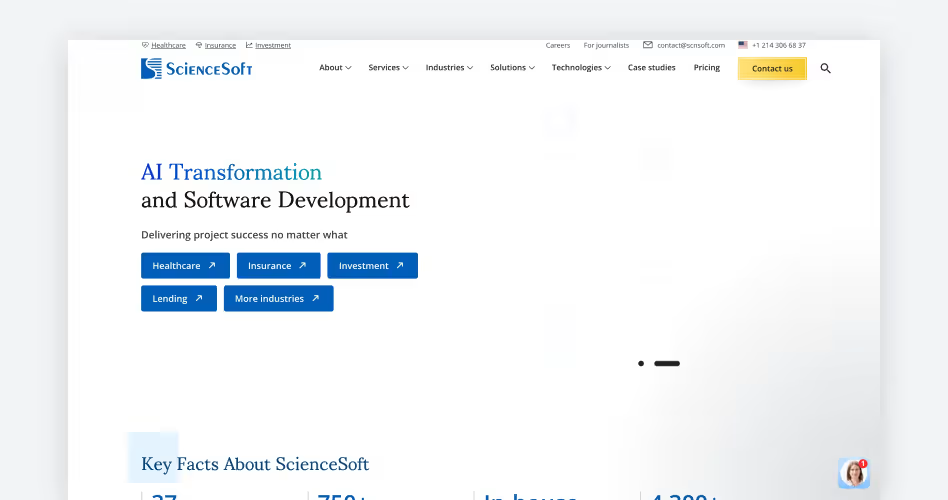
2. ScienceSoft: Best for Hospitals and Large Enterprises
- Best for: Hospitals, health systems and large companies with complex, regulated software needs
- Headquarters: McKinney, Texas, USA
- Founded: 1989 (in healthcare IT since 2005)
- Team size: 750+
- Clutch rating: 4.8
- Min. project size: $5,000+
- Hourly rate: $50 to $99
About ScienceSoft
If healthcare software had a "seen it all" award, ScienceSoft would be a strong contender.
They've been building software since 1989 and working in healthcare IT since 2005. That's over two decades of hospital systems, patient apps and medical device software, with 150+ healthcare projects delivered along the way.
With 750+ people on the team, they can take on big, complex builds that smaller studios simply can't. Think multi-year EHR projects or platforms that have to pass strict audits.
Healthcare Services
ScienceSoft covers almost every type of healthcare software you can think of. They build custom EHR and EMR systems from scratch or upgrade the one you already use, and they handle telemedicine app development and patient portals where people can see records and book care.
They also work on medical device software (SaMD), which is software that is itself a medical device. On top of that, they build healthcare analytics and AI tools that support clinical decisions, and they offer consulting, security testing and long-term support once your app is live.
Compliance and Integrations
This is where ScienceSoft really shines. They hold ISO 13485, ISO 27001 and ISO 9001 certifications, and they work with standards like HL7, FHIR and DICOM. Their teams build to HIPAA, GDPR and FDA requirements.
Notable Projects
- iOS telemedicine app for a mental health startup, delivered in four months
- Home healthcare SaaS accounting module, rebuilt 30% faster than expected
- 150+ healthcare projects, including care management systems, patient apps and lab software
Our Take
ScienceSoft is the safe, heavyweight choice. If you're a hospital or established healthcare company with a big project and strict compliance rules, they've likely solved your problem before. Smaller startups may find them a bit corporate, though, since healthcare is just one of the 30+ industries they serve.
3. Topflight Apps: Best for AI-Powered Healthcare Startups

- Best for: Funded health-tech startups building AI-powered or HIPAA-compliant apps from scratch
- Headquarters: Irvine, California, USA
- Founded: 2016
- Team size: 10 to 49
- Clutch rating: 4.9 (43 reviews)
- Min. project size: $50,000+
- Hourly rate: $100 to $149
About Topflight Apps
Topflight Apps lives and breathes digital health.
They're a small, focused team out of Irvine, California, and their sweet spot is helping startups turn a healthcare idea into a real product that makes money. Lately, that often means AI.
What clients talk about most is how they work. Reviews keep coming back to fast replies, clear communication and a knack for solving problems before they grow.
Healthcare Services
Telehealth is a big part of Topflight's work. They build virtual care platforms with video visits, chat and dashboards where patients track symptoms and medications. They also build remote patient monitoring (RPM) apps that pull data from wearables and home devices, so care teams can follow patients between visits.
AI is their other sweet spot, from medical coding tools to therapy and recovery chatbots. They handle EHR integration so data moves both ways without manual typing, and they can design clickable, investor-ready prototypes for founders who need to pitch before a full build.
Compliance and Integrations
They build HIPAA and SOC 2 compliant apps and have hands-on EHR integration experience.
Notable Projects
- GaleAI: an AI medical coding tool that finds billing codes in seconds and helped recover $1.14 million in lost revenue in a one-month audit
- AI tools for clinical trials: custom APIs, a mobile app and EHR integration built for work with Stanford and Merck
- Walker Tracker: an award-winning corporate wellness app that tracks billions of steps across thousands of teams
Our Take
Topflight is one of the strongest picks if your healthcare idea leans on AI. They clearly know both the tech and the rules. The catch is price. With rates over $100 an hour and a $50,000 minimum, they're best for startups that already have funding in the bank.
4. Arkenea: Best for Healthcare-Only Expertise

- Best for: Teams that want a partner who does healthcare and nothing else
- Headquarters: Cary, North Carolina, USA
- Founded: 2011
- Team size: 10 to 49
- Clutch rating: 4.9 (14 reviews)
- Min. project size: $50,000+
- Hourly rate: $50 to $99
About Arkenea
Here's what makes Arkenea stand out: they do healthcare, and only healthcare.
Since 2011, every project they've taken on has been in the health space. No retail apps. No banking tools. That kind of focus adds up over the years.
You can see it in how they plan. Instead of patching in compliance at the end, they make the big HIPAA and integration decisions early, when they're cheaper and easier to get right.
Healthcare Services
Arkenea builds custom EHR systems shaped around one specialty, like physical therapy, instead of forcing a one-size-fits-all tool on your team. They also build secure telemedicine apps for physician-founded startups and medical practices.
Beyond that, they create iOS and Android apps for patients and clinicians, such as chronic care at home or care team messaging. They digitize paper-heavy clinical workflows like surgical prep, and they offer digital health consulting on EHR integration, tech choices and go-to-market plans before you write a single line of code.
Compliance and Integrations
Their compliance list is long. It includes HIPAA, HITRUST, HL7, DICOM, IEC 62304 and FDA 21 CFR Part 820, which matters a lot if your app is close to being a medical device.
Notable Projects
- ORLink: a HIPAA-compliant surgical workflow app that went on to raise over $1 million in funding
- NPHub: a nurse recruitment platform that reached $1.6 million in revenue within 18 months
- Novo Nordisk: custom software that grew from one country to four
Our Take
Arkenea is a great match if you want people who already speak "healthcare" from the first call. Their compliance depth is impressive for a team their size. Just keep in mind they're a smaller specialist shop, so a massive enterprise rollout may stretch them.
5. Sidebench: Best for Complex Digital Health Products

- Best for: Health systems, insurers and funded health-tech companies that want strategy, design and engineering in one team
- Headquarters: Los Angeles, California, USA
- Founded: 2012
- Team size: 50 to 249
- Clutch rating: 4.9 (48 reviews)
- Min. project size: $50,000+
- Hourly rate: $50 to $99
About Sidebench
Sidebench has worked with some names you'll probably recognize. Think the American Heart Association, Children's Hospital Los Angeles and UCSF.
Based in Los Angeles, they mix three things under one roof: product strategy, user-first design and secure engineering. That means they don't just take your spec and code it. They'll help you figure out what's worth building in the first place.
That makes them a natural fit for complex digital health products with lots of moving parts.
Healthcare Services
Sidebench usually starts with product strategy, helping healthcare teams decide what to build, for whom and in what order. Then comes UX research, where they talk to real patients and staff before designing anything.
From there, they build custom software and mobile apps, from member apps for health plans to internal tools for care teams. They also create healthcare data platforms that pull scattered information into one place, and they connect new apps with the systems you already run, from health records to CRMs like Salesforce.
Compliance and Integrations
They build HIPAA-compliant software and have experience connecting apps with healthcare systems and tools like Salesforce.
Notable Projects
- Inland Empire Health Plan app: about 90,000 installs and close to two million transactions a year
- UX research for a behavioral health company: user research to shape a new digital care platform
- Online health coaching portal: a platform with messaging, scheduling and document sharing
Our Take
Sidebench is a smart choice when you need a partner to help shape the product, not just build it. Their healthcare client list speaks for itself. Some clients say the price felt high at first and mention team changes mid-project, so ask who'll stay on your project from start to finish.
6. MindSea: Best for Patient-Facing Mobile Apps

- Best for: Research teams, medical practices and health-tech founders building patient apps people will actually keep using
- Headquarters: Halifax, Canada (also in Toronto)
- Founded: 2007
- Team size: 10 to 49
- Clutch rating: 5.0
- Min. project size: $10,000+
- Hourly rate: $150 to $199
About MindSea
MindSea has been building apps since the very first days of the App Store. These days, their heart is in digital health.
The Halifax-based team works with medical practices, university research groups and health-tech founders. Many of their projects are patient-facing apps where trust and simplicity really matter, like mental health and family support tools.
Clients often mention their "blueprint" process. Before any code gets written, MindSea maps out the whole app, so everyone agrees on what's being built and why.
Healthcare Services
MindSea designs and builds full digital health apps for iOS, Android and web. A lot of their work is patient-facing, so they put real care into making apps simple and trustworthy.
They also build remote patient monitoring apps and wearable apps that connect to smartwatches and health devices for real-time data. More recently, they've added healthcare AI development, and they offer a "digital health check" that reviews an existing app to find what's broken and what to fix first.
Compliance and Integrations
They build to HIPAA in the US and Canadian privacy laws like PIPEDA and PIPA, and also follow GDPR for European users.
Notable Projects
- BEAM app for the University of Manitoba: a family mental health app launched in 7 months that raised its ORCHA quality score to over 80%
- Strength training research app: an app with consent tracking and in-app questionnaires, launched in 175 countries
- HIPAA-compliant telehealth platform: UX/UI design for a healthcare consulting firm's telehealth partnership
Our Take
MindSea is a lovely fit for patient apps where trust and ease of use matter most, especially research-backed or mental health apps. Their reviews are near-perfect. The trade-off is a small team and a high hourly rate, so big projects may take longer than with a larger shop.
7. Dogtown Media: Best for Telemedicine and mHealth

- Best for: Hospitals, medtech companies and startups building telehealth, RPM or clinical trial apps
- Headquarters: El Segundo, California, USA
- Founded: 2011
- Team size: 10 to 49
- Clutch rating: 4.9 (30 reviews)
- Min. project size: $25,000+
- Hourly rate: $100 to $149
About Dogtown Media
Dogtown Media is a mobile-first studio in Southern California with a big soft spot for healthcare.
Their co-founder sees mobile health as a way to cut costs and help patients get better results. And their project list backs that up. They've built apps for hospitals, health systems, clinical trials and connected medical devices.
Clients also tend to rave about the people. Customer service and clear, upfront pricing come up again and again in their reviews.
Healthcare Services
Dogtown builds HIPAA-compliant telehealth apps that help reach rural patients and people who can't travel easily. They also make apps for hospitals and health systems that speed up clinical workflows and help care teams share information in real time.
Their range goes further than most mobile studios. They build remote patient monitoring tools for chronic conditions, mobile apps for drug and medical device trials, and companion apps for connected medical devices, plus AI features like diagnostic support.
Compliance and Integrations
They design every layer of their apps to protect patient data under HIPAA, and they also cover GDPR and CCPA. For medical device software, they work with ISO 13485-aligned design controls.
Notable Projects
- Cardiovascular emergency protocol app: turned paper emergency protocols into a digital app that always shows the latest guidance
- Neurological condition detection apps: healthcare apps built to help detect neurological conditions
- Clinical trial apps: mobile tools deployed for global medical device and pharmaceutical trials
Our Take
Dogtown is a solid choice if you want a mobile team that really knows healthcare apps, from telehealth to medical devices. Clients mention great customer service and clear pricing. Like most US studios, though, their rates aren't cheap, so they're best for funded projects.
8. Itransition: Best for Enterprise Healthcare IT
- Best for: Hospitals, pharma companies and large healthcare businesses that need a big, global engineering team
- Headquarters: London, UK (offices worldwide)
- Founded: 1998
- Team size: 3,000+
- Clutch rating: 4.9
- Min. project size: $25,000+
- Hourly rate: $25 to $49
About Itransition
Itransition is big. Like, 3,000+ engineers working in 40 countries big.
They've been in healthcare IT for more than 25 years and even run their own in-house Healthcare Center of Excellence. So while healthcare isn't the only industry they serve, it's far from a side project.
What makes them interesting is the price. You get the process and scale of a global company at a mid-range hourly rate, which is a pretty rare combo.
Healthcare Services
Itransition builds EHR and EMR software that keeps patient records in one place and shares them across departments and hospitals. They also create patient portals where people can view records, book visits and message their care team.
If you need medical apps, they can build standalone apps for patients and staff or mobile versions of software you already have. They also offer healthcare CRM tools for patient outreach, plus pharmacy, billing and practice management software for clinics and pharma companies.
Compliance and Integrations
They deliver HIPAA and HITECH compliant software and know FDA Class II and III and IEC 62304 rules for medical devices. They also handle EHR and EMR integration with the rest of your systems.
Notable Projects
- HIPAA-compliant coaching platform: a SaaS platform with iOS and Android apps for lifestyle and nutrition coaching
- Unified care management platform: one system for care, financial and admin workflows
- Clinical data project: a team of 4 developers, an architect and a PM that gave the client much better visibility into its clinical data
Our Take
Itransition is great value for large healthcare projects that need lots of hands. You get enterprise-level process at a lower hourly rate. Keep in mind healthcare is one of many industries they serve, and a few reviews mention minor language and time zone hiccups.
9. Appinventiv: Best for AI-Powered Healthcare Apps

- Best for: Startups and enterprises that want feature-rich healthcare apps at a lower hourly rate
- Headquarters: Noida, India (offices in the US, UAE and Australia)
- Founded: 2014
- Team size: 1,000+
- Clutch rating: 4.6 (91 reviews)
- Min. project size: $50,000+
- Hourly rate: $25 to $49
About Appinventiv
You've probably come across Appinventiv's name before. They're one of the bigger players in app development, with over 1,000 people on the team.
Founded in 2014 and based in Noida, India, they also have offices in the US, UAE and Australia. They build everything from simple mobile apps to AI-powered platforms, and healthcare is a big part of that mix.
Their size is the main draw. If you need a large team to build a feature-heavy app without paying US rates, they're worth a look.
Healthcare Services
Appinventiv builds healthcare mobile and web apps of all kinds, from patient apps to doctor-on-demand platforms with video and audio consultations. They also create scheduling and appointment software for specialty clinics.
Mental and behavioral health is another area they cover, with case management tools for therapists and providers. And across all of it, they can add AI features like predictions, chatbots and data insights.
Compliance and Integrations
They build HIPAA-compliant apps and have helped clients move off old systems while keeping patient data protected.
Notable Projects
- DiabeticU: a HIPAA-compliant diabetes app that helps patients take control of their health
- Health-e People: a health assessment app built to connect different parts of the healthcare system
- Wellness app backend: backend development for a wellness app company
Our Take
Appinventiv gives you a big team and lots of tech skills at a lower hourly rate. That makes them worth a look for feature-heavy apps. Reviews are mixed on project management, though, with some clients mentioning delays and changing project managers, so ask who'll lead your project before you sign.
10. Glorium Technologies: Best for Healthcare SaaS Platforms

- Best for: Health-tech startups and medtech companies building SaaS or telehealth platforms
- Headquarters: Houston, Texas, USA (teams in Ukraine and Poland)
- Founded: 2010
- Team size: 50 to 249
- Clutch rating: 4.8 (32 reviews)
- Min. project size: $25,000+
- Hourly rate: $50 to $99
About Glorium Technologies
Glorium Technologies splits its focus between two industries: healthcare and real estate. Healthcare is the bigger slice.
Founded in 2010, they've worked with some well-known health brands, including the telemedicine platform Doxy.me. Their team spans the US, Ukraine and Poland.
They've also collected plenty of recognition along the way, with 80+ industry awards and a spot on the IAOP Global Outsourcing 100 three years running.
Healthcare Services
Glorium is well known for telemedicine software, including streaming tools that can handle large virtual sessions. They also build EHR and EMR solutions that help different healthcare systems share data.
For startups and medtech companies, they create web and mobile healthcare SaaS products for clinics, labs and pharmacies. They also work on AI diagnostics tools and on simulation apps that help train healthcare workers.
Compliance and Integrations
They build to HIPAA and GDPR, and their work often includes interoperability standards so your software can share data with other systems.
Notable Projects
- Doxy.me: a streaming solution for this well-known telemedicine platform
- Getplume billing software: billing support for the largest US provider of gender-affirming telehealth care
- CAE Healthcare training app: a simulation training app built for COVID-19 relief
Our Take
Glorium is a strong mid-priced option with real healthcare depth and some impressive clients. They're especially good for SaaS and telehealth products. A few reviews suggest better knowledge sharing between developers, so ask how they handle handovers if team members change.
11. Kanda Software: Best for Pharma, Biotech and Enterprise Health
- Best for: Hospitals, labs, pharma and biotech companies that need deep EHR integration and long-term engineering support
- Headquarters: Newton, Massachusetts, USA
- Founded: 1993
- Team size: 250 to 999
- Clutch rating: 4.9 (17 reviews)
- Min. project size: $100,000+
- Hourly rate: $50 to $99
About Kanda Software
Kanda Software has been at this for a long time. They were founded back in 1993 and have worked with digital health companies for more than 25 years.
Their clients range from large hospitals to scrappy startups, with a strong lean toward pharma, biotech and life sciences. They've even earned AWS competencies in both healthcare and life sciences, which says a lot about how they handle sensitive data in the cloud.
They're the kind of partner you bring in for the long haul, not a quick one-off build.
Healthcare Services
EHR work is a big strength for Kanda. They build custom record systems and integrate with major platforms like Epic, Oracle Health (Cerner), Meditech and Allscripts.
They also build digital therapeutics, which are apps that deliver treatment through software, with FDA marketing rules in mind. Pharma and life sciences companies hire them for drug discovery and compliance platforms. And if you already have a healthcare product, they can take over the engineering and run it long-term.
Compliance and Integrations
Their projects follow HIPAA, FDA rules for digital therapeutics and standard data privacy and security practices. EHR integration is a core strength.
Notable Projects
- Full platform takeover for a global healthcare provider: took over engineering of a digital therapeutics product while keeping HIPAA and FDA compliance
- SafeTherapeutics: a platform that helps reduce harmful drug reactions, built ready for EHR integration
- Medicine-On-Time: helped the company secure investment and built a new app to scale across North America
Our Take
Kanda is a strong pick for big, regulated healthcare products, especially in pharma, biotech and anything that needs to talk to Epic or Cerner. The $100,000 minimum puts them out of reach for most early-stage startups, though. They're best when you need a reliable, long-term engineering partner.
12. Orangesoft: Best for Mobile Health Apps and SaMD
- Best for: Healthcare startups and medtech companies building patient apps, telemedicine or software as a medical device
- Headquarters: Warsaw, Poland (offices in San Francisco)
- Founded: 2011
- Team size: 50 to 249
- Clutch rating: 4.9 (42 reviews)
- Min. project size: $25,000+
- Hourly rate: $50 to $99
About Orangesoft
Orangesoft is a full-cycle software company with two main focus areas: healthcare and fintech.
Headquartered in Warsaw with an office in San Francisco, they've been around since 2011. In healthcare, they'll take a product from the very first discovery workshop all the way through launch and support.
On Clutch, clients keep pointing to two things. They really understand healthcare rules, and they tend to hit their deadlines and budgets.
Healthcare Services
Orangesoft builds telemedicine apps that connect patients and doctors without an in-person visit. They also work on medical device software, including companion apps, embedded software and SaMD products, all the way from concept to regulatory submission.
On the AI side, they build tools for medical imaging, diagnosis support and virtual health assistants. They also create healthcare MVPs for startups and IoMT software that pulls data from connected devices into one place.
Compliance and Integrations
They build to HIPAA, GDPR and FDA requirements, and work with HL7 and FHIR so your software can share data with other healthcare systems.
Notable Projects
- Virtual hospital platform: a full digital care system for patients and doctors, built by a 19-person team, that uses medical device data in virtual visits
- Post-stroke care app: an FDA- and HIPAA-compliant web platform for medical staff and a mobile app for patients, with telehealth reminders and emergency contact
- OptiCounts surgical counting platform: a digital tool that improves safety in the operating room without storing any patient health information
Our Take
Orangesoft offers a great mix of healthcare depth, fair pricing and strong reviews. They're especially good if your app touches medical devices or needs FDA approval. Being Europe-based, they're a smart pick for US teams that want quality work at a more budget-friendly rate.
13. Apzumi: Best for Digital Health in Europe

- Best for: European and global health-tech companies that need GDPR, ISO 13485 and HIPAA covered from day one
- Headquarters: Poznań, Poland
- Founded: 2013
- Team size: 50 to 249
- Clutch rating: 4.9 (49 reviews)
- Min. project size: $10,000+
- Hourly rate: $50 to $99
About Apzumi
Apzumi is a Polish software company that spends most of its time in digital health, wellness and digital insurance.
Their clients are a mixed bunch: pharma companies, research groups, hospitals, clinics and medical device makers. What ties them together is a need for software that's both smart and strictly compliant.
They've been growing fast, too. In 2024, they landed on the Financial Times list of the 1,000 fastest-growing companies in Europe.
Healthcare Services
Apzumi builds remote patient monitoring platforms, including remote cardiac rehab, along with secure video consultation tools for clinics. They also make companion apps for connected devices like Bluetooth blood pressure monitors.
Mental health is another focus, with platforms that bring psychologists, patients and back-office work together in one place. They also help modernize old healthcare software and add AI and machine learning features.
Compliance and Integrations
Their software follows ISO 27001 and ISO 13485 standards, plus HIPAA and GDPR. Clients also praise how well they integrate with existing healthcare systems.
Notable Projects
- LMcare psychological care platform: a new platform for an online mental health provider whose psychologists had been juggling seven different tools
- Bluetooth blood pressure monitor app: added connected device support and a white-label version for a health and wellness brand, now live worldwide
- Medical resources MVP: a stable, board-ready MVP delivered in exactly three months
Our Take
Apzumi is a great choice if your users are in Europe or you need medical-grade standards like ISO 13485. Their reviews are full of praise for project management and healthcare know-how. With a $10,000 minimum, they're also one of the more accessible teams on this list for smaller projects.
14. Softeq: Best for Connected Medical Devices
- Best for: Medtech companies building connected devices where the hardware, firmware and apps all need to work together
- Headquarters: Houston, Texas, USA
- Founded: 1997
- Team size: 250 to 999
- Clutch rating: 4.9
- Min. project size: $50,000+
- Hourly rate: Undisclosed
About Softeq
Most app agencies stop at the screen. Softeq doesn't. Based in Houston and founded in 1997, they're a one-stop shop for hardware, firmware, mobile, web and cloud. In other words, they can build the medical device itself and the app that talks to it.
That's a rare skill set. And on Clutch, clients often call out one thing in particular: the quality of their code.
Healthcare Services
Softeq builds IoMT and wearable devices, like glucose meters and heart rate monitors, that track vitals and alert caregivers in an emergency. They also write the firmware that makes a physical medical device actually work.
On top of the hardware, they build mobile and web apps for patients, clinicians and pharmacies. They connect devices to hospital, pharmacy and insurance software, and they even build augmented reality apps that act as interactive manuals for complex medical machines.
Compliance and Integrations
Their team focuses on secure device-to-cloud connections and finding the best way to connect custom devices with hospital, pharmacy and insurance systems. Ask about their HIPAA and FDA experience for your specific device.
Notable Projects
- Skin cancer screening device firmware: built the firmware for a non-invasive, custom skin cancer screening device
- Healthcare SaaS MVP: designed the backend and built pharmacy and user features for a health app's first version
- IoT healthcare solutions: wearable and bedside devices that support remote vital sign monitoring
Our Take
If your product involves a physical medical device, Softeq is one of the few teams that can handle everything from circuit board to app store. Just know that healthcare is a smaller slice of their overall work, so check their medical device and compliance track record against your needs.
15. Itexus: Best for Healthcare Fintech and Insurance

- Best for: Companies where healthcare meets money, like insurance platforms, medical billing and telemedicine payments
- Headquarters: Warsaw, Poland
- Founded: 2013
- Team size: 130+ developers
- Clutch rating: 4.9
- Min. project size: $10,000+
- Hourly rate: $25 to $49
About Itexus
Itexus started life as a fintech software company. Over time, healthcare and insurance became a big part of their work.
They've now served 300+ clients across the US, Europe and the Middle East, with a team of 130+ developers. And people stick around: 87% of their clients come back for more.
That money-meets-medicine background is what makes them different. Billing, payments and insurance logic are second nature to them.
Healthcare Services
Itexus builds insurance platforms that help health and insurance companies manage policies, questionnaires and claims. They also build and upgrade telemedicine platforms for virtual care companies.
Money is where they really shine. They create medical billing systems and payment flows that handle transactions safely inside health apps. They also take on custom healthcare software projects and add AI scoring and analytics for health and insurance data.
Compliance and Integrations
They follow SOC 2, PCI DSS and ISO 27001 standards, which is a big plus if your app handles both health and payment data.
Notable Projects
- Telemedicine platform: custom software development for a telemedicine company
- Insurance management platform: a platform with a complex questionnaire that analyzes each customer's situation
- Insurance data capture tool: software that captures data from client conversations and turns it into reports
Our Take
Itexus is the go-to on this list when your healthcare product also deals with payments, billing or insurance. Their rates are among the lowest here, and their reviews are strong. A few clients wanted clearer updates on costs and timelines, so agree on reporting early.
Must-Have Features in a Healthcare App
So, what makes a healthcare app actually good? It's not just about showing information. A great app helps patients get care faster, saves doctors time and keeps every bit of health data safe.
The exact features depend on what you're building, but most successful healthcare apps share a few building blocks. Let's go through them.
Secure Login and Data Protection
Health data is about as private as it gets, so this one comes first. Your app should offer strong login options like two-factor authentication and biometric sign-in with Face ID or a fingerprint. All data should also be encrypted, both when it's stored and when it travels between the app and your servers.
And not everyone should see everything. A nurse, a doctor, a billing clerk and a patient each need different information. Role-based access makes sure each person only sees what's relevant to them. Building this in from the very first sketch, an approach called privacy by design, keeps data safer and screens less cluttered.
Telehealth Video Calls and Secure Chat
These days, plenty of patients would rather see a doctor from their couch. That's why telemedicine app development has become one of the most requested healthcare services.
Built-in video calls make virtual visits, follow-ups and quick check-ins easy, and secure chat lets patients ask questions or send photos of symptoms without calling the clinic.
Just remember that both need to be HIPAA compliant, so your everyday video or chat tool usually won't cut it. If a vendor touches patient data, the HHS guidance on HIPAA and cloud computing is a good place to see what that means in practice.
EHR and EMR Integration
Nobody wants to type the same patient details twice.
When your app connects to electronic health record (EHR) and electronic medical record (EMR) systems, data moves between the app and the clinic's main system on its own.
Most of these connections run through APIs built on health data standards called HL7 and FHIR. They let your app read and share things like patient history, lab results and medication lists with systems such as Epic or Cerner.
The payoff is simple: less typing, less wasted time and fewer mistakes in patient records.
Appointment Booking and Reminders
Booking a visit should take a few taps, not 20 minutes on hold. Let patients see open times, pick one and reschedule if something comes up. Then add automatic reminders by push notification, text or email. They help cut down on no-shows, and they're one of the simplest ways to keep users coming back to your app.
Remote Patient Monitoring and Wearables
Some apps need to keep an eye on a patient's health between visits. That's where remote patient monitoring (RPM) comes in. It pulls data from wearables and IoMT devices, like heart rate, blood pressure, blood sugar or sleep, so doctors can spot warning signs early and step in before a small problem turns into a big one.
All that data needs a home, though. A clear clinician dashboard helps care teams see who needs attention today without digging through charts. This matters most for people living with long-term conditions like diabetes or heart disease.
If RPM is on your list, ask your partner if they've worked with Apple HealthKit, Google Health Connect or Bluetooth medical devices. These connections can be tricky, and experience really shows here.
E-Prescriptions and Medication Tracking
Digital prescriptions let doctors send medicine orders straight to the pharmacy. It's faster than paper, and nobody has to squint at messy handwriting.
On the patient side, dose reminders help people take the right medicine at the right time. Some apps also add refill requests and warnings for risky drug mixes.
How Much Does Healthcare App Development Cost?
Here's the short answer: most healthcare apps cost somewhere between $40,000 and $500,000 or more. Where you land depends on your features, how many systems you need to connect to and how much compliance work is involved.
For a wider look at how app budgets add up, our mobile app development cost guide breaks it down step by step.
Here's a quick look at the three main price ranges:
Basic Healthcare App (MVP)
Think of this as the "let's test the idea" version. You build just the core features, like sign-up, secure login, booking and simple chat, and see if real users want it. It's the smartest starting point for healthcare startups and small clinics that want proof before spending more. If you're curious how this stage is priced in general, here's a closer look at MVP development cost.
Mid-Level Healthcare Platform
This is where things get more serious. You're adding video visits, separate dashboards for patients and doctors, and a connection to the clinic's record system.
Full HIPAA compliance work also lands here, which is a big part of why the price jumps. Most growing health-tech companies end up in this range.
Enterprise Healthcare Solution
This is the big league. Enterprise apps serve hospitals and large insurers, so they need to handle thousands of users, lots of roles and connections to many outside systems at once.
The extra cost goes into heavy security, detailed audit logs, complex integrations and AI integration for things like triage and decision support. Many of these projects also involve modernizing older legacy systems along the way.
What Each Type of Company Charges
The company you pick also shapes your budget. Based on the Clutch rates in our list, the healthcare app development companies here fall into three rough groups.
If you're looking for affordable healthcare app development companies, Itransition, Appinventiv and Itexus charge around $25 to $49 an hour.
Most of the list sits in the middle at $50 to $99 an hour, including ScienceSoft, Arkenea, Sidebench, Glorium, Kanda, Orangesoft and Apzumi. At the premium end, Topflight Apps, Dogtown Media and MindSea charge $100 or more an hour.
A lower rate doesn't always mean a lower bill, though. A more experienced healthcare team may finish faster and avoid costly compliance fixes later.
Extra Costs to Plan For
Heads-up: the build is only part of the bill. Most teams set aside about 15% to 20% of the build cost each year for updates, bug fixes and security patches.
On top of that, HIPAA-compliant hosting usually costs more than regular hosting, because the provider has to sign a Business Associate Agreement (BAA) with you.
You'll also want to budget for regular security tests and for third-party services like video calls, texts and payments, which often charge monthly or per use. And if your app counts as a medical device, FDA clearance can add a lot of time and money.
Our advice? Start small. Launch an MVP with your must-have features, learn from real users and grow from there. It's the easiest way to keep costs under control.
How to Choose the Right Healthcare App Development Company
Picking the right partner can save you months of headaches and keep you out of compliance trouble. Picking the wrong one can leave you with an app that fails audits or that nobody wants to use.
The good news? You don't need to be a tech expert to choose well. Just follow these steps in order.
Step 1: Write Down What You Need First
Before you talk to any agency, get clear on your own plan. Who is the app for: patients, doctors or both? What are the three to five features it can't launch without? What's your rough budget, and when do you want to go live?
You don't need a perfect document. A one-page brief is enough, and this design brief template can help you get started. Having it means every agency is quoting the same project, which makes comparing them much easier later.
Step 2: Shortlist Teams with Real Healthcare Work
Now look at portfolios. You want a healthcare mobile app development company that has built apps like yours, such as telemedicine apps, patient portals or monitoring tools.
Don't stop at the project list, though. Open a few case studies and look for three things:
- What problem the client had
- How the team solved it
- What results they got after launch
Aim for a shortlist of three to five companies. Any more than that, and comparing them gets messy.
Step 3: Ask the Tough HIPAA and Security Questions
This step weeds out a lot of agencies. Ask each one how they encrypt data, control who sees what, track activity and test for security holes. Then ask the big one: will you sign a Business Associate Agreement (BAA)? A team handling patient data for a US company should say yes without hesitating. If your users are in Europe, check that they know GDPR too.
Step 4: Check If They Can Connect to the Systems You Use
Most healthcare apps need to talk to other software. Ask if they've worked with EHR platforms like Epic or Cerner, and with data standards like HL7 and FHIR.
If your app needs wearables, labs, pharmacies or payment tools, ask about those too. Bad integrations are one of the most common reasons healthcare apps get stuck, so it's worth asking for real examples.
Step 5: Find Out If Your App Needs FDA Approval
Some healthcare apps count as medical devices under FDA rules, usually ones that diagnose, treat or monitor a condition. The FDA's own policy on device software functions and mobile medical apps explains which apps it focuses on. A good partner will help you figure this out on the first call, because finding out halfway through can mean costly rebuilds and months of delay.
Step 6: Compare Quotes, Timelines and How They Work
By now you should have a few proposals. Put them side by side, but don't just look at the price.
Check what each quote actually includes. Is design part of it? Testing? Security audits? A cheap quote that leaves these out often ends up costing more. Also look at how they plan to work with you. Who's your main contact? How often will you get updates? What happens if the plan changes?
A good partner will be upfront about risks and won't promise a timeline that sounds too good to be true.
Step 7: Lock In Code Ownership and Support Before You Sign
Last step, and it's an important one. Your contract should clearly say that you own the source code, designs and documents once the project is paid for. Ask for access to the code repository and hosting accounts too, so you stay in control if you ever switch teams.
Then check what happens after launch. Healthcare apps need regular security updates, bug fixes and changes as rules and phones change. Ask what their post-launch support and maintenance plan covers, how fast they respond and whether it's included or billed separately.
Red Flags to Watch Out For
Sometimes the best way to find the right healthcare app development company is to know what a wrong one looks like. If you spot any of these during your calls, slow down.
They Get Vague About HIPAA
If you ask about HIPAA and get a fuzzy answer like "don't worry, we've got it covered," that's a warning sign. A good team will explain exactly how they encrypt data, who can access it and how they log activity. And if they won't sign a BAA, walk away.
They Have No Real Healthcare Work to Show
A great fitness app or shopping app isn't the same as a clinical tool. If every case study is outside healthcare, you'll be paying them to learn on your project.
They Quote Without Asking Questions
A fixed price after one short call usually means they haven't thought about your integrations, compliance or users yet. The good ones ask a lot of questions before they put a number down.
They're Unclear About Who Owns the Code
If the contract doesn't clearly hand you the source code, designs and accounts, you could get locked in. Get this in writing before any work starts.
Support Stops at Launch
If their plan ends the day your app goes live, ask why. Healthcare apps need security updates and fixes for years, not weeks.
Building a Healthcare App for the UAE
If your app will serve patients in Dubai, Abu Dhabi or anywhere else in the UAE, the rules look a bit different from the US. HIPAA doesn't apply here. Instead, you'll be dealing with local health authorities and a strict national data law.
Health Data Must Stay in the UAE
The big one is Federal Law No. 2 of 2019, which covers how technology is used in health fields across the country, including free zones. In simple terms, health data linked to care in the UAE generally can't be stored, processed or moved outside the country unless a health authority approves it.
That has a real impact on your tech choices. Your hosting, backups and even some third-party tools may need to run on UAE-based servers.
Dubai's NABIDH and Abu Dhabi's Malaffi
Each emirate also has its own health information exchange. In Dubai, the Dubai Health Authority (DHA) runs NABIDH, a platform for sharing unified health records. In Abu Dhabi, the Department of Health runs Malaffi, the region's first health information exchange.
If your app connects to clinics or hospitals, it may need to share data with one or both. They're separate systems with their own rules, so a team that has worked with them before can save you a lot of back and forth.
Picking a Team for UAE Projects
Ask any agency you're considering whether they've built for DHA or DoH requirements and where they plan to host your data. Our own UI/UX design team in Dubai works with UAE clients, and if you're budgeting, this guide to mobile app development cost in Dubai is a helpful starting point.
Frequently Asked Questions
What Does a Healthcare App Development Company Do?
It designs, builds and looks after digital tools for the health industry. Think telemedicine apps, patient portals, EHR systems, fitness and wellness apps and remote patient monitoring tools. The good ones also take care of compliance, security and connecting your app to hospital systems.
How Do I Choose the Right Healthcare App Development Company?
Start with a short brief of what you need. Then shortlist teams with real healthcare projects, ask how they handle HIPAA and integrations, and compare what each quote actually includes. Finally, make sure you'll own the code and that support continues after launch.
How Much Does It Cost to Build a Healthcare App?
Most healthcare apps cost between $40,000 and $500,000 or more. A basic MVP usually starts around $40,000 to $80,000. Add telehealth, EHR integration and full HIPAA compliance, and you're often looking at $80,000 to $200,000. Big enterprise systems can go well past that.
How Much Does Healthcare App Development Cost in Dubai?
Prices in Dubai depend on the same things as anywhere else: features, integrations and compliance work. The main extras are UAE-based hosting to meet local data rules and any work needed to connect with NABIDH or Malaffi. The best move is to get two or three quotes that spell out these items clearly.
How Long Does It Take to Build a Healthcare App?
A simple MVP takes about 3 to 5 months. A mid-level platform usually takes 5 to 9 months. Enterprise apps with lots of integrations can take 9 to 18 months or more, especially if you need FDA clearance.
Does Every Healthcare App Need to Be HIPAA Compliant?
Nope, not every one. HIPAA kicks in when an app creates, stores or shares protected health information for a hospital, clinic, insurer or one of their partners. A simple step counter that only the user sees might not fall under HIPAA at all. If you're not sure, talk to a healthcare compliance expert before you start building.
What Are the Red Flags When Hiring a Healthcare App Development Company for HIPAA Compliance?
Watch out for vague answers about encryption and access control, a refusal to sign a BAA, no real healthcare case studies and a fixed price before they've asked about your data. Any of these is a good reason to keep looking.
Which Healthcare App Development Companies Specialize in Telemedicine?
From our list, Topflight Apps, Dogtown Media, Glorium Technologies, Orangesoft and Arkenea all have strong telemedicine work. ScienceSoft and Itransition also build telehealth platforms at a larger, enterprise scale.
Which Healthcare App Development Companies Have AI Expertise?
Topflight Apps stands out for healthcare AI, including medical coding and clinical trial tools. ScienceSoft, Orangesoft, Appinventiv and Dogtown Media also build AI features like diagnosis support, imaging tools and chatbots.
Do Healthcare App Development Companies Offer Maintenance and Post-Launch Support?
Most do, but what's included varies a lot. Some bundle support into the main contract, while others bill it separately. Plan for about 15% to 20% of your build cost each year, and ask how fast they respond when something breaks.
Can a Healthcare App Store Patient Data Outside the UAE?
Generally, no. Under Federal Law No. 2 of 2019, health data related to care in the UAE usually has to be stored and processed inside the country unless a health authority allows an exception. Check the rules with your legal team and your development partner early.
Should I Hire a Local or Offshore Healthcare App Development Company?
Both can work. A local healthcare app development company in the USA or the UAE makes meetings, time zones and local compliance easier. An offshore or nearshore team can cost less per hour. What matters most is real healthcare experience, clear communication and a solid plan for protecting patient data.
Final Thoughts
There's no one "best" healthcare app development company for everyone. The right pick depends on your goals, your budget and the kind of app you're building. A startup testing an idea needs a very different partner than a hospital connecting dozens of systems.
Before you decide, compare portfolios, read client reviews and ask each company how they handle HIPAA, integrations and support after launch. A strong partner will give you clear answers and won't promise timelines that sound too good to be true.