


- Top MVP Development Companies for Startups in 2026
- How We Ranked These MVP Development Companies
- The 15 Best MVP Development Companies in 2026
- Best MVP Development Companies by Industry
- MVP Development Cost in 2026: What You'll Pay Based on Your Product
- MVP Development Hourly Rates by Geography (2026)
- How Long Does MVP Development Take in 2026?
- How to Choose the Right MVP Development Company for Your Startup
- 10 Questions Every Founder Should Ask Before Hiring an MVP Development Company
- Red Flags to Avoid When Choosing an MVP Development Company
- Frequently Asked Questions
- Final Thoughts

%201%201.svg)


.svg)

Top 15 MVP Development Companies for Startups in 2026


- Most early-stage MVP development projects cost between $15,000 and $75,000, depending on product scope, features, and design complexity.
- Nearshore MVP development rates typically range from $25 to $55 per hour.
- MVP development agencies commonly offer product discovery, UX/UI design, prototyping, agile development, and post-launch iteration.
- Pricing varies based on project complexity, feature requirements, and team location.
Hiring an MVP development company isn't just about finding the lowest price. Two agencies may give you completely different quotes for the same product, and that's usually because they're offering different levels of service.
In most cases, MVP development costs range from $15,000 to $75,000+, depending on your product, feature set, design requirements, technology stack, and the experience of the development team. A simple MVP can often be launched in a few weeks, while more complex products require a larger budget and a longer timeline.
This guide compares the best MVP development companies in 2026, explains what each agency offers, breaks down typical pricing, and highlights the key factors to consider before choosing a development partner for your startup.
Top MVP Development Companies for Startups in 2026
We evaluated dozens of firms on Clutch rating, startup fit, pricing transparency, and delivery track record. Here's the full ranked list - use this table to shortlist, then read the full profiles below.
How We Ranked These MVP Development Companies
Not every MVP development company is the right fit for every startup. A company that's great for an enterprise SaaS project may not be the best choice for a first-time founder with a limited budget. Likewise, a highly rated agency may not have the product strategy or startup experience needed to build a successful MVP.
That's why we didn't rank companies based on popularity alone. We looked at the things that matter most when you're trusting a team to build your first product.
Here's what we considered when putting together this list:
- Client Reviews & Reputation – We looked for agencies with strong Clutch ratings and a solid number of verified client reviews, not just a handful of perfect scores.
- Experience Building MVPs – We gave preference to companies with a proven track record of building MVPs for startups, especially early-stage founders.
- Services Offered – We looked at whether the agency can handle product discovery, UX/UI design, development, testing, and launch support under one team.
- Pricing Transparency – We considered whether agencies provide clear pricing information or at least realistic budget expectations before the sales process begins.
- Product Strategy – A good MVP isn't about building every feature. We looked for agencies that help founders prioritize what should be included in the first version of the product.
- Delivery Timeline – We favored agencies with realistic delivery timelines instead of promising unrealistically fast launches.
- Team Experience – We considered whether projects are led by experienced product managers, designers, and senior engineers rather than relying entirely on junior developers.
- Post-Launch Support – We also looked at what happens after launch, including bug fixes, improvements, and ongoing product support.
No ranking is perfect, and the "best" MVP development company depends on your product, budget, timeline, and goals. This list is designed to help you compare agencies on the factors that matter most before making a decision.

The 15 Best MVP Development Companies in 2026
We evaluated dozens of firms against the eight criteria above - Clutch rating and review depth, startup-specific track record, full-service capability, pricing transparency, feature prioritization process, timeline realism, team seniority, and post-launch support.
Here are the agencies that held up best, with the specific numbers behind each ranking.
1. Orbix Studio
.avif)
Best for: Startups needing design-led MVP strategy without enterprise agency pricing.
- Founded: 2022
- Headquarters: New York, USA (Global offices: New York · Riyadh · Dubai · Dhaka)
- Team Size: 35+
- Minimum Project: $10,000–$25,000 at a $70/hr rate
- Clutch Rating: 5.0/5 (46+ verified reviews)
- Website: orbix.studio
Overview
Orbix Studio combines product strategy, UX/UI design, and full-stack engineering under one roof for startups building their first MVP. Rather than handing founders to separate design and dev vendors, one team carries the product from scoping through launch - with 42+ public case studies documenting real outcomes, not just portfolio screenshots.
Core Services
MVP development - product scoping, clickable prototypes, feature prioritization · UI/UX design · SaaS product design · full-stack development · mobile app development · Webflow builds · dashboard design · branding · post-launch iteration support.
Pros
- 5.0/5 Clutch rating across 46+ verified reviews - a review count/rating combination few agencies on this list match.
- $10,000 entry point at $70/hour - roughly a fifth of the $50,000 minimum common among mid-tier agencies on this list.
- Design, branding, and engineering under one team, so an MVP can move from product scoping to a shipped interface without three separate vendor handoffs.
- Verified independently across Clutch, GoodFirms, and DesignRush - not a single-platform rating.
Cons
- Founded in 2023 - a shorter track record than agencies operating 15–20 years, like Thoughtbot or STRV.
- Team of 35+ — smaller delivery capacity than large outsourcing firms like BairesDev (4,000+) or Innowise (3,500+).
- Not built for heavy enterprise procurement processes requiring multi-stakeholder legal review.
Why Choose Orbix Studio?
For founders who need product thinking, not just code execution, Orbix Studio pairs a senior design team with engineering so an MVP moves from idea to shippable product without coordinating three vendors. Book a free 30-minute strategy call to see if it's the right fit before committing.
2. thoughtbot
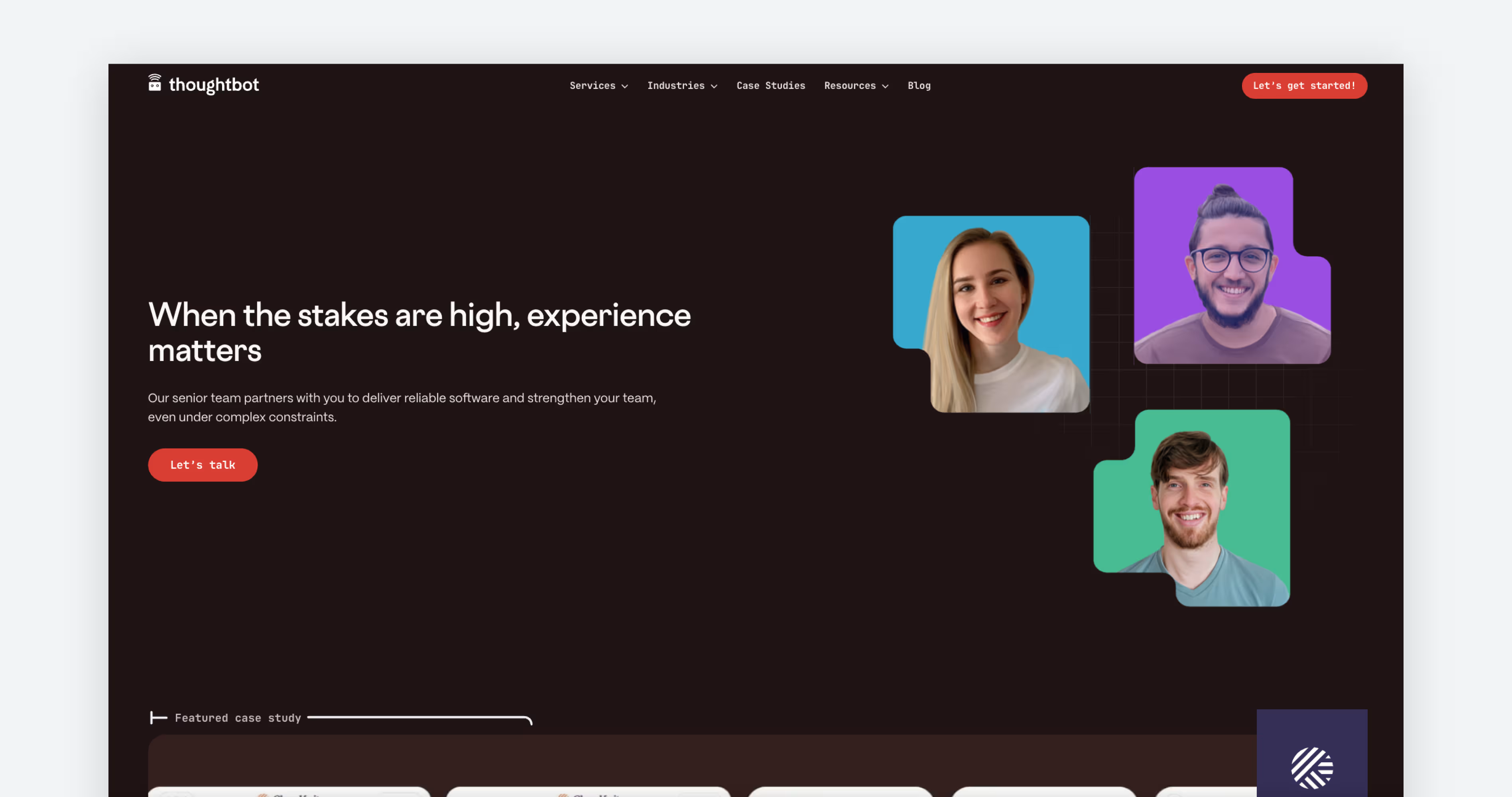
- Team Size: 50–249 employees
- Minimum Project Size: $10,000+
- Average Rating: 4.9 (39 Clutch reviews)
- Best For: Healthcare, finance, SaaS, insurance, government platforms
thoughtbot has been working with startups and product teams for more than two decades, and that experience shows throughout their process. Instead of jumping straight into development, they place a heavy focus on product strategy, validation, user research, and roadmap planning before building the MVP itself.
Their work also leans strongly toward products that require stability, maintainability, and long-term scalability rather than quick prototype-style launches.
Core Services
Product strategy and validation, UX/UI and product design, web and mobile app development, AI integration, and DevOps engineering.
Our Take
thoughtbot feels more like a long-term product partner than a traditional development agency. They are especially well-suited for founders building serious SaaS or healthcare products where strategy, reliability, and product quality matter just as much as launch speed.
3. Rootstrap

- Team Size: 250–999 employees
- Minimum Project Size: $50,000+
- Pricing: $50–$99/hr
- Reviews: 44 Clutch reviews
- Best For: SaaS, fintech, marketplaces, B2B platforms
Rootstrap combines product strategy, design, development, and launch support under one team, making them a practical option for startups that want a more complete MVP process. Their work appears heavily structured around helping companies move from idea validation into scalable product development without rebuilding everything later.
The agency also has a noticeable balance between startup agility and larger engineering capabilities, which makes them relevant for both early-stage founders and growing product teams.
Core Services
Product strategy, UX/UI design and user research, web and mobile development, AI and machine learning integration, and cloud modernization with DevOps support.
Our Take
Rootstrap feels particularly strong for startups that want more than just outsourced development. Their biggest advantage is the ability to handle strategy, product execution, and scaling within one workflow, which can make the MVP process much smoother for growing teams.
4. Uptech

- Team Size: 51–200 employees
- Founded: 2016
- Average Rating: 4.9 on Clutch
- Best For: Healthcare, fintech, e-commerce, social apps
Uptech positions itself as a full-cycle product development company, and that comes through clearly in the way they talk about MVPs. Their process leans heavily on product discovery, user research, and market validation before moving into design and engineering.
A lot of their work also revolves around mobile and consumer-facing products, especially in fintech and healthcare. Rather than focusing on quick prototype builds, the agency seems more geared toward helping startups launch products that can continue growing after the MVP stage.
Core Services
Product discovery and strategy, UX/UI design, mobile and web development, AI and machine learning integration, and QA with product management support
Our Take
Uptech feels like a good match for founders who want a product-minded team involved throughout the entire MVP journey. Their strongest advantage is the balance between UX thinking and engineering depth, especially for startups building mobile apps or products expected to scale over time.
5. EnactOn Technologies
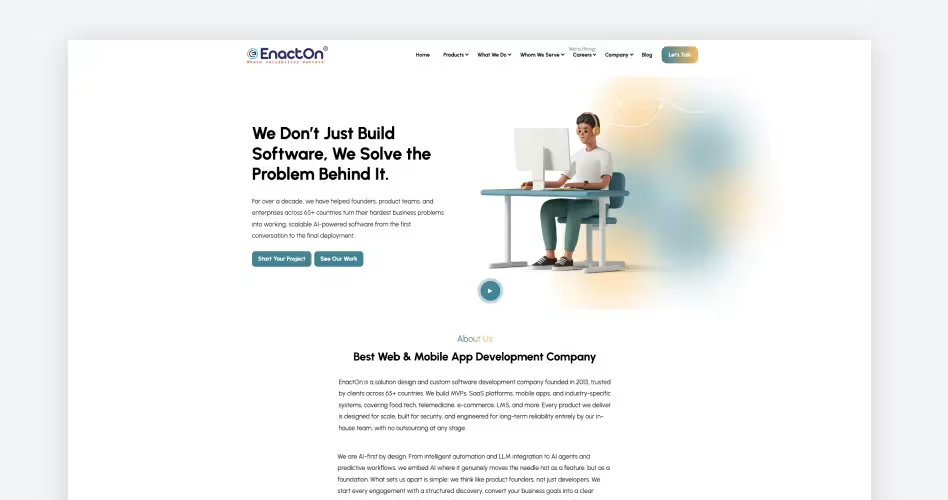
- Team Size: 80+ employees
- Founded: 2013
- Minimum Project Size: $5,000+
- Pricing: $25–$49/hr
- Best For: Non-technical and early-stage founders building SaaS, AI, and marketplace MVPs who need scope discipline before code not after the budget's already spent
EnactOn Technologies has spent over a decade turning early-stage ideas into shipped products, 500+ of them, for 350+ clients across 65+ countries. What separates them from a typical outsourced dev shop is where the work actually starts: every engagement runs through their Target-Market Alignment Framework first, trimming the feature list down to what's proven and necessary before a single sprint begins.
That discipline carries all the way through delivery. Every release passes a four-gate review, functional, security, performance, and deployment, so AI-accelerated code never reaches production unchecked. Their BondMeds telehealth MVP is a clear example: it launched HIPAA-compliant in 12 weeks and had 1,200+ subscribers within its first quarter.
Core Services
MVP development for SaaS, AI, and marketplace startups; discovery and scope prioritization; AI-accelerated engineering under a four-gate review pipeline; vibe-coded prototype takeover (Lovable, Bolt, Replit, Cursor, v0, Claude Code); and post-launch iteration support.
Our Take
EnactOn Technologies stands out for founders who've been burned by scope creep before, their process is built to stop that at the source, not manage it after the fact. About 9 in 10 clients who go on to build a second product build it with EnactOn Technologies again, which says as much about the outcomes as it does about the process.
6. Purrweb
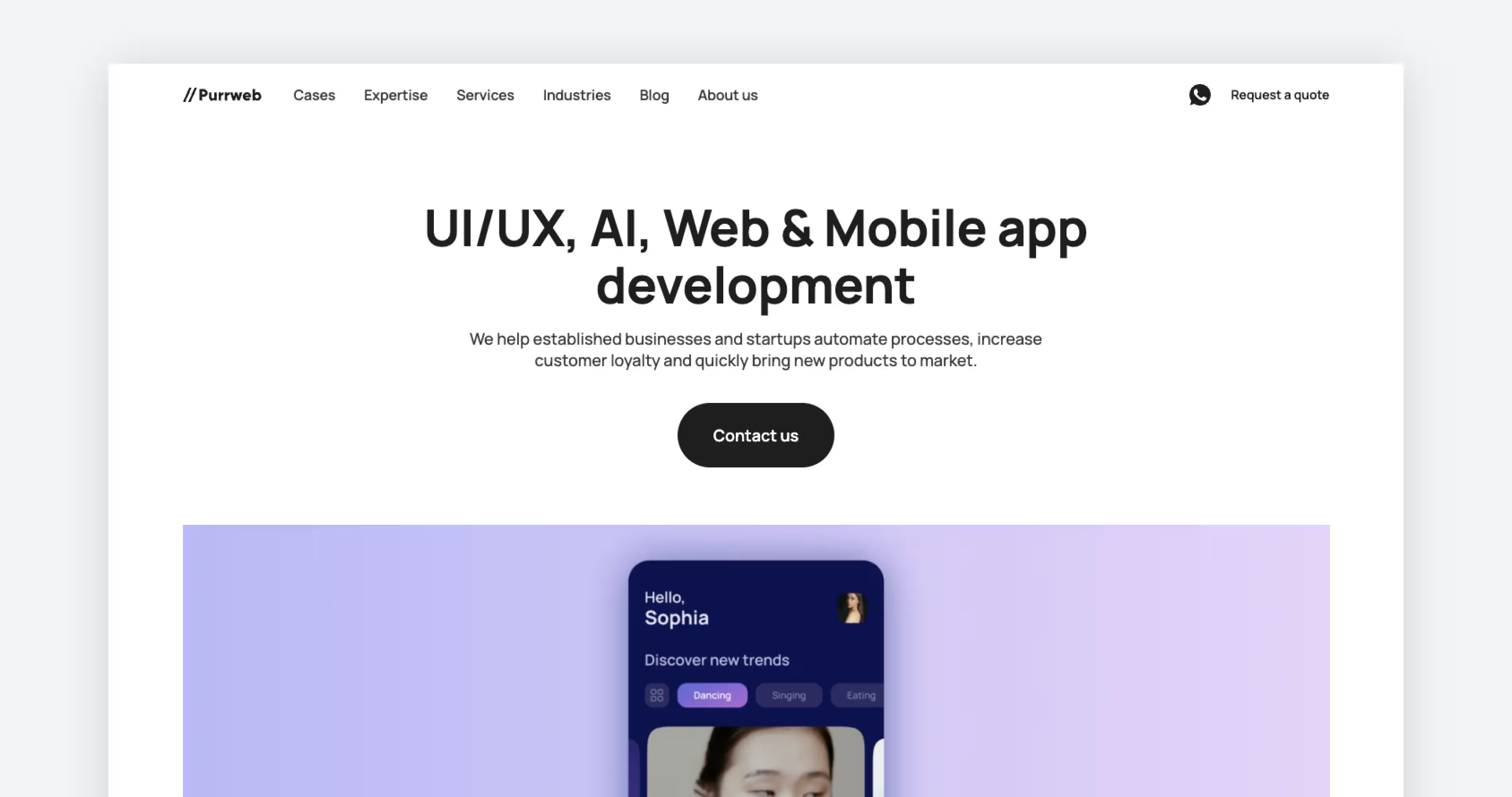
- Team Size: 50–249 employees
- Founded: 2014
- Pricing: $25–$49/hr
- Minimum Project Size: $5,000+
- Reviews: 44 Clutch reviews
- Best For: Mobile apps, web apps, startup MVPs, UI-heavy products
Purrweb puts a lot of attention on helping startups launch quickly without overcomplicating the MVP process. Their messaging focuses heavily on feature prioritization, user experience, and building a usable first version that can realistically grow later.
Compared to some strategy-heavy agencies, Purrweb feels more execution-oriented. The company appears particularly comfortable with fast-moving mobile and web app projects where founders need design and development working closely together from the beginning.
Core Services
MVP development, UI/UX design and system analysis, mobile and web development, cross-platform app development, and custom software development.
Our Take
Purrweb looks especially appealing for pre-seed and seed-stage founders who want a cleaner launch process without massive budgets or long discovery phases. Their strongest advantage is the balance between speed, usability, and startup-friendly pricing, especially for founders building mobile-first products.
7. Altar.io
- Team Size: 24–45 employees
- Founded: 2015
- Project Range: Typically $20,000–$180,000
- Reviews: 28 Clutch reviews
- Best For: Fintech startups, SaaS products, marketplaces
Altar.io takes a much more strategy-first approach compared to many traditional MVP agencies. Before development begins, the team spends significant time helping founders shape the product itself through scope definition, user stories, prototypes, and roadmap planning.
One thing that stands out is how closely they position themselves alongside founders during the early product phase. Their process feels less like handing tasks to an outsourced team and more like working with a senior product partner that helps narrow priorities before money gets wasted on unnecessary development.
Core Services
MVP development, product strategy and roadmap planning, UX/UI design and prototyping, custom software development, and scaling support.
Our Take
Altar.io looks especially valuable for founders who still need clarity around the product before building it. Their biggest strength is the structured discovery process and senior-level involvement, which can make a huge difference when an MVP is still being shaped rather than simply executed.
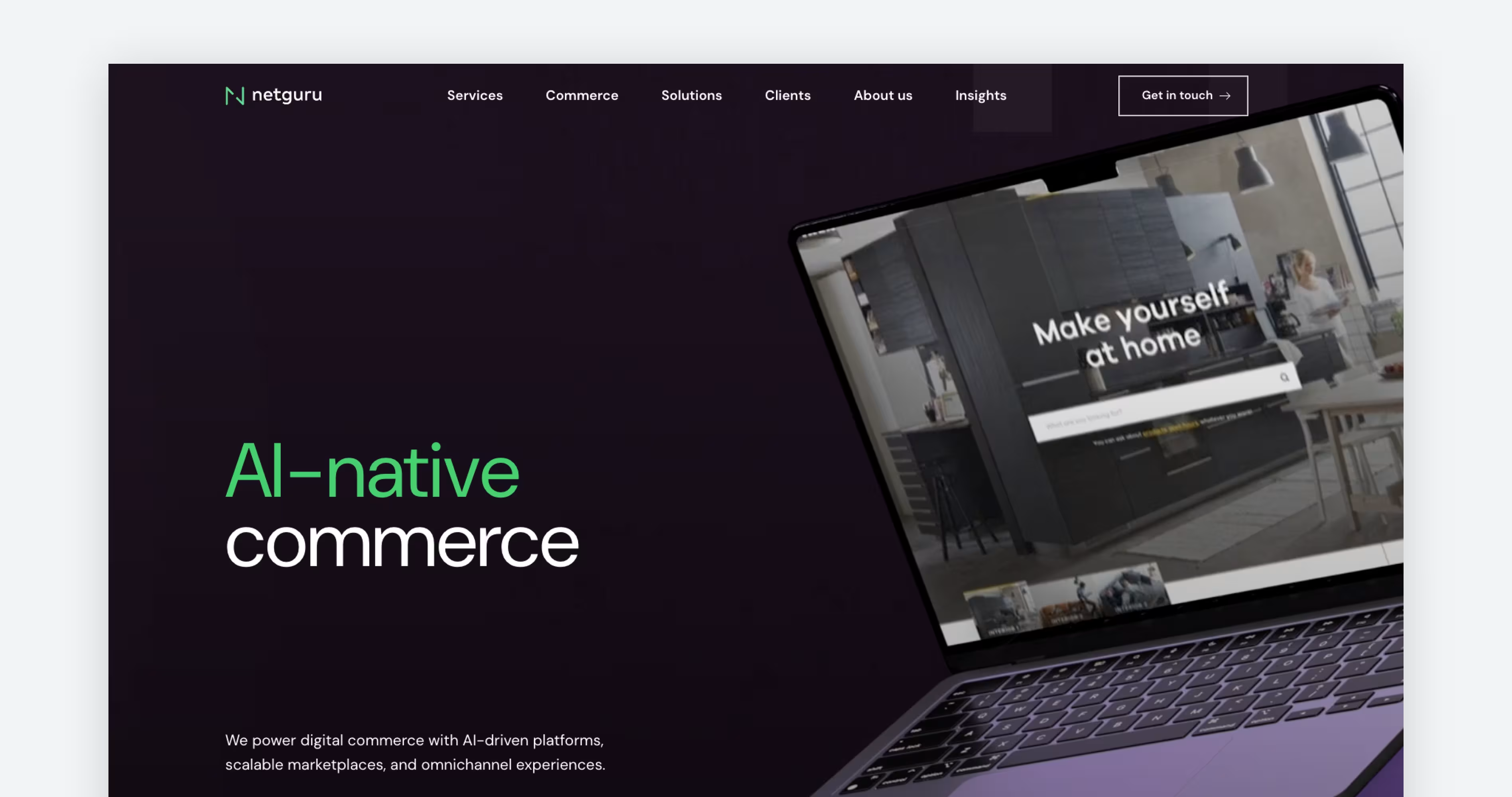
8. Netguru
- Team Size: 250–999 employees
- Founded: 2008
- Pricing: $50–$99/hr
- Minimum Project Size: $50,000+
- Average Rating: 4.9 (73 Clutch reviews)
- Best For: Digital commerce platforms, marketplaces, fintech products
Netguru works more with large digital products and scalable platform ecosystems than lightweight startup MVPs. Their portfolio heavily focuses on ecommerce infrastructure, AI-powered systems, marketplaces, and mobile products that require long-term engineering support and cross-functional product teams.
A lot of their case studies also revolve around scaling products, modernizing systems, and expanding engineering capacity rather than simply launching an early prototype.
Core Services
Custom software development, mobile and web development, UX/UI and product design, AI consulting, and DevOps services.
Our Take
Netguru feels like a better fit for startups already thinking about scale, operations, and long-term product growth. Their biggest advantage is the depth of engineering and product infrastructure they can provide once an MVP starts evolving into a larger platform.
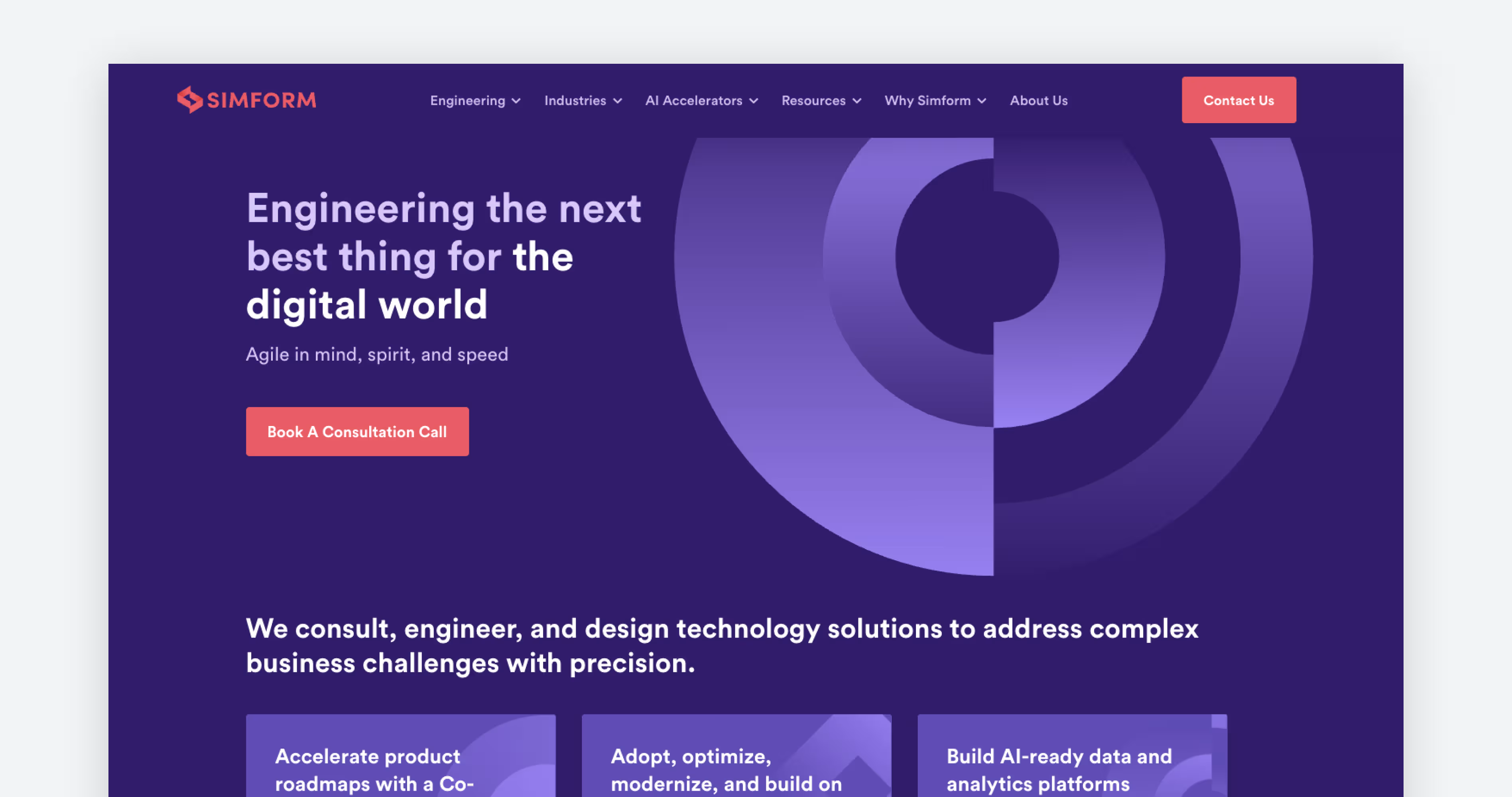
9. Simform
- Team Size: 1,000–9,999 employees
- Founded: 2010
- Pricing: $25–$49/hr
- Minimum Project Size: $25,000+
- Average Rating: 4.8 (84 Clutch reviews)
- Best For: SaaS products, cloud-native apps, API-heavy platforms
Simform focuses heavily on scalable engineering and cloud-based product development. Their positioning feels more technical than design-driven, especially for products that require backend systems, integrations, APIs, and long-term infrastructure planning.
The agency also appears comfortable working on larger digital products where performance, architecture, and system reliability matter from the early MVP stage.
Core Services
Application and custom software development, mobile app development, cloud and DevOps engineering, AI/ML integration, and workflow automation.
Our Take
Simform looks like a strong fit for founders building technically demanding products rather than lightweight prototype MVPs. Their biggest advantage is the engineering depth behind the product build, especially for scalable SaaS and cloud platforms.
10. BairesDev

- Team Size: 1,000–9,999 employees
- Founded: 2009
- Pricing: $50–$99/hr
- Minimum Project Size: $50,000+
- Average Rating: 4.9 (62 Clutch reviews)
- Best For: AI products, enterprise software, scalable SaaS platforms
BairesDev operates more like a large engineering organization than a small startup studio. Their biggest strength is the ability to quickly provide senior developers, dedicated teams, and long-term technical support for products that need to scale after launch.
The company also puts strong emphasis on nearshore collaboration, engineering flexibility, and handling complex software builds across web, mobile, AI, and cloud environments.
Core Services
Custom software development, mobile and web development, AI and machine learning, QA and testing, DevOps services, UX/UI design, staff augmentation.
Our Take
BairesDev feels like a strong fit for startups planning to grow aggressively after the MVP stage. The agency stands out most for its engineering scale, technical depth, and ability to continue expanding the product with larger dedicated teams over time.
11. MetaLab

- Team Size: 51–200 employees
- Founded: 2006
- Minimum Project Size: $100,000+
- Best For: SaaS products, fintech apps, AI platforms, consumer tech products
MetaLab is heavily design-driven, but unlike many branding studios, they also handle real product delivery and engineering. A lot of their reputation comes from building interfaces for products that millions of people already use, including platforms like Slack and Coinbase.
Their work feels especially aligned with startups where product experience, usability, and interface quality directly affect growth and adoption.
Core Services
Product strategy, UX/UI design, product design, branding, custom software development, mobile app development, full-stack engineering.
Our Take
MetaLab feels best suited for startups where design quality is part of the product advantage, not just visual polish. The agency stands out most when founders want an MVP that already feels refined, credible, and market-ready from the first release.
12. Ramotion
.avif)
- Team Size: 10–49 employees
- Founded: 2009
- Pricing: $150–$199/hr
- Minimum Project Size: $50,000+
- Average Rating: 4.9 (29 Clutch reviews)
- Best For: SaaS products, AI startups, consumer apps, digital platforms
Ramotion blends branding, UX/UI, and product development more closely than most MVP agencies on this list. Their work focuses heavily on creating cohesive digital experiences where the product, website, and brand identity all feel connected from the beginning.
A lot of their portfolio also leans toward modern SaaS and tech brands where interface quality and product presentation play a major role in user trust and adoption.
Core Services
Brand strategy, UX/UI design, web design, app design, web app development, design systems, frontend and backend development.
Our Take
Ramotion feels particularly strong for founders launching products that need both visual polish and brand credibility early on. Their biggest advantage is the ability to make an MVP feel like a complete product experience rather than just a functional app.
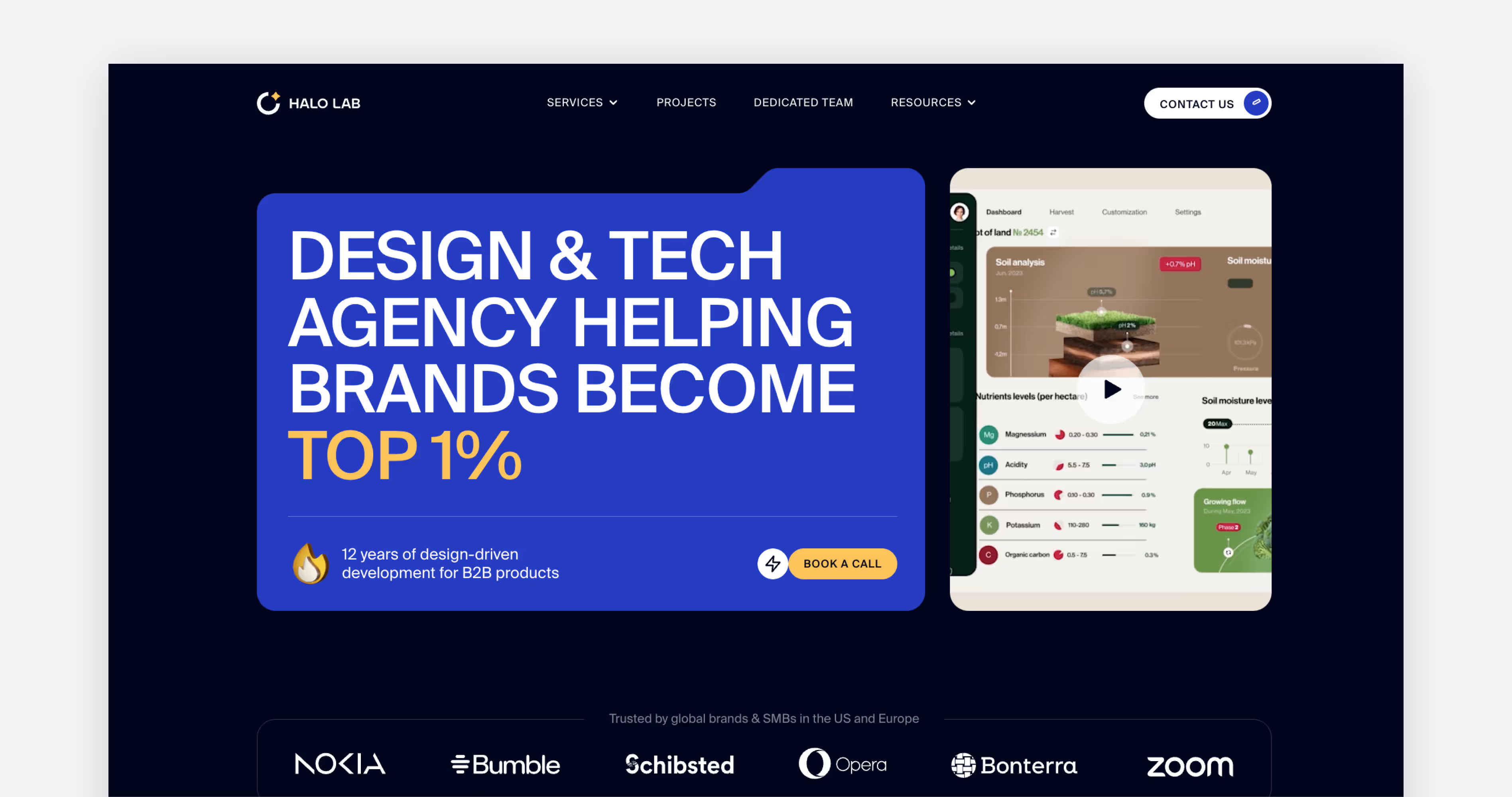
13. Halo Lab
- Team Size: 50–249 employees
- Founded: 2013
- Pricing: $25–$49/hr
- Minimum Project Size: $10,000+
- Average Rating: 4.9 (94 Clutch reviews)
- Best For: B2B products, Webflow projects, startup MVPs, web apps
Halo Lab positions itself as a design-and-development agency built for modern digital products. Their messaging focuses heavily on fast MVP delivery, polished frontend experiences, and helping startups move from idea to launch without unnecessary complexity.
The agency also seems especially comfortable working on products where branding, landing pages, Webflow, and app experience all need to feel connected from the start.
Core Services
UI/UX design, branding, Webflow development, MVP development, web development, mobile app development, CMS development.
Our Take
Halo Lab feels like a strong fit for founders who want a visually polished MVP without moving into ultra-premium agency pricing. Their biggest advantage is the balance between design quality, launch speed, and practical frontend-focused execution.
14. Arounda
.avif)
- Team Size: 10–49 employees
- Founded: 2016
- Pricing: $25–$49/hr
- Minimum Project Size: $25,000+
- Average Rating: 5.0 (80 Clutch reviews)
- Best For: SaaS products, fintech apps, AI platforms, Web3 products
Arounda feels very product-focused in the way they approach MVP development. Their process combines strategy, UX/UI, branding, and development together, which makes the agency especially relevant for startups that want a more complete product experience rather than only design or engineering support.
The agency also puts strong emphasis on usability, scalable systems, and long-term product growth. A lot of their work revolves around SaaS, AI, fintech, and Web3 platforms where polished UX and structured product thinking matter early in the launch process.
Core Services
UX/UI design, MVP development, branding, web development, mobile app development, Webflow development, product strategy.
Our Take
Arounda looks like a strong fit for startups that already have a serious product vision and want a polished MVP built around usability and product clarity. Their biggest advantage is the ability to combine design quality and structured product execution within one workflow.
15. Shakuro

- Team Size: 51–200 employees
- Founded: 2006
- Pricing: $25–$49/hr
- Minimum Project Size: $5,000+
- Average Rating: 5.0 (62 Clutch reviews)
- Best For: SaaS products, healthcare apps, e-learning platforms
Shakuro combines branding, UX, and development into one product workflow. Their work feels especially focused on digital products that need strong usability, polished design, and scalable architecture from the beginning.
The agency also appears comfortable with more complex product categories like healthcare, AI, SaaS, and e-learning platforms where both user experience and technical quality matter early.
Core Services
UI/UX design, branding, web development, mobile app development, AI development, product strategy, support and maintenance.
Our Take
Shakuro feels like a strong fit for founders who want an MVP that already feels polished and market-ready. Their biggest strength is the balance between creative product design and practical technical execution.
Best MVP Development Companies by Industry
The best MVP partner for a fintech startup is a genuinely different agency than the best partner for a healthcare app, a marketplace, or an AI-powered SaaS tool — and the cost of getting that match wrong isn't just money, it's the weeks of runway spent rebuilding.
Below are nine industry verticals. Each one has a short description of what makes that category technically different, followed by the agencies from our ranked list with the most relevant, documented experience.
Best MVP Development Companies for SaaS Startups
A great SaaS MVP requires more than a clean UI. It needs multi-tenancy architecture, usage-based billing logic, a structured onboarding flow, and a dashboard experience that makes the product's core value immediately obvious to a new user within the first session.
Best MVP Development Companies for Fintech Startups
Fintech MVPs operate in one of the most heavily regulated environments in software. Payment processing, KYC/AML verification, open banking integrations, and data security requirements all add complexity that most generalist agencies aren't equipped to handle correctly.
Best MVP Development Companies for Healthcare Startups
Healthcare MVPs face the most demanding compliance environment in software. HIPAA (US) and GDPR (EU) govern how patient data is stored, processed, and transmitted - and violations can result in fines that end a startup before it reaches Series A.
Best MVP Development Companies for Healthcare Startups
Healthcare MVPs face the most demanding compliance environment in software. HIPAA (US) and GDPR (EU) govern how patient data is stored, processed, and transmitted - and violations can result in fines that end a startup before it reaches Series A.
Best MVP Development Companies for AI-Powered Startups
AI-native MVPs in 2026 are a distinct category. They're not just software products with an AI feature bolted on - they require LLM orchestration, vector database architecture, prompt engineering infrastructure, and GPU-optimized deployment pipelines that most agencies are still learning.
Best MVP Development Companies for E-Commerce & Marketplace Startups
Marketplace MVPs are structurally different from single-sided SaaS products - they need to solve two-sided supply/demand problems simultaneously, with separate onboarding, dashboards, and trust mechanisms for buyers and sellers (or riders and customers, or hosts and guests) before the product works at all.
Best MVP Development Companies for EdTech Startups
EdTech MVPs balance two competing needs: content delivery has to feel simple enough for non-technical learners and instructors, while the backend needs to handle enrollment, progress tracking, and increasingly AI-assisted learning paths without becoming a bloated LMS clone on day one.
Note: EdTech is a thinner specialty across this particular agency list - if course delivery and video infrastructure are central to your MVP, ask any shortlisted agency directly for EdTech-specific case studies before committing.
Best MVP Development Companies for PropTech & Real Estate Startups
PropTech MVPs range from simple listing portals to complex property management ecosystems, and the right partner depends heavily on which end of that spectrum you're building - MLS/IDX integration and mapping tools are a very different technical problem than tenant billing and maintenance workflows.
Best MVP Development Companies for Logistics & Supply Chain Startups
Logistics MVPs are integration-heavy rather than feature-heavy - the core product (tracking a shipment, assigning a driver) is often simple, but the cost and complexity live in connecting that core product to the ERP, WMS, and fleet systems your customers already run.
Best MVP Development Companies for Web3 & Blockchain Startups
Web3 MVPs carry a cost structure unlike any other vertical on this list: smart contract engineering alone typically eats 25–40% of the total budget, and a security audit is not optional - it's the line item that prevents a single exploit from ending the company.
Best MVP Development Companies for Enterprise & B2B Internal Tools
Enterprise and internal-tool MVPs get judged by a different bar than consumer or startup-facing products: role-based access control, audit logging, and integration with existing enterprise systems (SSO, ERP, CRM) are core requirements from day one, not later add-ons.
MVP Development Cost in 2026: What You'll Pay Based on Your Product
MVP development costs can range from $5,000 to $250,000+, depending on the type of product you're building. The biggest cost factors are product complexity, feature count, design requirements, technology stack, and the development team you hire.
The final cost depends on more than just the number of features. These are the biggest factors that influence your budget:
- Product complexity — Simple apps cost less than platforms with dashboards, AI, or real-time features.
- Number of features — Every additional feature increases design, development, testing, and maintenance time.
- Design requirements — Custom UX/UI takes longer than using pre-built templates or design systems.
- Technology stack — Mobile apps, AI integrations, and custom backend systems generally cost more than standard web applications.
- Development team — Costs vary depending on whether you hire freelancers, an MVP agency, or an in-house team, as well as where the team is located.
- Post-launch support — Bug fixes, hosting, monitoring, and product improvements are often separate from the initial development budget.
MVP Development Hourly Rates by Geography (2026)
Where your development team is located has a big impact on your MVP budget. Teams in North America and Western Europe generally charge more, while Eastern Europe, Latin America, and South Asia offer lower rates without necessarily sacrificing quality.
The table below compares average hourly rates, common strengths, and the types of startups each region is best suited for.
USA & Canada ($100–$200/hr)
The USA and Canada have the highest MVP development rates, but they also offer experienced product teams, senior engineers, and strong product strategy. They're often the preferred choice for funded startups, enterprise software, and products with complex technical or compliance requirements.
UK & Western Europe ($80–$150/hr)
Development costs in the UK and Western Europe are slightly lower than in North America but still fall into the premium range. Agencies in countries like the UK, Germany, and the Netherlands are well known for UX design, fintech, healthcare, and other regulated industries where security and compliance are important.
Eastern Europe ($40–$90/hr)
Eastern Europe offers one of the best balances between cost and quality. Countries such as Poland, Ukraine, Romania, and the Czech Republic have strong engineering talent and extensive experience building SaaS, AI, and custom software products, making the region a popular choice for startups.
India & South Asia ($25–$60/hr)
India and South Asia offer the most affordable MVP development rates. The region has a large pool of developers and agencies, making it a popular option for startups with limited budgets. While pricing is attractive, it's important to evaluate an agency's experience, communication, and delivery process before making a decision.
Latin America ($40–$80/hr)
Latin America provides competitive pricing while offering working hours that overlap with North American businesses. Countries such as Brazil, Argentina, Colombia, and Mexico have growing software industries, making the region a good option for US startups that value real-time collaboration without paying North American rates.
How Long Does MVP Development Take in 2026?
Most MVPs take anywhere from 4 to 28 weeks to build. The exact timeline depends on what you're building, how many features you include, and whether product planning is completed before development starts.
A simple MVP with one core feature can often be launched in about a month. On the other hand, products with payments, multiple user roles, AI features, or industry regulations require more design, development, testing, and quality assurance, which naturally increases the timeline.
The table below shows the typical development timeline for different types of MVPs.
It's important to remember that adding more developers doesn't always make an MVP launch faster. Many tasks such as product discovery, UX/UI design, feature planning, and testing - must happen in sequence. In most cases, the fastest way to reduce your timeline is to reduce your scope by focusing only on the features needed to validate your idea.
How to Choose the Right MVP Development Company for Your Startup
Picking an MVP partner is one of the most consequential vendor decisions a founder makes. The wrong choice can burn months of runway and leave you with technical debt that slows growth for years. This four-step framework helps you match your specific situation to the right type of agency.
Step 1: Define Your Budget Tier
Your budget determines which agency tier is realistic for you:
- Under $30,000 → Design-first studio, no-code agency, or offshore boutique
- $30,000 – $80,000 → Full-service startup studio (most startups fit here)
- $80,000 – $200,000 → Senior engineering agency or full-product studio
- $200,000+ → Enterprise-grade studio with compliance or AI specialization
Step 2: Match the Agency to Your Industry
Use the vertical tables above. An agency without healthcare compliance experience should not be building your HIPAA-required MVP. An agency without fintech regulatory knowledge should not be your PCI-DSS partner. Industry-specific experience is not a nice-to-have - it's a requirement.
Step 3: Validate Their Startup Credentials
Ask for three startup-specific case studies - not enterprise projects. For each, ask:
- What was the product problem you solved?
- What was the timeline and budget?
- What happened after launch? (Users, revenue, funding raised?)
If they can't answer the third question with real numbers, be cautious.
Step 4: Run a Paid Discovery Sprint Before Full Commitment
The best way to evaluate any agency is to pay for a short discovery sprint ($2,000–$5,000) before signing a full engagement. This reveals how they think, communicate, and prioritize - the three things that determine project success more than any portfolio can.
10 Questions Every Founder Should Ask Before Hiring an MVP Development Company
Choosing an MVP development company isn't just about comparing prices or portfolios. The right questions can tell you how an agency works, what to expect during the project, and whether they're the right fit for your startup.
Before signing a contract, use these questions to compare agencies and avoid common mistakes.
What's your typical MVP timeline for a project like mine? Every product is different, but an experienced agency should be able to give you a realistic timeline based on similar projects they've delivered. Be cautious of teams that promise unusually fast delivery without first understanding your requirements.
Can you share a recent MVP case study? Past work is one of the best indicators of future results. Ask to see a recent startup project, what problem the team solved, how long development took, and what happened after the MVP launched.
What's included in your MVP pricing? A proposal should clearly explain what's included in the quoted price. Ask whether product discovery, UX/UI design, testing, project management, cloud setup, and post-launch support are included - or billed separately.
Who will actually work on my project? Some agencies introduce senior experts during sales calls but assign junior developers after the contract is signed. Ask who will manage your project and whether senior designers, engineers, and product managers will be involved throughout development.
How do you handle changes during development? Requirements often change as new ideas and user feedback emerge. A good agency should have a clear process for reviewing, approving, and estimating any changes without disrupting the project.
How do you decide which features go into the MVP? A successful MVP focuses on solving one core problem, not building every idea at once. Look for agencies that use a structured prioritization framework such as MoSCoW, RICE, or an Impact-Effort Matrix instead of simply building every requested feature.
Do you offer a product discovery workshop before development? Many experienced agencies begin with a paid discovery phase before writing any code. This helps define the product, prioritize features, identify technical risks, and create a realistic roadmap before committing to full development.
Who owns the source code and intellectual property? Before signing a contract, confirm that you'll own the source code, designs, and intellectual property once the project is complete. Ownership should be clearly stated in the agreement to avoid future disputes.
What happens after the MVP launches? Launching your MVP is only the beginning. Ask what kind of post-launch support is included, whether bug fixes are covered, and how long the agency will help you monitor and improve the product after release.
Have you helped startups raise funding with an MVP? If you're planning to pitch investors, ask whether the agency has experience building MVPs for fundraising. Teams with startup experience often understand how to create products that are ready for demos, customer validation, and investor presentations.
Red Flags to Avoid When Choosing an MVP Development Company
- No discovery phase offered: Any agency that wants to start design or development before a structured discovery sprint is skipping the most critical step in the MVP process.
- Vague or missing pricing: Agencies that won't discuss ballpark budget ranges early on typically have inconsistent scoping practices.
- No named feature prioritization method: If they can't tell you how they decide what makes the cut, they're guessing along with you.
- Portfolio without outcomes: Screenshots without user numbers, funding raised, or business outcomes are marketing, not evidence.
- Unclear IP ownership: If code and design ownership after delivery isn't unambiguous, walk away.
- No post-launch support plan: An agency that disappears at "delivery" leaves you without technical support during the period you'll learn the most.
- Overpromising on timeline: Agencies promising fully-featured MVPs in 2–3 weeks are either underscoping severely or setting unrealistic expectations.
- Junior-only team with no senior oversight: Ask specifically who is doing the technical architecture, not just who is writing code.
- No client references you can actually contact: Reputable agencies will connect you with past clients, not just point to written testimonials.
- No senior developer oversight on AI-generated code: In 2026, many agencies use AI coding tools (Cursor, GitHub Copilot, Claude Code) to accelerate development. This is fine - but only with senior engineers reviewing and validating every output. Junior-only teams using AI tools without oversight produce technical debt that kills MVPs at scale.
Frequently Asked Questions
How Much Does It Cost to Hire an MVP Development Agency?
MVP development typically costs between $10,000 and $250,000+. Pricing depends on feature count, product complexity, platform requirements, design scope, your development team's geography, and whether the product needs custom backend infrastructure, compliance architecture, or AI integration. A simple SaaS MVP starts around $20,000–$60,000. Complex or regulated MVPs routinely exceed $120,000.
How Long Does MVP Development Usually Take?
A simple MVP can often launch within 8–12 weeks. Products with custom integrations, mobile apps, dashboards, or more advanced workflows typically take 12–20 weeks. Regulated industries (healthcare, fintech) add 4–8 weeks for compliance architecture.
What Features Should an MVP Include?
An MVP should focus only on the core features needed to solve one primary user problem. Most agencies use feature prioritization frameworks (MoSCoW, RICE) to reduce unnecessary complexity and improve time to market. If a feature doesn't directly test your core hypothesis, it shouldn't be in the MVP.
Can an MVP Be Built With No-Code Tools?
Yes. No-code MVP development (Webflow, Bubble, Glide, Softr) works well for marketplaces, internal tools, booking platforms, and early SaaS validation. However, products requiring custom backend systems, high scalability, or advanced workflows typically move to custom development within 6–12 months of launch.
How Do I Find an MVP Development Agency Near Me?
Start with Clutch.co - filter by "Minimum Viable Product" as a service focus and your city or country. Read reviews specifically from startup clients, not enterprise customers. Then run a paid discovery sprint with your top two or three options before committing to a full engagement.
What Is the Difference Between an MVP and a Prototype?
A prototype is a non-functional or partially functional design model used to visualize a product and gather early feedback - often built in Figma or as a clickable mockup. An MVP is a working product with real functionality, a real backend, and real users. Prototypes validate design assumptions; MVPs validate product-market fit.
Can an MVP Be Built in 30 Days?
Some very lean MVPs - single-feature web apps, simple marketplace listings, no-code tools - can launch in 30 days. However, most properly scoped MVPs with a real backend, user authentication, core workflows, and basic UX take 8–12 weeks minimum. Agencies promising fully-featured MVPs in 30 days are either severely limiting scope or overpromising.
What Tech Stack Should My MVP Be Built On in 2026?
Proven MVP stacks in 2026 include React or Next.js for the frontend, Node.js or Python/FastAPI for the backend, PostgreSQL or Supabase for the database, and AWS or GCP for cloud infrastructure. For AI-native products, add OpenAI API/Anthropic SDK, Pinecone or pgvector for vector storage, and LangChain for LLM orchestration.
What Is the Difference Between Custom MVP Development and No-Code MVP?
Custom MVP development means the product is built with real code — giving you full flexibility, scalability, and control over every aspect of the architecture. No-code MVPs use visual tools that are faster to launch but have platform limitations, vendor lock-in risks, and performance ceilings. Custom is better for products expecting significant scale; no-code is better for pure idea validation.
Which MVP Agencies Specialize in AI-Powered Products?
Top agencies for AI-native MVPs in 2026 include BairesDev, Relevant Software, GeekyAnts, and Appinventiv - all of whom have documented experience with LLM integration, AI/ML engineering, or AI product architecture. Look specifically for agencies that have shipped AI products, not just ones that say they use AI in their workflow.
Do MVP Agencies Help With Product Strategy?
Yes. The best MVP development agencies help founders with product discovery, MVP scope planning, user flow design, launch strategy, and product roadmap planning before development begins. These activities are not optional extras - they're what separates product-minded agencies from code-execution shops.
How Do Founders Protect Their Startup Idea When Working With an Agency?
Founders typically use NDAs, clearly defined IP ownership clauses in contracts, trademarks for brand identity, and controlled access to product documentation. In practice, strong execution and faster market entry protect ideas more effectively than secrecy. Reputable agencies actively encourage proper IP ownership structures.
Which MVP Agency Has the Highest Clutch Rating?
Several agencies on this list hold perfect 5.0 Clutch ratings, including Orbix Studio (46+ reviews), SolveIt (51 reviews), Orangesoft (42 reviews), and Brocoders (35 reviews). A perfect rating with a meaningful review count is a stronger signal than a perfect rating with only a handful of reviews.
Final Thoughts
The right MVP development company does more than write clean code. They challenge your assumptions, shape your scope, design for real users, and help you learn faster than any internal team could in the same timeframe.
About 90% of startups fail and 42% of those failures trace back to building a product the market didn't need. The best defense against that outcome isn't a bigger development budget or a longer feature list. It's a focused MVP built around the right hypothesis, with the right team, validated with real users as fast as possible.
Ready to build your MVP?



















.avif)
