- How much does a saas design agency cost?
- What is included in saas design agency pricing?
- SaaS design agency pricing models explained
- Fixed project vs retainer vs subscription: which pricing model is best?
- SaaS design pricing by project type
- What affects saas design agency pricing?
- Hidden costs in saas design projects
- Red flags in saas design agency pricing
- What Orbix Studio charges for SaaS design
- Which pricing model is best for your saas company?
- Frequently Asked Questions
- Final thoughts


.svg)

%201%201.svg)
SaaS Design Agency Pricing in 2026: Costs, Models, and What to Expect
Why does one SaaS design agency quote $5,000 and another quote $25,000? That is one of the most common questions SaaS teams ask when comparing design partners.
The answer usually comes down to scope, process, and experience. Two agencies may offer similar-looking deliverables, but that does not mean they are doing the same level of work. One may only handle the visual design, while the other includes strategy, UX thinking, and developer handoff.
Here is the short answer: most SaaS design agencies charge $5,000 to $30,000 for a defined project, $3,000 to $15,000 per month for ongoing retainer support, and $10,000 to $20,000 for a focused 30-day design sprint. The rest of this guide explains where your project is likely to fall in those ranges.
This guide will help you understand those differences. We will cover SaaS design agency costs, pricing models, and what to look for before you hire.
How much does a SaaS design agency cost?
SaaS design agency pricing can start at a few thousand dollars for smaller projects and go past $50,000 for larger, more complex engagements. The final cost usually depends on the type of work, the scope, and the pricing model behind it.
Here is the simple version: most SaaS design work falls into a few common pricing ranges, and most companies end up paying somewhere between $5,000 and $30,000 for project-based work.
What is included in saas design agency pricing?
SaaS design agency pricing usually includes much more than the final screens. In many cases, you are paying for the thinking, planning, and support behind the design, not just the visual output.
That is also why pricing can vary so much. Some agencies focus on execution only, while others include strategy, UX, systems work, revisions, and developer handoff in the scope.
Strategy and discovery

Before design starts, agencies often spend time understanding the product, the audience, the goals, and the market context.
That can include kickoff sessions, positioning discussions, feature priorities, and clarity around what the design needs to solve.
Agencies that include this stage in their process often charge more because they are shaping the direction early, not just executing screens later. In many cases, better outcomes start here.
UX research and user flows

A lot of pricing differences show up in how much UX work an agency includes. Some teams move straight into interface design. While others spend time researching user behavior, mapping journeys, and planning how key flows should work.
That extra layer adds cost, but it also adds confidence to the decisions behind the interface. Instead of relying on guessing, the design is built around clearer user logic and stronger product thinking.
UI design, systems, and handoff
This usually covers the visual side of the work, including layouts, components, responsive states, and the overall interface. In more complete engagements, it also includes reusable design systems.
That is where pricing often reflects depth. A few polished mockups are one level of deliverable, while a consistent system that can scale across the product takes more time, structure, and coordination.
SaaS design agency pricing models explained
The total price matters, but the pricing model matters almost as much. Two agencies may quote similar numbers, yet the way they structure the work can lead to very different levels of flexibility, support, and long-term value.
That is why it helps to look at how SaaS design agencies price their services before comparing costs. Below are the most common pricing models and when each one tends to make the most sense.
Fixed project pricing
Fixed project pricing means you agree on one price for one clearly defined scope. That could be $6,000 for a landing page, $12,000 to $20,000 for a SaaS website, or $8,000 to $25,000 for a defined MVP design project.
It works best when the deliverables are clear from the start. If everyone already knows what is being designed, what is included, and where the project ends, fixed pricing makes budgeting much easier.
The big advantage is predictability. You know the project may cost $8,000, $18,000, or $30,000 before work begins, which makes proposals easier to compare.
The catch is simple: fixed pricing works best when the scope stays fixed. If new pages, extra flows, added features, or repeated revision rounds keep getting added later, the original quote usually stops matching the real workload.
Monthly retainer pricing
Monthly retainer pricing is for SaaS companies that need design help on a regular basis. Instead of paying for one project at a time, you pay a set monthly fee for ongoing support.
It usually makes sense when the work keeps coming. One month it might be a landing page, the next month product screens, then onboarding updates, growth experiments, or design support for a feature launch.
Most retainers start around $3,000 to $5,000 per month for lighter support. More involved partnerships often land in the $6,000 to $15,000 per month range, and deeper product design support can go higher.
If your team is shipping often and design needs never really pause, a retainer is usually easier to manage than opening a new project every few weeks. It gives you continuity, a steadier workflow, and a team that stays close to the product over time.
Design subscription pricing
Design subscription pricing is a simpler way to handle ongoing design work. Instead of turning every request into a separate project, you pay a monthly fee and keep a steady flow of smaller tasks moving.
It tends to work well for SaaS teams that move fast and already know what they need. That could mean landing page updates, ad creatives, new screens, onboarding tweaks, feature visuals, or other repeatable design requests that come up week after week.
This model works best when the requests are frequent, clear, and easy to scope as they come in. If your team wants speed and simplicity more than a deep strategic process, subscription pricing can be a practical fit.
For reference, Orbix Studio's own SaaS design subscription starts at $2,999 per month with one senior UI/UX designer, and moves to $5,499 per month for two designers and multiple active projects.
Sprint-based pricing
Sprint-based pricing is for short, focused work over a fixed period, usually 1 to 4 weeks. It is often used when a SaaS team needs quick progress on one clear priority.
Because the time is fixed, the scope needs to stay focused too. That makes the sprint-based model a good fit for short-term momentum, not broad or constantly changing work.
How to price a 30-day SaaS design sprint
A 30-day SaaS design sprint usually costs $10,000 to $20,000 with an agency. The final price depends on how many screens and flows are in scope, how many designers are assigned, and whether research and developer handoff are included.
Most 30-day sprints follow a similar weekly rhythm:
To price it, start with the screens. One senior designer can realistically cover 15 to 30 screens in 30 days, and two designers can cover 30 to 50. Then add research days, review rounds, and handoff support. If a quote does not list screen count, revision rounds, and what happens on day 31, ask before you sign.
If you only need to test one product decision before building, a five-day SaaS design sprint is the smaller, cheaper version of this format.
Dedicated design team pricing
Dedicated design team pricing is built for SaaS companies that need ongoing design support across product, growth, onboarding, and marketing. Instead of paying for one project at a time, you are paying for steady access to a team that stays involved over time.
Most setups start around $10,000 to $15,000 per month. More involved engagements often land in the $15,000 to $30,000+ per month range.
For larger SaaS companies with consistent design demand, this model often gives the best continuity. The team stays close to the product, understands the context better over time, and can keep work moving without the stop-start rhythm of project-based pricing.
Fixed project vs retainer vs subscription: which pricing model is best?
There is no single pricing model that works best for every SaaS company. The right choice usually depends on three things: how clear your scope is, how often design work comes up, and how fast your team needs things to move.
Best for clearly defined projects
Fixed pricing usually works best when the project is already well scoped. If you know exactly what needs to be designed, how much work is involved, and where the project ends, it is much easier to agree on one price upfront.
This is often a good fit for things like a landing page, a website redesign, or a defined MVP scope. Stable deliverables and stable timelines are what make this model work.
Best for ongoing product design needs
When design work keeps coming, project-by-project pricing can start to feel slow and inefficient. A retainer or subscription model usually fits better when the team needs regular updates, new screens, flow improvements, and ongoing design support across the month.
That kind of setup often creates better continuity. The agency stays closer to the product, understands the context faster, and can keep work moving without restarting the process every time.
Best for fast-growing saas teams
Growth-stage SaaS teams usually need more than occasional design help. They may be shipping features, testing onboarding, updating the website, improving conversion flows, and supporting product marketing at the same time.
In that situation, the best model is often the one that gives enough flexibility without slowing the team down. For some companies, that means a retainer. For others, especially with heavier and more constant demand, a dedicated design team can be the better fit.
SaaS design pricing by project type
One of the easiest ways to understand SaaS design pricing is to look at the type of work being bought. A landing page, a marketing website, an MVP, and a full product redesign all sit in very different pricing ranges.
That is why this section breaks pricing down by project type. It gives a more practical view of what SaaS companies usually pay based on the actual deliverable.
SaaS landing page design pricing
Landing page pricing usually sits below full website pricing because the scope is smaller and the goal is more focused. In most cases, SaaS landing page design falls around $2,000 to $8,000, though higher-converting campaign pages with stronger strategy or custom visuals can go beyond that.
A single landing page is not just a smaller website page. It is usually built around one offer, one audience, and one conversion goal, which is why agencies often price it differently from broader website work.
SaaS website design pricing
SaaS website design usually costs $5,000 to $30,000+ with an agency. Page count matters less than the amount of strategy, copy, and custom design each page needs, which is why two 10-page websites can be priced very differently.
For real examples and what drives the price up, see our full breakdown of SaaS website design cost.
MVP product design pricing
MVP product design pricing usually depends on how much of the product needs to be designed and how quickly it needs to happen. Most MVP design projects land somewhere between $8,000 and $25,000, though more complex scopes can go higher.
A lightweight MVP with a few core screens will sit closer to the lower end. Once the product includes multiple flows, dashboard states, onboarding, settings, and role-based experiences, the scope grows quickly and so does the price
Full saas product redesign pricing
A full product redesign usually costs more because it goes beyond visual cleanup. In many cases, agencies are rethinking user flows, improving structure, aligning teams, and creating a more scalable product experience.
That is why full SaaS redesigns often start around $20,000 and can easily reach $50,000 to $75,000+. The bigger the product, the more screens, workflows, stakeholders, and system decisions need to be accounted for.
Dashboards are usually the most expensive part of that scope, which is why we cover SaaS dashboard design cost in a separate guide.
Design system pricing
Design system pricing usually starts around $5,000 to $10,000 for smaller systems and can move into the $15,000 to $20,000+ range when the product needs a more complete and scalable foundation.
This work is valuable because it helps the product stay consistent as it grows. But it also takes more planning than many teams expect, especially when the system needs reusable components, naming structure, responsive behavior, documentation, and alignment between design and development.
If the same system needs to cover a web app and native mobile screens, expect the cost to rise by roughly 30 to 50 percent, because components need platform-specific states and documentation. Ongoing support is usually handled on a small monthly retainer once the first version ships.
Most teams start with tokens and 10 to 20 core components, then grow the system as new features ship. Our SaaS design system guide shows what that first version should include.
SaaS rebrand pricing
A SaaS brand refresh usually costs $5,000 to $20,000, while a full rebrand with strategy, website updates, and product UI changes often runs well past $50,000. When a rebrand touches the product, budget for design system work too, because new colors and type need to flow into every component.
We break down where that budget goes, phase by phase, in our guide to SaaS rebranding cost.
What affects saas design agency pricing?
SaaS design pricing can vary a lot, even for projects that sound similar at first. In most cases, the difference comes down to four things: scope, product complexity, process depth, and how the work is delivered.
A smaller, clearly defined project will usually cost less. A more complex product, a heavier strategy process, or a faster timeline will usually push pricing higher.
Scope and deliverables
The more work the agency needs to produce, the more the project will cost. That includes pages, screens, flows, assets, and anything else included in the final scope.
A 1-page landing page will cost far less than a 10-page website. In the same way, a product with 10 screens will be priced very differently from one with 30 screens, multiple flows, and extra states.
Product complexity
Some SaaS products are simple. Others have dashboards, permissions, workflows, integrations, and multiple user roles.
That complexity affects pricing because it adds more thinking, more structure, and more design decisions. A more complex product usually needs more time to design well.
Research, strategy, and stakeholder involvement
Not every agency includes the same level of thinking behind the work. Some focus mostly on design execution, while others include discovery, UX research, flow planning, workshops, and stakeholder alignment.
That extra depth usually increases the cost, but it also changes the quality of the process. More strategy often means clearer decisions before the design is finalized. Teams built around that kind of thinking work more like a UX consultancy than a design shop, and they price accordingly.
Timelines, revisions, and handoff requirements

Tight timelines often raise pricing because the agency has to move faster and adjust resources. More revision rounds and more internal feedback can also expand the workload.
Handoff matters too. If the agency is expected to prepare responsive states, reusable components, detailed files, and developer support, the project will usually cost more than one that ends with simple mockups.
Hidden costs in saas design projects
The quoted price is not always the full price. Many SaaS teams budget for the main design work, then run into extra costs once the project is underway. In most cases, those costs come from changes, add-on services, or support needed after the core design phase is done.
Extra revisions and scope creep
This is one of the most common places where budgets start to shift. The original quote may cover 2 or 3 revision rounds, but once new ideas, extra pages, added flows, or stakeholder feedback keep stacking up, the work moves beyond the agreed scope.
That does not always look dramatic at first. One extra screen here, one new use case there, one more round of feedback. But over time, those changes can push a $10,000 project well past its original budget.
Research tools, copywriting, and custom assets
Not every design quote includes the supporting work around the design itself. Things like UX research tools, copywriting, custom illustrations, icon sets, motion assets, or stock imagery may be priced separately.
This matters because design rarely works in isolation. A landing page may need messaging help. A product flow may need research input. A marketing page may need custom visuals. Those pieces improve the final result, but they can also add to the total cost.
Build support and post-design collaboration
Many teams assume the work ends once the final files are delivered. In reality, there is often more to do after that point.
Developers may need clarification. Responsive states may need updates. Product teams may request adjustments during implementation. Some agencies include part of that support, while others bill for it separately.
That is why a handoff is not always the end of the engagement. If build support, QA review, or post-design iteration is needed, the final cost can go beyond the original quote.
Red flags in saas design agency pricing
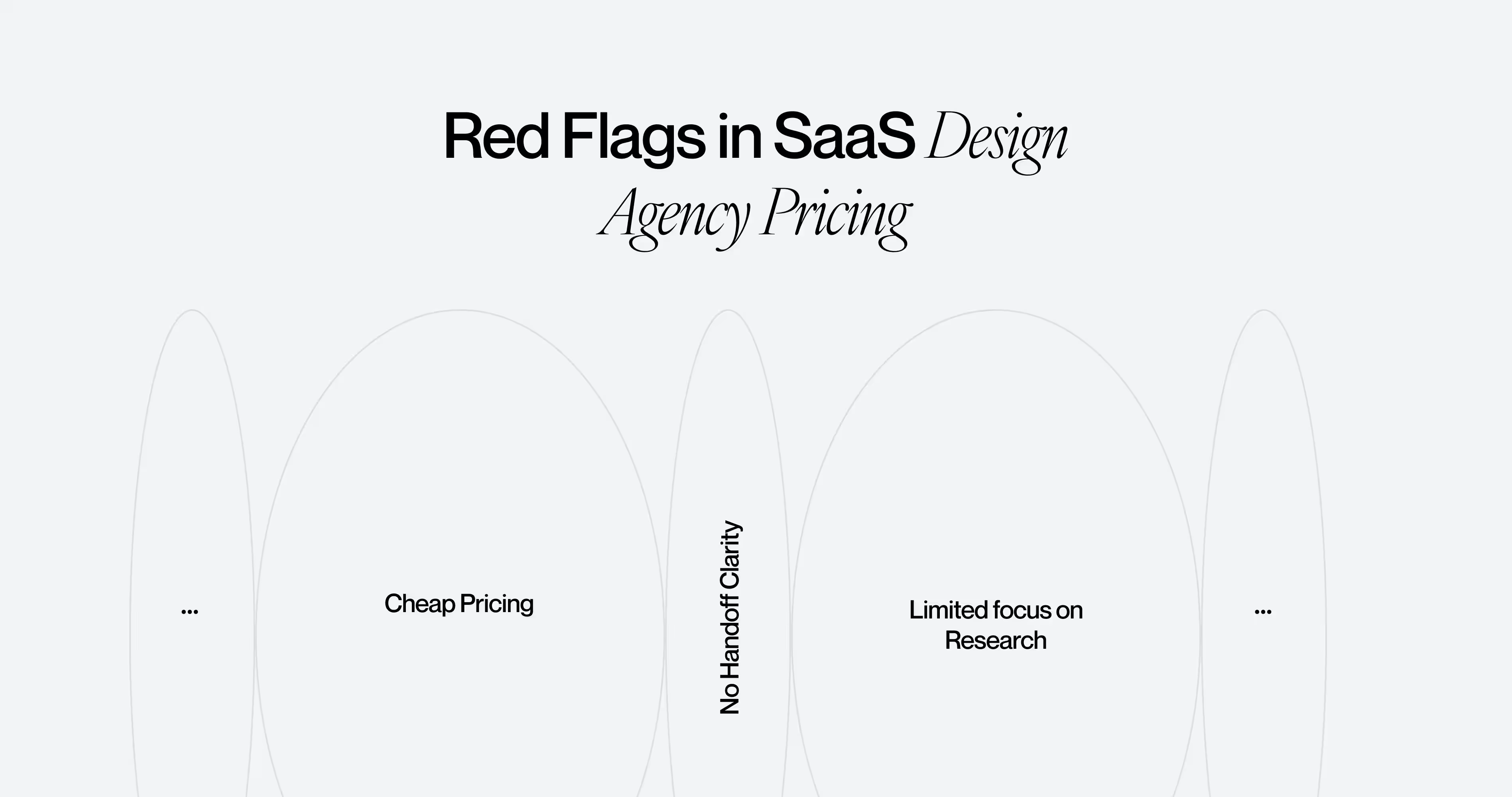
Cheap pricing is not always the problem. Unclear pricing is. When a quote feels unusually low, overly broad, or too easy to say yes to, it is worth slowing down and looking closer.
In many cases, weak pricing signals point to weak process, missing scope, or support that may not hold up once the project starts.
- Prices that seem too low: If one quote is far below the rest, something is usually missing. It may be strategy, revision room, UX work, or proper handoff support.
- Vague deliverables: If the proposal says things like “full design support” or “complete UX/UI package” without defining pages, screens, flows, or outputs, the scope is probably too loose.
- Unlimited requests with no delivery terms: Unlimited requests can work well, but only when the plan states turnaround time, how many requests run at once, and how revisions are handled. If those terms are missing, there is usually a catch somewhere.
- No research process: Some agencies move straight into visuals without learning much about the product, users, or goals. That may lower the price, but it can also lower the quality of the outcome.
- No handoff clarity: If the proposal does not explain what happens after the design is approved, that is a problem. Developers may need support, and files may need more structure than simple mockups.
No SaaS-specific case studies: SaaS products come with flows, logic, edge cases, and growth needs that not every agency understands. If there is no relevant work to show, the fit may not be as strong as it seems. A good agency will share SaaS case studies that show the scope, timeline, and outcome of each project.
What Orbix Studio charges for SaaS design
We publish our pricing because SaaS teams should not have to book a call just to see a number. As a SaaS design agency, here is where our work usually lands:
Every project starts with a short scoping call, so the final number is based on your actual screens and flows, not a guess.
Which pricing model is best for your saas company?
The right pricing model depends on where your company is right now. A team with one clear project in front of it will need something different from a team shipping new features every month.
That is why the best model usually comes down to stage, scope, and how often design work shows up.
Best fit for early-stage startups
Early-stage teams usually do best with focus. The budget is tighter, priorities change fast, and the goal is often to get one important thing done well, not build a long design process around everything.
That is why fixed project pricing often works well at this stage. If the need is clear, like a landing page, a small website, or an MVP design scope, it gives more control over cost and keeps the project easier to manage.
Best fit for growing saas companies
As the company grows, design work usually stops being occasional. New pages, product updates, onboarding improvements, feature launches, and conversion work start showing up more often.
At that point, one-off projects can start to feel slow. A monthly retainer is often a better fit because it gives the team ongoing support without having to restart the relationship every time new work comes up.
Best fit for teams with continuous design demand
Some SaaS teams always have something in motion. Product updates, growth experiments, design cleanup, new flows, support for developers, and marketing work can all run at the same time.
That kind of demand usually fits better with a retainer, subscription, or dedicated design team. When design needs are continuous, continuity tends to work better than repeated project pricing.
Frequently Asked Questions
How much does a SaaS design agency charge?
Most SaaS design agencies charge between $5,000 and $30,000 for project-based work. Smaller jobs can start around $3,000, while larger redesigns or strategic product work can go well beyond $50,000.
Is a retainer better than project pricing?
A retainer is usually better when design needs are ongoing each month. Project pricing works better when the scope, timeline, and deliverables are already clear from the start.
What is usually included in SaaS design pricing?
SaaS design pricing often includes discovery, UX work, wireframes, UI design, revisions, and developer handoff. Some agencies also include design systems, workshops, or strategy, while others price those separately.
What pricing model is best for startups?
For most startups, fixed project pricing is the simplest place to start. It gives clearer budget control and works well when the team needs one defined outcome like an MVP, landing page, or small website.
Why do SaaS design agency prices vary so much?
Prices vary because agencies scope work differently and include different levels of depth. Scope size, product complexity, research, revision rounds, and handoff support can all change the final quote.
How much does SaaS website design cost?
SaaS website design usually costs between $5,000 and $30,000+ depending on page count, messaging complexity, and CMS needs. Smaller sites cost less, while larger marketing sites with custom sections and templates cost more.
How much does SaaS product design cost?
SaaS product design often starts around $8,000 to $15,000 for lighter MVP work and can reach $20,000 to $75,000+ for larger redesigns. Pricing depends on screen count, flows, complexity, and strategic involvement.
How much does a design system cost for a SaaS product?
A SaaS design system usually costs $5,000 to $10,000 for a basic component library and $15,000 to $20,000+ for a complete, documented system. Covering both web and mobile, or building a brand system alongside it, pushes the cost higher.
How much does a 30-day SaaS design sprint cost?
A 30-day SaaS design sprint usually costs $10,000 to $20,000 with an agency. The final price depends on the number of screens, the size of the team, and whether research and developer handoff are included.
How much does design as a service cost for a SaaS startup?
Design as a service, often sold as a design subscription, usually costs $2,000 to $10,000 per month. Most early-stage SaaS startups start at $3,000 to $5,000 per month for one senior designer working on one request at a time.
Final thoughts
The best pricing model is not always the cheapest one. It is the one that fits your scope, your team, and the way design work actually happens inside your company.
If you know what you need and want help choosing the right setup, the next step is simple: compare the scope, the process, and the level of support behind the price. That is usually where the real value shows up.


.svg)
.svg)


.svg)







.avif)



.svg)

