


.svg)

%201%201.svg)
SaaS Rebranding Cost: A Complete Guide to Pricing, Budgeting & ROI
- A brand refresh can cost 50-70% less than a full rebrand, making it a practical option for companies updating their look without changing their market position.
- Brand strategy, visual identity, website redesign, product UI updates, and brand rollout account for most of the total project cost - not just logo design.
- Companies should reserve 15-30% of their budget for hidden costs such as SEO migration, design system updates, marketing assets, and implementation.
SaaS rebranding costs typically range from $5,000–$20,000 for a brand refresh and $50,000–$250,000+ for a full rebrand. The final investment depends on far more than a new logo - it includes brand strategy, positioning, visual identity, website updates, product UI, and implementation across every customer touchpoint.
Whether you're preparing for a funding round, entering a new market, or repositioning your product, understanding these cost drivers helps you build a realistic budget and avoid expensive surprises later.
This guide breaks down SaaS rebranding costs by company stage, explains where your budget goes. We’ll also compare brand refreshes with full rebrands, and uncover the hidden costs many SaaS companies fail to plan for.
How Much Does Rebranding a SaaS Company Cost?
SaaS rebranding typically costs $5,000 to $250,000+, depending on the scope of the project. A visual refresh for an early-stage startup costs far less than a complete rebrand that includes brand strategy, product updates, website redesign, and a company-wide rollout.
These are industry benchmarks rather than fixed prices. The final budget depends on the scope of work, not just the size of the company.
A project focused on a new logo and visual identity will cost much less than one that includes brand strategy, messaging, product UI, website updates, and implementation across every customer touchpoint.
As companies grow, rebranding becomes more complex. More stakeholders are involved. More assets need updating. The product, website, sales materials, documentation, and marketing channels all need to stay consistent.
That additional work increases both the timeline and the overall investment .A useful way to think about your branding investment is where the budget actually goes. Strategy and positioning usually account for 15–25% of the project.
Visual identity and brand guidelines represent 25–35%. Product, website, and marketing implementation often require the largest share at 35–50%, while rollout, training, and launch activities make up the remaining 10–20%.
If you're comparing proposals, don't focus on price alone. Compare the deliverables. Two agencies may quote the same budget while offering very different levels of strategy, research, implementation, and post-launch support.
Understanding that difference makes it easier to choose the right partner and avoid unexpected costs later. Looking for a custom estimate? Explore our Brand Design Service to see what's included in a professional SaaS branding project.
Rebranding Cost Breakdown SaaS
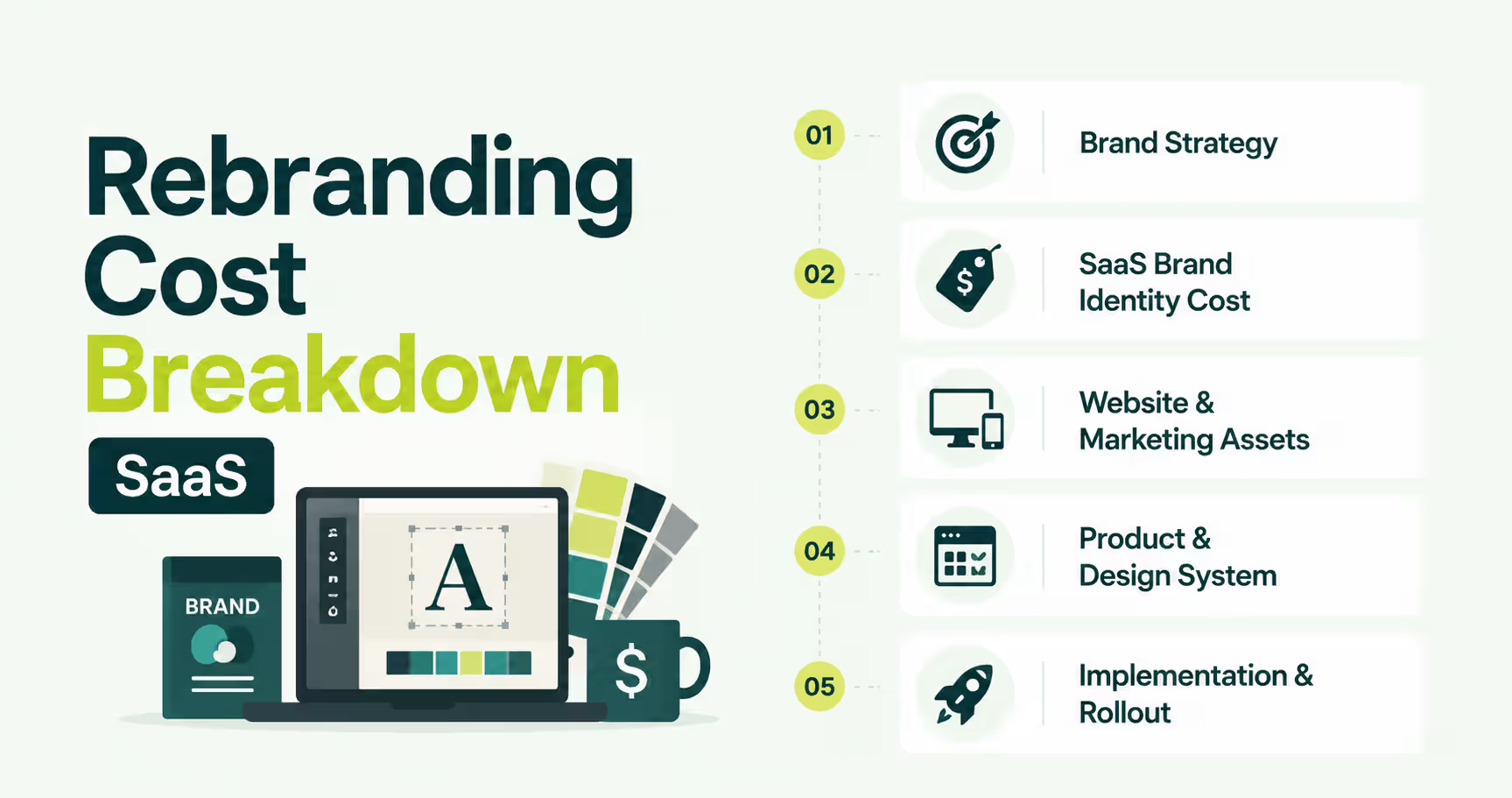
A SaaS rebrand involves much more than designing a new logo. It combines strategy, messaging, visual identity, website updates, product design, and implementation into one coordinated project. Each stage requires different skills, time, and resources, which is why costs can vary so widely between companies.
Understanding these cost categories helps you see where your budget is being invested and which deliverables have the greatest impact on the final price.
Brand Strategy
Brand strategy is the foundation of every successful SaaS rebrand. Before any visual work begins, the focus is on understanding the business, the market, and the customers.
This stage defines how your company should be positioned, what makes it different, and how that value should be communicated across every touchpoint.
Typical deliverables include stakeholder workshops, customer and competitor research, brand positioning, audience personas, a messaging framework, value proposition, brand architecture, and tone of voice.
These decisions guide everything that follows, from your website copy to your product interface and sales messaging.
Because strategy shapes every part of the rebrand, it usually represents 15–25% of the total project budget. Companies that skip this step often end up redesigning visual assets later because the underlying positioning was never clearly defined.
Typical Deliverables
✔️ Brand audit
✔️ Customer & competitor research
✔️ Brand positioning
✔️ Messaging framework
✔️ Value proposition
✔️ Brand architecture
✔️ Tone of voice
✔️ Brand strategy documentation
If you're launching a new product, targeting a different customer segment, or repositioning after funding, investing in strategy first usually delivers better long-term results than starting with visual design alone. You can learn more about building a scalable brand foundation in our Brand Design for Startups guide.
SaaS Brand Identity Cost
A visual identity system gives your SaaS company a consistent look across every customer touchpoint. Instead of creating separate designs for your website, product, marketing, and sales materials, it defines one visual language that every team follows.
This goes far beyond designing a logo. A complete visual identity includes your logo system, typography, color palette, iconography, illustrations, motion style, and brand guidelines. Together, these assets make your website, product, presentations, and marketing materials look like they belong to the same company.
One of the biggest investments is creating the rules behind the design. Brand guidelines explain how every asset should be used, while a shared asset library gives teams access to approved logos, graphics, and templates.
According to Nielsen Norman Group, consistency helps people learn and recognize interfaces faster, making products easier to use and brands easier to remember.
Well-documented design systems from companies like Atlassian and IBM Carbon also show how shared standards help large teams maintain consistency as products grow.
Typical Deliverables
- Logo system (primary, secondary, app icon, favicon)
- Typography hierarchy
- Color palette with accessibility standards
- Iconography and illustration library
- Motion design principles
- Brand guidelines
- Shared asset library
- Marketing and social media templates
For most SaaS companies, a visual identity system represents 20–35% of the total rebranding budget. The cost isn't driven by the logo itself - it's driven by creating a complete system that designers, developers, and marketers can reuse for years.
If you'd like to understand how all the pieces fit together, read our What Is SaaS Branding guide.
Website & Marketing Assets
The number of assets you have is one of the biggest factors behind rebranding costs. A startup with a 10-page website and a few sales slides has much less work than a SaaS company with hundreds of landing pages, ads, emails, presentations, and product screenshots.
Every asset needs to match the new brand. That means updating website pages, marketing copy, product visuals, sales decks, email templates, social media graphics, and downloadable resources. If customers see different logos, colors, or messaging across these channels, the rebrand quickly loses its impact.
Typical Deliverables
- Website pages and landing pages
- Product screenshots and feature graphics
- Sales and investor presentations
- Email templates
- Social media and advertising creatives
- Case studies, ebooks, and downloadable resources
- Brand asset library
The website is only one part of the project. Every marketing asset must also be reviewed, redesigned, approved, and published. That's why larger SaaS companies often spend much more on this stage than startups.
According to Bynder, keeping brand assets consistent across teams is one of the biggest challenges for growing companies. A shared asset library helps marketing, sales, and product teams use the latest logos, graphics, and templates instead of creating their own versions.
If you're building a brand from the ground up, our Brand Design for Startups guide explains how to create assets that stay consistent as your company grows.
Product & Design System
For a SaaS company, the product is one of the biggest parts of the brand. Customers spend far more time inside the product than on the website. That's why a rebrand also includes updating the dashboard, navigation, buttons, forms, charts, and other interface elements. If the website looks new but the product doesn't, the brand feels inconsistent.
Many SaaS companies also build a design system during a rebrand. Think of it as a shared library of reusable components and design rules that keeps every screen consistent.
According to the Figma Resource Library, design systems help teams work faster while creating a more consistent product. Learn more in our Design Systems 101 SaaS Guide.
Typical Deliverables
- Product UI refresh
- Dashboard redesign
- Component library
- Design tokens
- UI patterns
- Design system documentation
- Developer handoff
As products grow, so does the amount of work. More screens, features, and user flows need to be updated, tested, and documented. That's why product updates and design systems usually account for 15–30% of a SaaS rebranding budget. The upfront investment is higher, but it also makes future updates faster and more consistent.
Implementation & Rollout
SaaS rebrand does not finish just after a new logo or website goes live. The new brand also needs to be applied everywhere customers interact with your business. If your website looks new but your product, sales deck, or help center still uses the old brand, the experience feels inconsistent.
As companies grow, brand assets spread across different teams. Marketing updates the website, product teams update the app, sales use presentations, and customer support manages help articles.
Implementation & successful rollout makes sure everyone works from the same brand guidelines, so customers see one consistent brand across every touchpoint.
Typical Deliverables
- Website and product launch support
- Sales and marketing asset updates
- Brand guidelines implementation
- Internal documentation
- Team training
- Quality assurance
- Asset library management
- Post-launch brand governance
A website rollout also needs careful planning. Pages may move, URLs can change, and content is often rewritten. Google Search Central recommends planning these changes carefully to help preserve search visibility after a website migration.
If your rebrand includes a new website, our SaaS Website Redesign guide explains how to manage the transition without losing traffic.
What Affects SaaS Rebranding Costs?
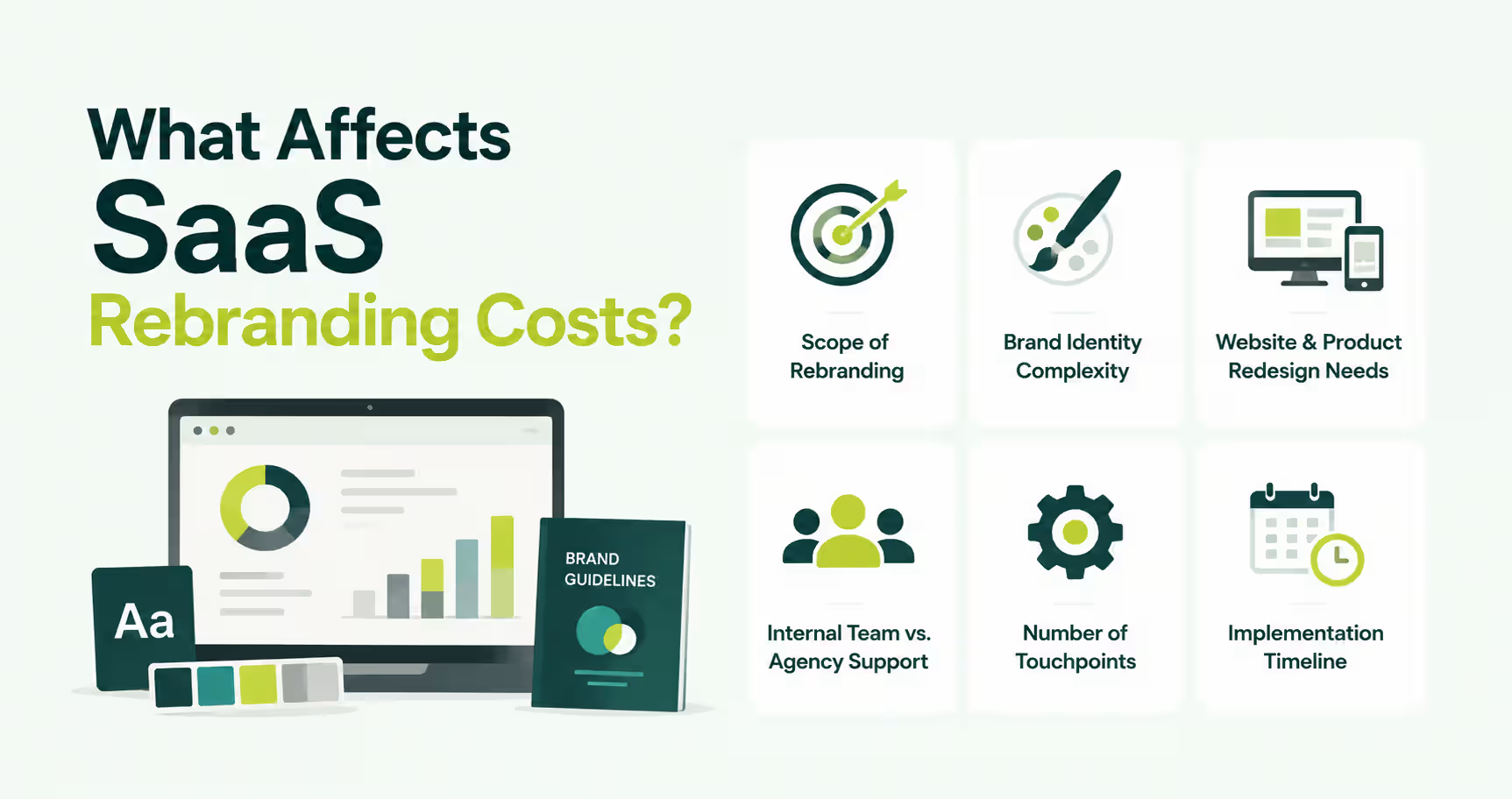
The price of a SaaS rebrand depends on one thing: how much work needs to be done. A startup refreshing its identity requires a very different project than an enterprise company updating its brand across products, teams, and markets.
Here are the biggest factors that affect the final cost
Company Stage & Business Goals
The bigger the business goal, the bigger the rebrand. A startup may only need a clearer identity to launch its product. A growing SaaS company might need new positioning, messaging, and a redesigned website.
Enterprise companies often rebrand to enter new markets, support acquisitions, or unify multiple products. At that scale the work usually goes to B2B branding agencies that can handle multi-product positioning, not just a new identity. According to McKinsey, companies frequently rebrand during major business transformations, not simply because they want a new look.
Brand Scope & Deliverables
A logo redesign costs far less than a complete brand system. Every deliverable adds work. Brand strategy, messaging, visual identity, brand guidelines, website assets, and marketing materials all require research, design, reviews, and documentation.
Product & Technical Complexity
The more places your brand appears, the more expensive the rebrand becomes. Updating a marketing website is one task. Updating hundreds of product screens, multiple languages, integrations, and design components is another.
Many SaaS companies also build a design system during a rebrand to keep every product and team consistent. The Figma Resource Library explains how design systems improve consistency and help products scale.
If your project also includes rebuilding the website, our SaaS Website Design Cost guide explains how technical complexity affects the budget.
Team Structure & Delivery
Projects slow down as more people become involved. A founder can approve designs in a day. Enterprise companies may need feedback from marketing, product, engineering, leadership, and legal teams before work moves forward. More reviews mean more revisions, longer timelines, and higher costs.
Your delivery model also matters. Freelancers usually handle one specialty, while agencies provide strategy, design, implementation, and project management under one team. Our SaaS Design Agency Pricing guide compares what's typically included at each pricing level.
If you go the agency route, here's how to choose a branding agency that can handle all four.
Brand Refresh vs Full Rebrand SaaS
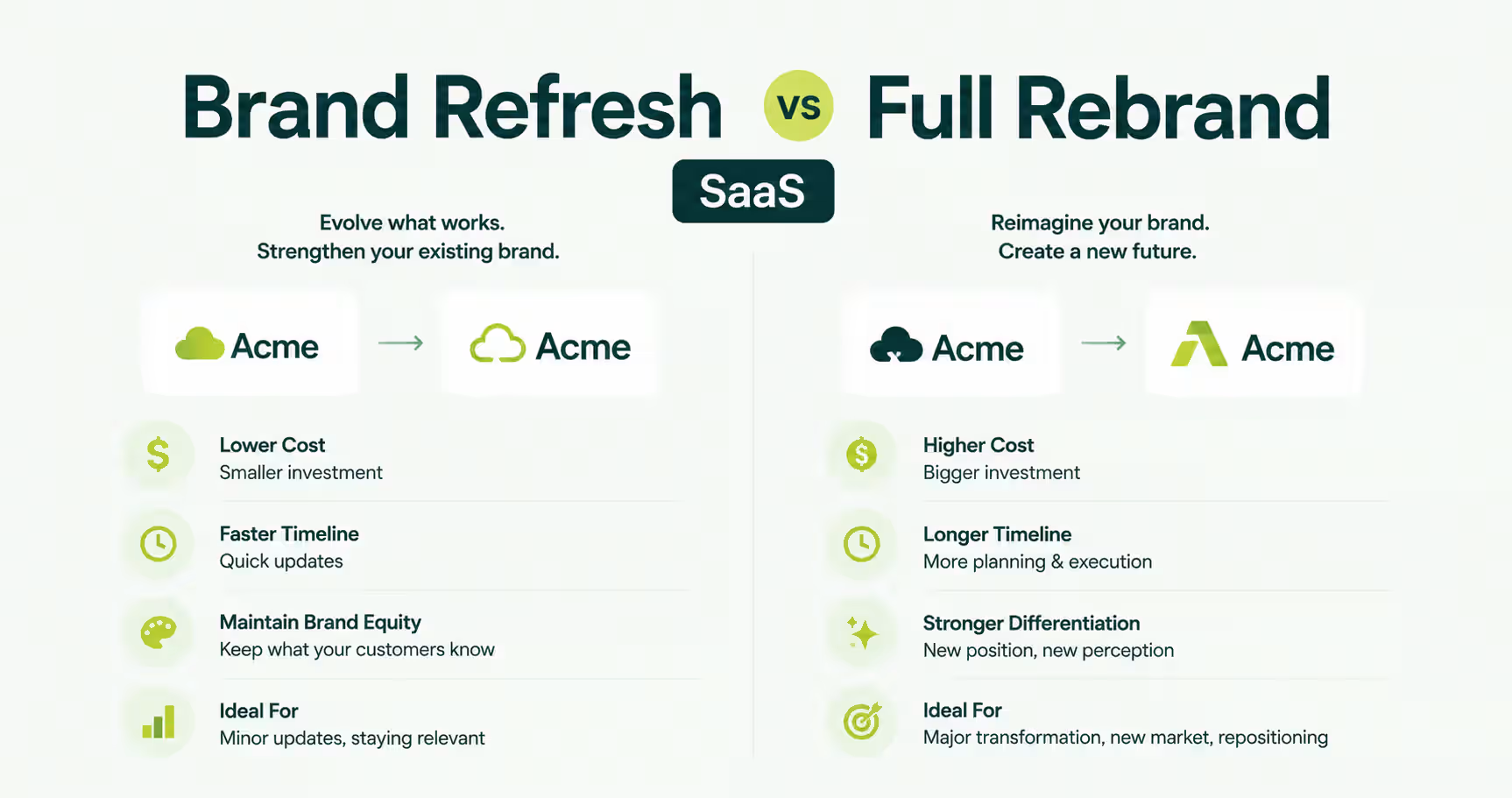
Not every SaaS company needs a full rebrand. Sometimes a visual update is enough to modernize the business. In other cases, the product, audience, or market has changed so much that the entire brand needs to be rebuilt. The table below compares both approaches and helps you choose the right investment.
A brand refresh is the right choice when your business is moving in the right direction, but your brand no longer looks current.
You may update the logo, improve the visual identity, refresh the website, and modernize your marketing assets while keeping your positioning and messaging largely the same. This approach costs less, takes less time, and works well when the business itself hasn't changed.
A full SaaS rebrand makes sense when the business has evolved. You may be targeting a new customer segment, entering a new market, launching new products, or repositioning after funding or an acquisition.
In these cases, updating the visuals alone won't solve the problem because customers also need a new understanding of what your company does and why it matters.
The easiest way to decide is to ask one question: Has the business changed, or only the brand? If only the visuals feel outdated, a brand refresh is usually enough. If your strategy, positioning, or audience has changed, investing in a full rebrand will create better long-term results.
This is why companies like Interbrand and Landor treat rebranding as a business decision rather than a design project. The strongest brands don't change because design trends change - they change because the business has grown in a new direction.
Hidden Costs of SaaS Rebranding
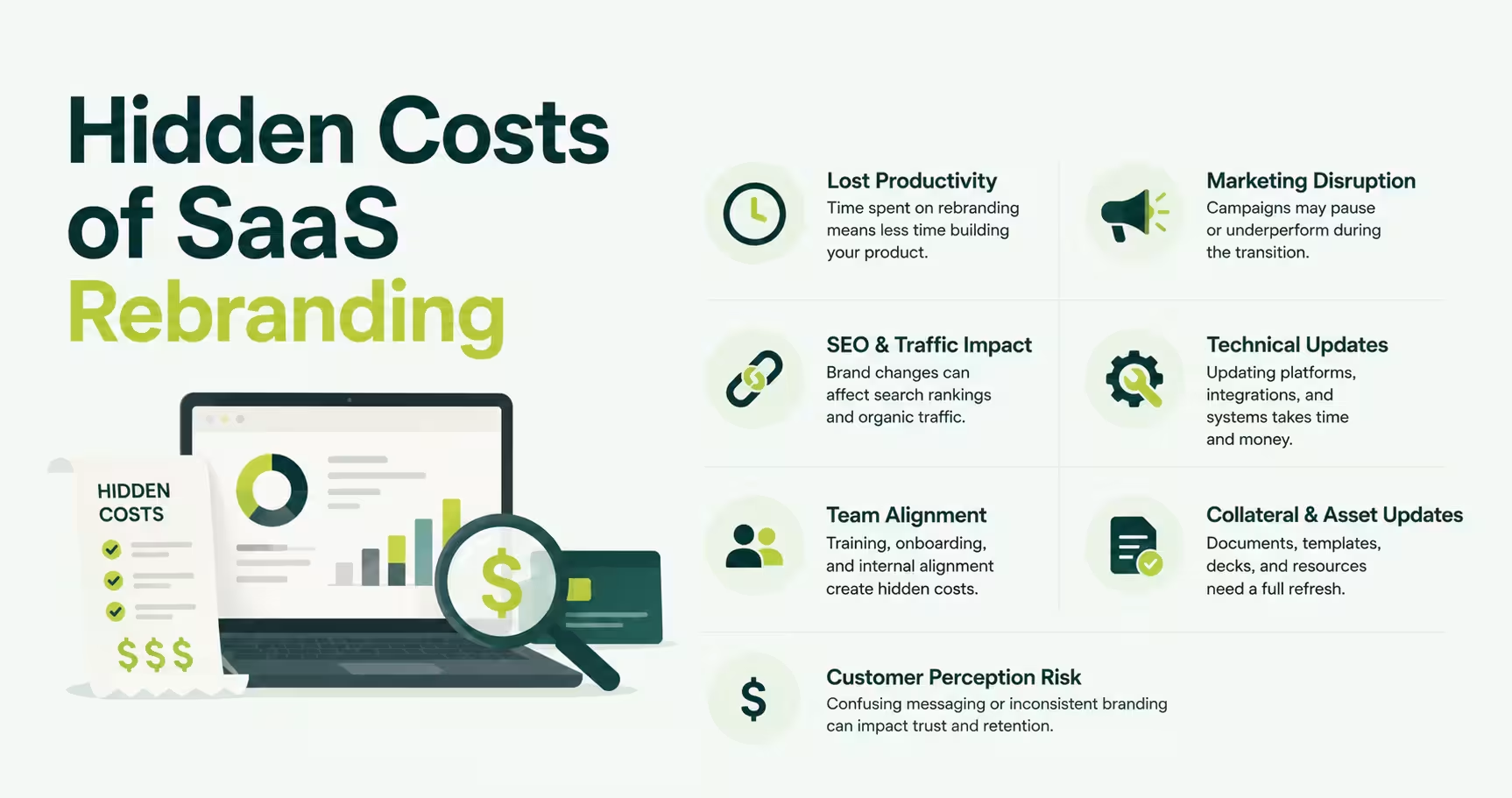
A rebranding budget doesn't stop at strategy, design, and development. Many of the biggest expenses appear during implementation, when every team, system, and customer touchpoint needs to adopt the new brand. These hidden costs are often left out of the initial estimate but can significantly increase the total project budget.
- SEO migration: Changing URLs, page structure, or content without a migration plan can reduce organic traffic. Redirects, metadata, internal links, XML sitemaps, and analytics all need to be updated to protect existing rankings.
- Product rollout: Updating the product usually takes longer than updating the website. Dashboards, onboarding flows, notifications, mobile apps, and UI components all need to match the new brand. The larger the product, the more testing and coordination this requires.
- Marketing asset migration: Every customer-facing asset needs updating, including landing pages, sales decks, product screenshots, email templates, social media graphics, and paid ads. Missing even a few assets creates an inconsistent brand experience.
- Operational costs: A new brand also changes internal operations. Teams need updated brand guidelines, asset libraries, CRM templates, support documentation, and training before they can use the new identity consistently. Without proper governance, employees often continue using outdated assets.
- Lost productivity during rollout: Designers, marketers, developers, and leadership all spend time reviewing, approving, and implementing the new brand. This temporary shift in focus can slow product releases and marketing campaigns while the rollout is in progress.
- Third-party platforms and integrations: Your brand may also appear in app stores, CRM systems, email platforms, partner portals, knowledge bases, and customer support tools. Updating these systems is often overlooked during budgeting, especially in larger SaaS organizations.
Frequently Asked Questions
When should you rebrand a SaaS company?
Rebrand your SaaS company when your positioning, audience, or product has changed. Common triggers include entering a new market, raising funding, launching new products, merging with another company, or outgrowing your current brand.
How do you rebrand a SaaS company?
A SaaS rebrand follows six steps: brand strategy, positioning, messaging, visual identity, website and product updates, and rollout. The goal is to align every customer touchpoint with your new brand.
How much does it cost to rebrand a SaaS company?
Most SaaS rebrands cost between $10,000 and $250,000+. A brand refresh typically costs $5,000–$20,000, while a full rebrand with strategy, product updates, and implementation usually starts around $20,000 and can exceed $250,000 for enterprise SaaS.
What's the difference between a brand refresh and a full SaaS rebrand?
A brand refresh updates your visual identity while keeping your positioning and messaging largely unchanged. A full rebrand rebuilds your strategy, messaging, visual identity, website, and product experience.
How long does a SaaS rebrand take?
A brand refresh usually takes 2–6 weeks. A full SaaS rebrand typically takes 2–6 months, depending on the number of stakeholders, product complexity, website updates, and rollout requirements.
What are the hidden costs of a SaaS rebrand?
The biggest hidden costs include SEO migration, product updates, marketing asset replacement, CRM updates, internal training, documentation, and rollout. Setting aside 10–20% of your total budget for implementation helps avoid unexpected expenses.
How do I choose the right SaaS branding agency?
Look for an agency with SaaS experience, strong case studies, a clear Saas rebranding process, and expertise in strategy, UX, branding, and product design. Compare scope, deliverables, timelines, and implementation support, not just the price.
Wrapping Up
There isn't a single price for SaaS rebranding because no two companies need the same level of work. A startup refreshing its brand and an enterprise repositioning its business will have very different budgets, timelines, and deliverables.
This guide covered the typical cost ranges, what's included in a rebrand, the biggest pricing factors, hidden costs, and how to decide between a brand refresh and a full rebrand. Use these benchmarks to build a realistic budget before starting your project.





.svg)
.svg)


.svg)







.avif)



.svg)

