


- How Much Does UI/UX Design Cost in Saudi Arabia?
- UI/UX Design Pricing in Saudi Arabia by Project Type
- UI/UX Design Packages and Pricing Models
- What's Included in UI/UX Design Pricing?
- How to Choose the Right UI/UX Design Agency in Saudi Arabia
- Frequently Asked Questions
- What Your UI/UX Design Budget Really Depends On




.svg)

- UI/UX design in Saudi Arabia costs between SAR 5,000 and SAR 150,000+, depending on your project.
- The biggest factors are project size, features, number of screens, and design complexity.
- Freelancers cost less. Agencies provide a full team, research, testing, and long-term support.
- Getting several quotes and comparing what's included helps you choose the best value, not the lowest price.
If you're planning a new website, mobile app, or SaaS product, one of the first questions you'll ask is: how much will the design cost? The answer isn't simple, because every project carries different goals and requirements.
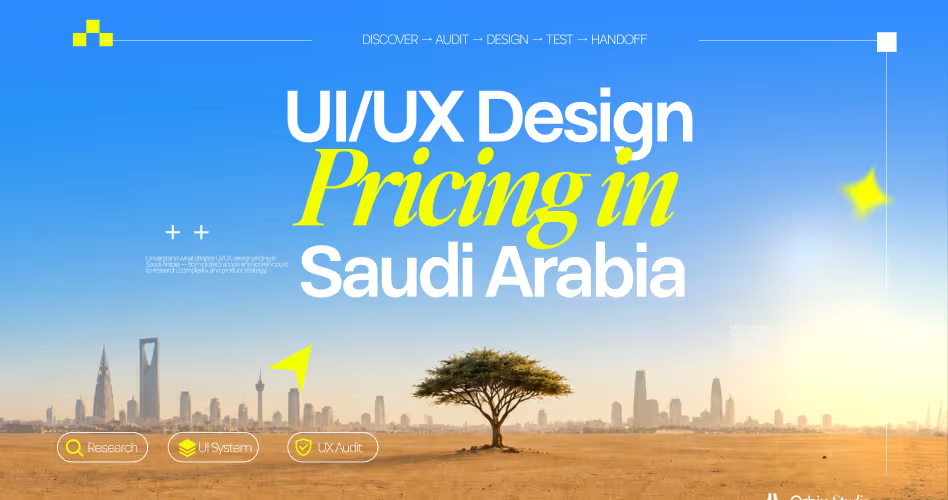
UI/UX design pricing in Saudi Arabia ranges from a few thousand Saudi Riyals to well over SAR 150,000. The final price depends on your project's size, features, timeline, and the experience of the designer or UI/UX design agency you hire.
This guide breaks everything down in plain terms. You'll see average pricing, compare project types, learn what affects the cost, and find tips for choosing the right UI/UX design service.
How Much Does UI/UX Design Cost in Saudi Arabia?
UI/UX design in Saudi Arabia costs between SAR 5,000 and SAR 150,000+. Smaller projects, like a business website or landing page, sit at the lower end of that range.
Larger projects, such as mobile apps, SaaS platforms, and enterprise software, cost more because they need more research, screens, testing, and design work.
The final price depends on the type of product, the number of screens, design complexity, project timeline, and whether you hire a freelancer or a UI/UX design agency in Riyadh, Jeddah, or elsewhere in the Kingdom. If your project includes user research, usability testing, or a design system, expect to pay more.
The table below shows average UI/UX design pricing in Saudi Arabia for the common project types.
UI/UX Design Pricing in Saudi Arabia by Project Type
Every UI/UX project is different, so the price varies. Designing a business website takes less time than creating a mobile app or a SaaS platform with many features. Product type, screen count, user research, and complexity all shape the final cost.
Below you'll find average UI/UX design pricing in Saudi Arabia by project type, along with what's typically included and how long each project takes.
Website UI/UX Design Cost
If you're building a website, know that not all websites cost the same. A one-page landing page for a marketing campaign takes far less time to design than a corporate website with dozens of pages, custom user journeys, and interactive features.
Instead of asking what website UI/UX design costs, ask what kind of website you're building. That's the biggest factor in your budget. A few-page site is faster to design, while larger websites need more planning, more screens, and more testing before development.
The table gives you a general idea of what to expect in Saudi Arabia. Keep in mind these are averages.
Your final cost may run higher or lower depending on scope, the number of unique pages, the amount of user research, and whether you need custom UI components, responsive layouts, or bilingual Arabic and English designs. Bilingual work adds real cost, because right-to-left layouts require their own spacing, typography, and component rules.
When comparing quotes, don't look only at the total. Check what's included. A higher quote may cover research, wireframes, interactive prototypes, usability testing, and developer handoff, while a lower quote may cover visual design alone. Understanding the inclusions helps you pick the best value, not the cheapest option.
Mobile App UI/UX Design Cost in Saudi Arabia
Unlike websites, mobile apps aren't priced by page count. They're priced by what users need to do inside the app.
Think about a banking app. A user signs in, transfers money, views transactions, receives notifications, and manages an account. Now compare that to a fitness app that only tracks workouts.
Both might carry a similar number of screens, but the banking app demands far more planning, testing, and user experience design. That's why mobile app UI/UX design cost climbs so quickly with complexity.
The same logic applies to startup apps, consumer apps, healthcare apps, and cross-platform apps. As your app adds features, user journeys, and interactions, both design time and budget increase.
Before comparing prices, list the features your app actually needs. Login systems, payments, messaging, booking, maps, dashboards, and push notifications each add design work.
A clear feature list helps agencies quote accurately and prevents surprise costs later. Our work on CouriQ and NexCard shows how feature scope drives the design timeline.
MVP UI/UX Design Cost
If you're building your first product, you don't need to design every feature on day one. That's what an MVP, or Minimum Viable Product, is for. An MVP focuses on the core problem your product solves, so you launch faster, collect feedback, and improve over time.
This approach helps startups avoid spending months designing features nobody needs. Founders often chase the "perfect" product first. In reality, investors and early users want a working product that proves the idea, not a long feature list.
A well-designed MVP includes only the essential user flows: signing up, completing one main task, and viewing results. Keeping the scope small reduces both your design budget and your launch timeline.
As a rule, a good MVP should carry 20% to 30% of your final product's features while delivering 100% of its core value. Every extra feature adds screens, user flows, testing, and revisions, which drives the cost up fast.
Start with the features users need, validate the idea, then invest in more functionality as the product grows. That's the fastest and cheapest route to launch.
SaaS and Web App UI/UX Design Cost
Unlike a website or mobile app, a SaaS product isn't something users visit once and leave. It's a tool they open every day to manage their work.
Whether it's a CRM, ERP system, customer portal, or analytics dashboard, the goal is to help users finish tasks faster, find information quickly, and stay productive.
That's why SaaS UI/UX design takes longer and costs more. Designers don't just build attractive screens. They organize large amounts of data, simplify complex information, and keep the interface usable as new features arrive.
Good SaaS design reduces training time, improves user adoption, and makes everyday tasks easier for customers. It also helps you avoid the SaaS UX mistakes that force expensive rebuilds a year later.
When estimating your budget, think about how people use the product daily, not just how many screens it holds. Products with multiple user roles, detailed reports, real-time data, and advanced permissions need far more planning and testing than simpler web apps. We break the numbers down further in our guide to SaaS dashboard design cost.
Investing in good UX early reduces support requests, improves retention, and makes future updates easier to build.
Enterprise UI/UX Design Cost
Enterprise UI/UX design differs sharply from designing a startup product or a business website. You're designing for hundreds or thousands of users across teams, departments, and locations.
The goal isn't a good-looking interface. It's a product that stays consistent, scalable, and usable as the business grows.
Instead of one user journey, enterprise projects carry multiple user roles, each with different permissions and responsibilities. An HR platform may need separate experiences for employees, managers, recruiters, and administrators.
Keeping those experiences consistent takes detailed planning, reusable components, and a design system the whole product team can build on.
Enterprise UI/UX projects are long-term investments rather than one-time engagements. Companies often keep working with the same design team to expand features, maintain a shared design system, and improve the product over time.
The upfront cost is higher, but a scalable design foundation helps teams move faster, reduces inconsistencies, and lowers the cost of every future update.

UI/UX Design Packages and Pricing Models
UI/UX agencies in Saudi Arabia offer design packages to make pricing easier to read. Instead of paying for every service separately, you get a set of deliverables based on your project's size and goals.
Agencies price in two ways. Fixed-price packages are the common choice, because they lock the scope and make budgeting predictable. Hourly rates run roughly SAR 200 to 600 depending on seniority, and they suit open-ended or exploratory work.
If you're unsure which package you need, don't start with your budget. Start with your product. A startup building its first MVP needs a very different package than a company redesigning an enterprise platform.
These packages are general examples. Every agency bundles different services, so compare what's included rather than the final number. A higher-priced package can save money later if it covers research, testing, or a reusable design system.
What's Included in UI/UX Design Pricing?
The final design is one part of a UI/UX project. Behind every screen sits a process that helps teams understand users, solve problems, and prepare the product for development. Here's what a professional UI/UX design project typically includes.
01. Discovery and Project Planning
Every successful UI/UX project starts with a clear plan. Before design work begins, the team meets with your decision-makers to understand business goals, target audience, and project requirements.
They also identify the priority features and build a roadmap that outlines what gets designed and when.
This step aligns expectations. When scope is clear from the start, teams avoid misunderstandings, reduce revisions, and hold the schedule.
02. User Research and UX Audit
Good design is built on real user needs, not guesses. Designers study how people use similar products, review competitors, and identify the problems worth solving.
If you're redesigning an existing product, a UX audit surfaces usability issues and improvement areas. The team may also build user personas and customer journey maps to understand behavior.
Insights from this phase let designers make informed decisions and create experiences that are easier to use. Nielsen Norman Group's usability research is the standard reference for why this stage pays for itself.
03. Wireframes and User Flows
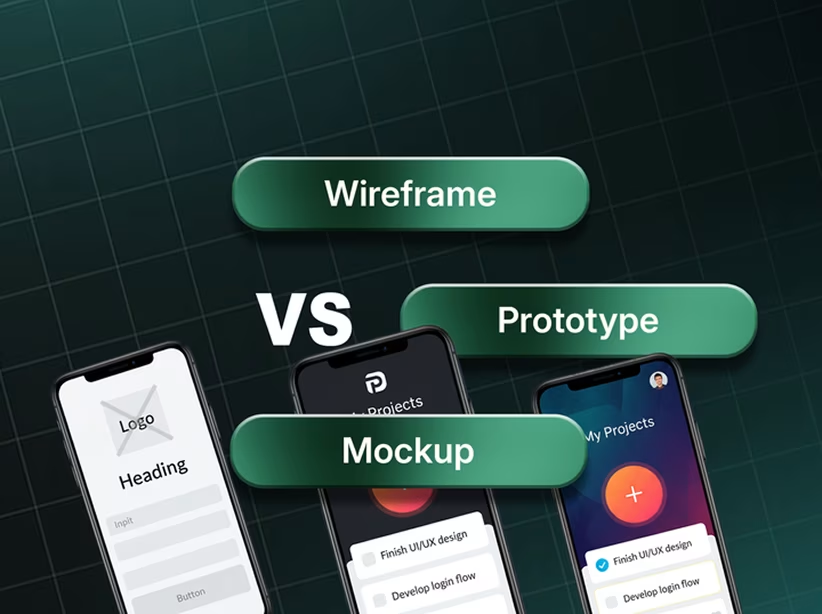
Before adding colors, icons, or branding, designers focus on how the product should work. They build user flows to map the steps people take to finish tasks, then create low-fidelity wireframes to plan each screen's layout.
This stage also covers navigation and information architecture, so users find what they need quickly.
Changing a wireframe is far faster and cheaper than redesigning polished screens later, which protects both time and budget.
04. UI Design and Interactive Prototypes
Once the layout is approved, designers turn wireframes into polished interfaces. They apply colors, typography, icons, spacing, and branding to create high-fidelity UI designs.
Interactive prototypes built in Figma let clients click through the product and feel how it works before development starts. Feedback and revisions land here too.
Reviewing a realistic prototype helps teams catch design issues early and gives everyone confidence before development begins.
05. Testing and Developer Handoff
The final stage prepares the design for development. Designers test the interface for usability issues, review accessibility, and organize reusable components into a design system when needed.
They hand developers the Figma files, specifications, assets, and documentation needed to build every screen accurately.
A complete handoff cuts confusion, speeds up development, and helps the shipped product match the approved design.
How to Choose the Right UI/UX Design Agency in Saudi Arabia
Choosing a UI/UX design agency in Saudi Arabia isn't about finding the lowest price. A good agency should understand your business, explain its design decisions, and run a clear process from discovery to developer handoff.
Before you sign a proposal, compare agencies against the checklist below.
A great UI/UX agency makes the process feel clear, not confusing. If an agency can't explain how they work, what you'll receive, or why they recommend certain decisions, ask more questions before moving forward.
The right partner is transparent from day one and helps you make informed decisions, not just attractive screens. Orbix Studio works with teams across Riyadh and the wider Gulf on exactly this kind of engagement.
Frequently Asked Questions
How much does UI/UX design cost in Saudi Arabia?
UI/UX design in Saudi Arabia typically costs between SAR 5,000 and SAR 150,000+. Landing pages and business websites cost less, while mobile apps, SaaS platforms, and enterprise products need a larger budget because they involve more research and design work.
How much should I budget to hire a UI/UX designer?
Your budget depends on the project. A small website may need SAR 5,000 to 20,000, while a startup MVP usually runs SAR 15,000 to 40,000. Larger mobile apps and SaaS platforms often require SAR 30,000 to 100,000+.
What's the average cost of a UI/UX design project?
UI/UX design projects in Saudi Arabia commonly fall between SAR 20,000 and SAR 60,000. The final cost depends on product type, feature count, the design process, and the experience of the designer or agency.
What's the difference between freelance vs agency UI/UX design cost?
Freelance UI/UX designers are generally the more affordable option for websites, landing pages, and small MVPs. Agencies charge higher prices because they offer additional services such as research, strategy, usability testing, and developer handoff.
How much do UI/UX design agencies charge per hour?
Agencies in Saudi Arabia charge roughly SAR 200 to 600 per hour, depending on experience and the services included. Fixed-price projects are more common, because they make budgeting easier and define the scope up front.
What factors affect UI/UX design pricing?
The biggest factors are product type, project scope, number of screens, design complexity, user research, testing, timeline, and whether you hire a freelancer or an agency. More features and custom work mean higher design costs.
How much does it cost to design a mobile app's UI/UX in Saudi Arabia?
Mobile app UI/UX design costs between SAR 20,000 and SAR 100,000+. A simple startup app costs far less than a fintech, healthcare, or enterprise app with advanced features and multiple user flows.
Do design agencies in Saudi Arabia charge in SAR or USD?
Agencies based in Saudi Arabia quote in Saudi Riyals. Agencies serving international clients may also quote in USD, especially for remote or global projects.
What's typically included in a UI/UX design package?
A standard package covers discovery, user research, wireframes, UI design, interactive prototypes, revisions, and developer handoff. Larger packages add usability testing, design systems, and ongoing design support.
How does the project timeline affect design cost?
Tight deadlines raise the cost, because agencies assign more people or work outside their normal schedule. A flexible timeline usually earns you a more competitive quote and leaves more room for feedback and revisions.
What Your UI/UX Design Budget Really Depends On
The best way to estimate your UI/UX design cost in Saudi Arabia is to understand what you're building and what your users need. Once your scope is clear, comparing quotes and choosing a pricing model gets much easier.
Whether you're building a website, mobile app, SaaS product, or enterprise platform, thoughtful UI/UX design leads to a better product and a smoother development process. Ready to scope your project properly? Get a project estimate →
.avif)


















.avif)
