- Brand vs. Branding vs. Brand Identity: The Quick Answer
- What is a Brand?
- What is Branding?
- What is Brand Identity?
- Brand vs. Branding vs. Brand Identity: Side-by-Side Comparison
- How the Three Actually Work Together
- Real Examples: Brand, Branding, and Identity in Practice
- Common Mistakes Companies Make
- Signs Your Brand and Branding Are Out of Sync
- How to Know Which One You Actually Need
- Frequently Asked Questions
- Fix the Layer That's Actually Broken


.svg)

%201%201.svg)
Brand vs. Branding vs. Brand Identity: What's the Real Difference?
- Brand is the perception in a buyer's head, branding is the strategy, brand identity is the visible system.
- The order only runs one way: strategy first, expression second, perception last.
- The top mistake: building a logo before anyone agrees on the positioning behind it.
You ask five people on a marketing team to define "brand," "branding," and "brand identity." You'll usually get five different answers. Half of them will quietly contradict each other.
That confusion isn't harmless. A creative brief written around the wrong term sends a design partner chasing the wrong problem for weeks. The budget gets spent. The core issue doesn't move.
Here's the short version before the long one. Brand is a perception. Branding is a strategy. Brand identity is a visible system.
They sit on top of each other in that exact order. Getting the order backward is where rebrand budgets quietly disappear, one design revision at a time.
This guide breaks all three terms apart. It shows exactly how they connect, then gives you a way to check which one your team actually needs to fix first. That last part matters more than the definitions, because nearly every team already senses something is off. They just aim the fix at the wrong layer.
Brand vs. Branding vs. Brand Identity: The Quick Answer
A brand is the perception that exists in someone's mind after they interact with your company. Branding is the deliberate work of shaping that perception on purpose. Brand identity is the visible system, logo, color, type, voice, that carries the strategy into the world.
None of the three terms is optional, and none substitutes for the other two. A company with a strong brand identity and no branding strategy looks polished and says nothing memorable. A company with sharp branding and no brand identity has a clear story that nobody can recognize twice.
Brand is the result. Branding is the plan. Brand identity is the delivery mechanism.
Here's a fast way to sort any request into the right bucket. A conversation about who you are and why you're different is branding. A conversation about the logo, the palette, or the deck template is brand identity. A conversation about what people already think of you is brand, and no design file fixes that directly.
Skipping straight to identity work without settling the strategy first causes rebrands to underdeliver more often than any other single mistake. The pattern gets covered in more depth in what brand identity actually covers, including the parts of the system teams tend to miss.
What is a Brand?
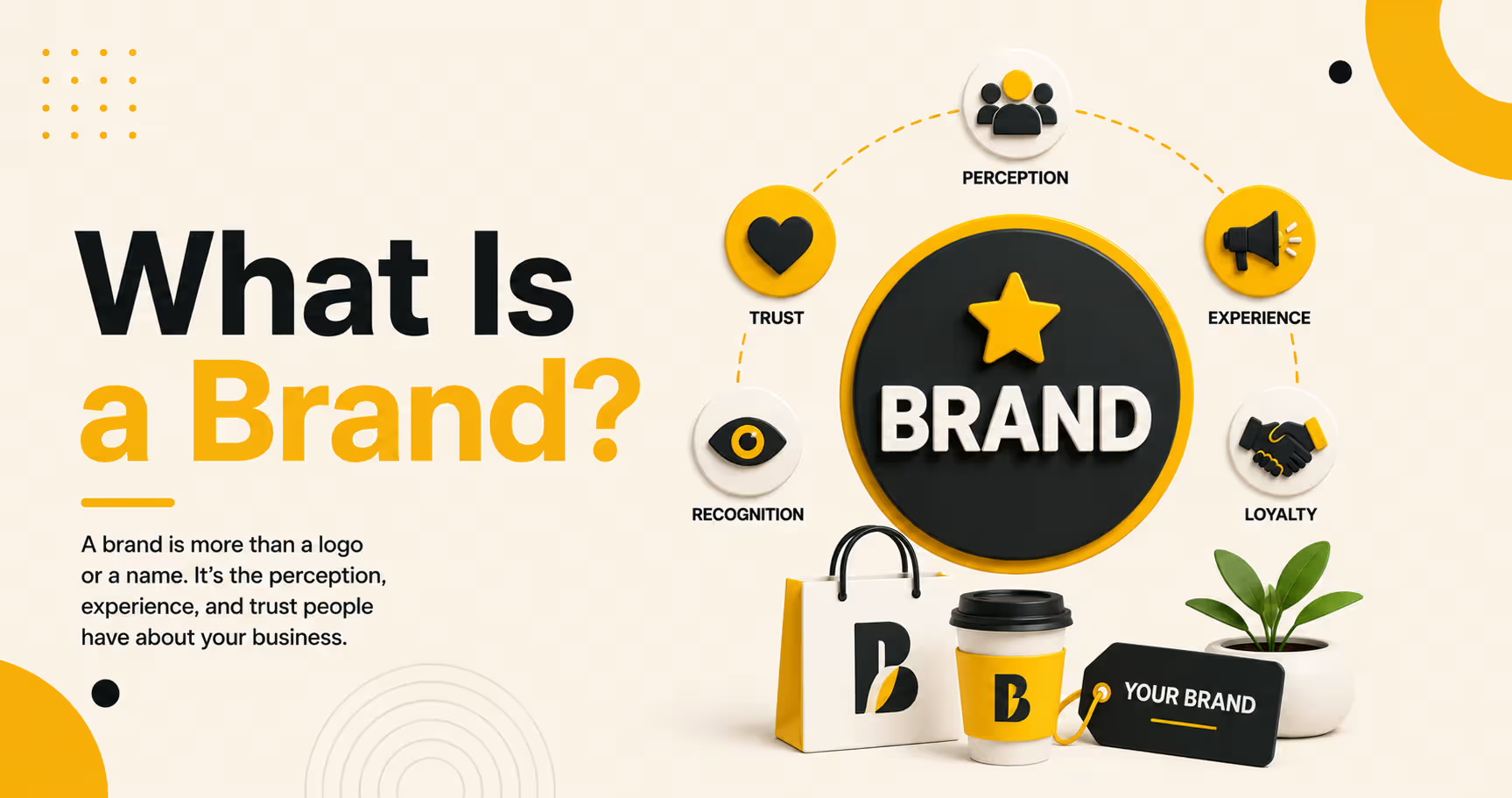
A brand is the sum of every impression someone forms about your company over time. It's not a file. It's not a logo or a slogan. It's a judgment that lives in someone else's head, and you influence it without ever fully controlling it.
That judgment forms in specific moments, not in the abstract. A prospect notices a sales deck that looks rushed at midnight. A visitor notices a website nobody has touched in years. A support ticket sits unanswered for three days, and the impression shifts again.
None of those moments involve a logo. Every one of them still shapes the brand quietly, in the background, whether your team is paying attention or not.
A brand is a verdict your market reaches with or without your input.
That's why treating "brand" as a deliverable is the wrong model from the start. An agency can hand you a finished logo file on a Friday. Nobody can hand you a finished brand.
A brand only exists in aggregate. It gets built from every interaction a buyer has with your company across months, sometimes years. The mistake compounds fast in B2B. Gartner's research shows a single purchase decision can involve six to ten people, each forming a separate impression before anyone compares notes.
What is Branding?
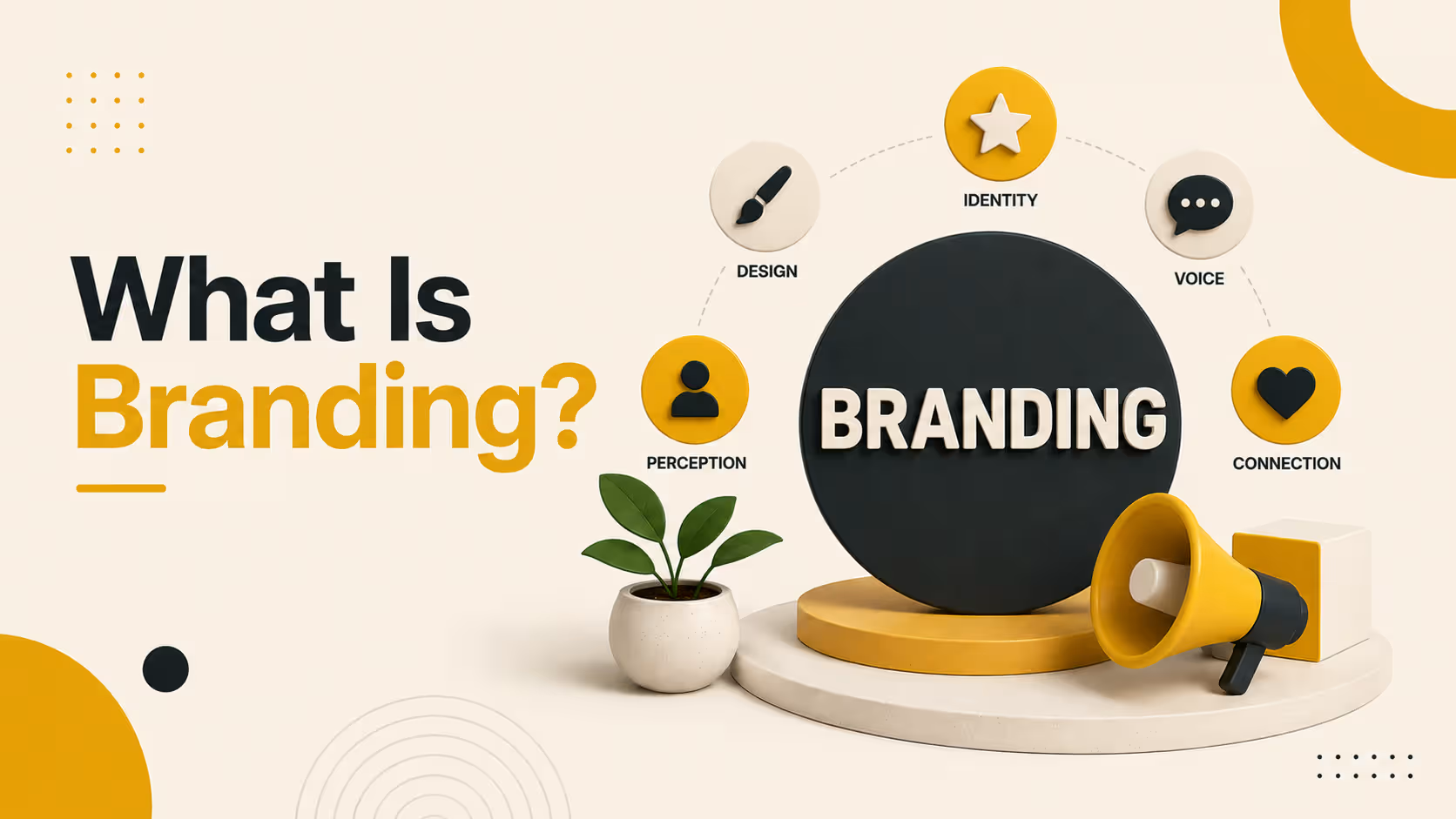
Branding is the ongoing, deliberate work of deciding what your company stands for. It's how you shape the way the market comes to understand you. Branding covers positioning, messaging, the promise you repeat, and the trade-offs you're willing to name out loud.
Branding rarely produces one finished file you hand off and close out. It's a discipline, not a one-time project with an end date. The work continues as the market shifts and competitors change what they claim.
Good branding answers a short list of hard questions before a single visual gets made. Why does this company exist? Who is it actually built for, and just as important, who is it deliberately not for?
Branding is the answer to "why us." Brand identity is how that answer gets seen.
Skip that question and jump straight to a mood board, and the result is a good-looking company with nothing to say. The visuals ship on schedule. The sales team keeps struggling to close deals anyway, and nobody on the leadership team can explain why.
That exact failure pattern shows up constantly in SaaS branding work. Product-led companies skip positioning often, because the product itself feels like proof enough on its own. It usually isn't enough on its own.
A product without a clear position competes on features alone. Features get matched by a competitor within a quarter, sometimes faster.
What is Brand Identity?
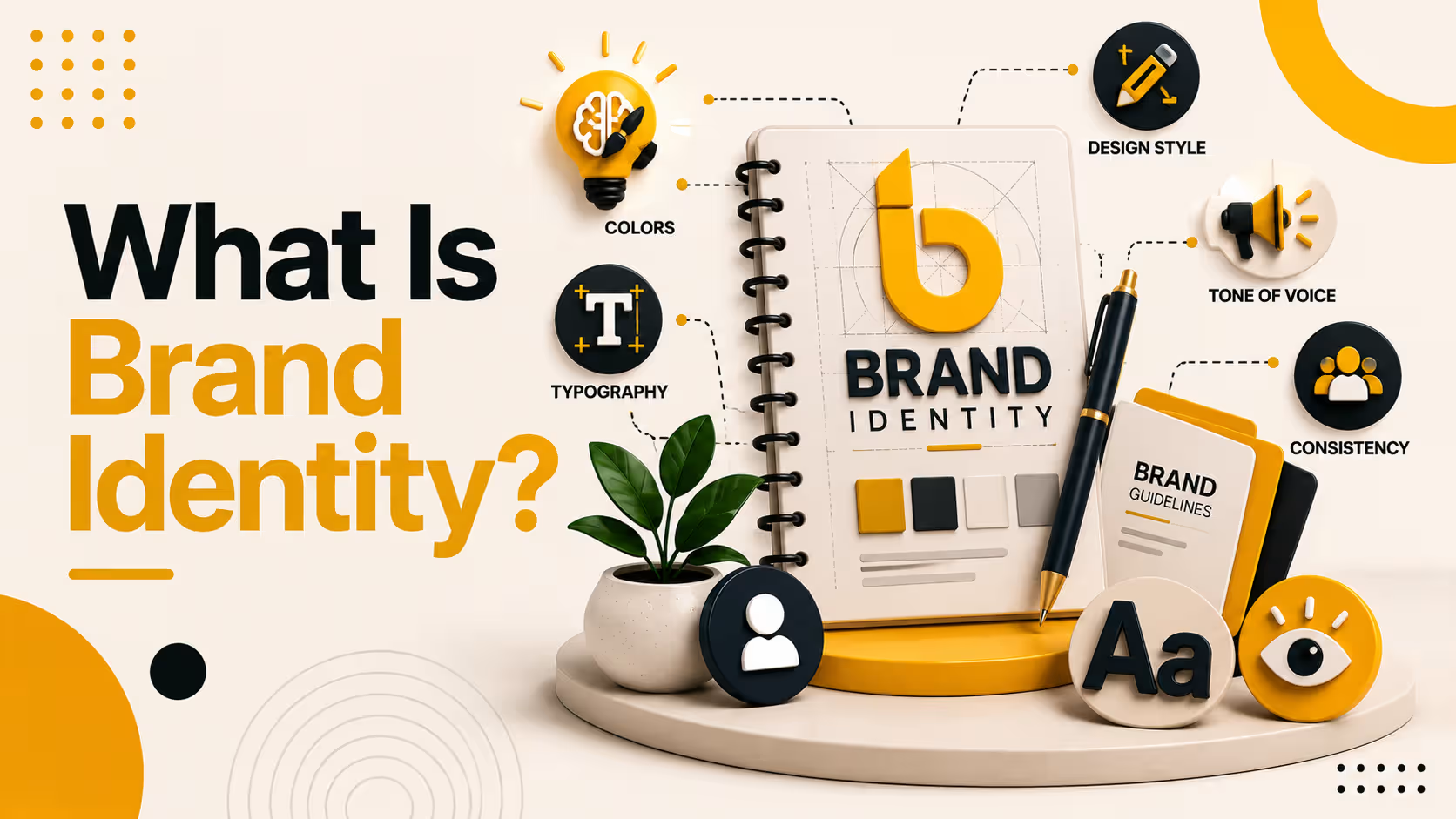
Brand identity is the collection of visible and audible assets that carry your branding strategy into the world. That includes the logo, color palette, typography, imagery, and a defined voice. It's the part of the system a designer actually builds and ships.
If you can see it, print it, or click through it, it's identity work. It isn't strategy work, no matter how good it looks on a screen.
Brand identity extends far past the logo once you look at where a buyer actually spends time. That list includes the sales deck template, the proposal document, the onboarding sequence, and the product interface itself. Each surface either reinforces the brand or quietly works against it.
A strong brand identity behaves like a system, not a style: every asset follows the same rules so nothing looks like it was shipped from a different company.
That system idea gets missed often. Teams treat brand identity as a folder of logo files instead of a rulebook. The gap shows up fast once a sales deck, a product interface, and a marketing site get built by three different people. No shared reference exists between any of them.
The fix looks like a proper SaaS design system. That means one source of truth for color, type, and components that every team pulls from instead of guessing on their own.
Skip that system, and a company can spend a real budget on identity work and still look inconsistent within two quarters. The money gets spent, but the consistency problem never actually gets solved.
Brand vs. Branding vs. Brand Identity: Side-by-Side Comparison
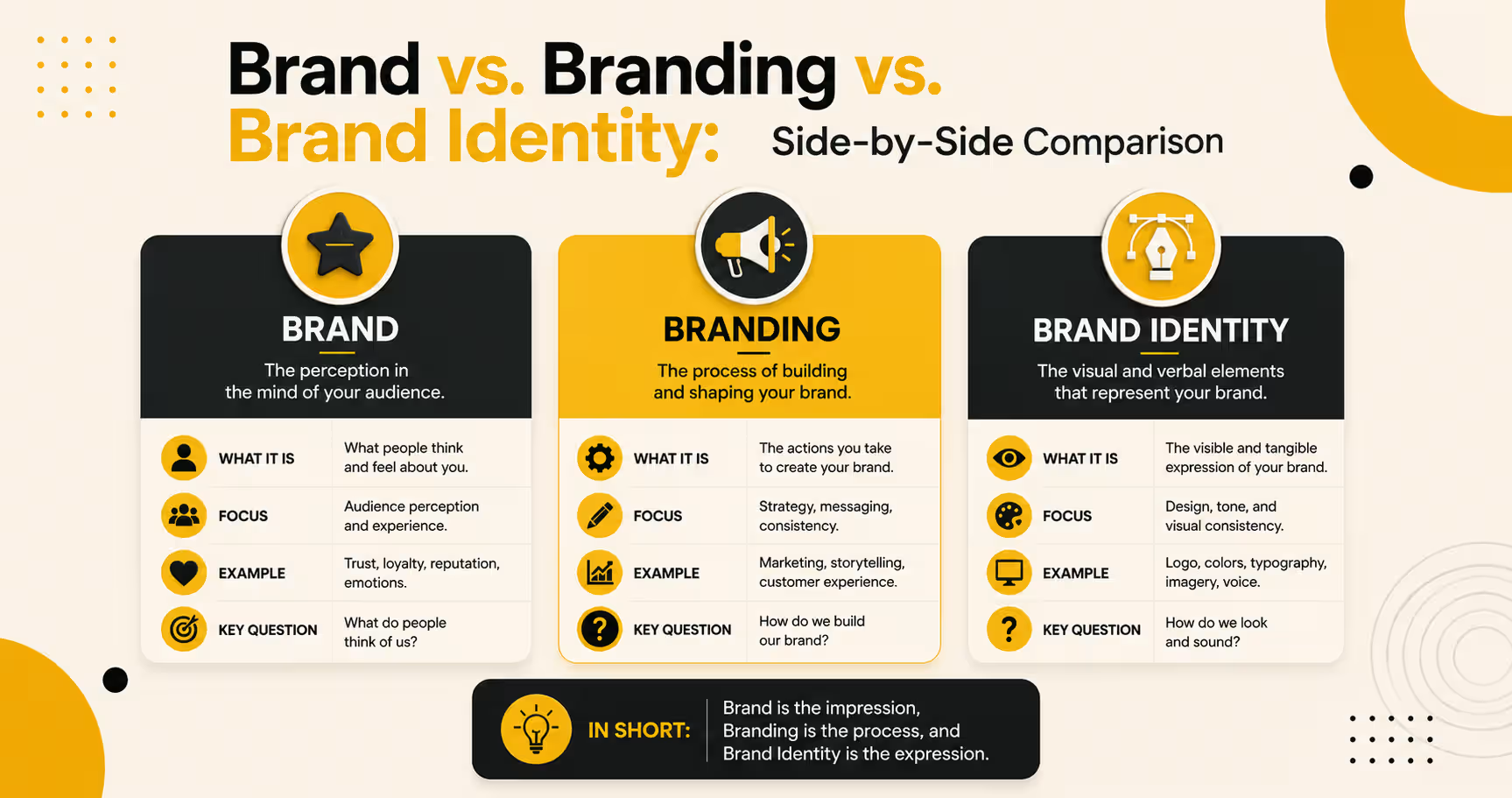
Seeing all three side by side settles the confusion faster than any single definition can on its own. Each term answers a different question, changes on a different timeline, and gets owned by a different part of the business.
None of the three rows work alone. A company can have a flawless brand identity and still lose deals if the branding underneath is muddy. A company can have sharp branding and still confuse buyers if the identity contradicts the position at every turn.
How the Three Actually Work Together
The three terms follow a fixed sequence, and the sequence only runs one direction. Branding sets the direction first. Brand identity expresses that direction visibly second. Brand is the outcome that forms once enough people encounter that expression consistently, over time.
Reversing the order doesn't save time. It only delays the cost to a later, more expensive stage of the project.
A logo built before the strategy exists gets redesigned eventually. That happens the moment leadership finally agrees on a real position. The rework almost always costs more than sequencing the project correctly the first time around.
Get the sequence right once, and every asset built afterward defends the same position instead of contradicting it.
When we work on rebrands at Orbix Studio, the pattern holds without exception. A positioning workshop happens before a single mockup gets opened, every time, no exceptions made for a tight deadline.
That sequence shaped the solar technology rebrand in our brand design work. The identity system only got built once the market position was locked in writing and signed off by leadership.
Rebuilding an identity system after the fact usually means a new website, new sales material, and updated templates. Everything ships twice instead of once. That doubled cost, not a design preference, is the real argument for sequencing branding before identity on every project a team takes on.
Real Examples: Brand, Branding, and Identity in Practice
Abstract definitions get clearer once you watch the three layers play out inside a real company instead of a textbook case study. Three examples show the pattern from different angles.
Stripe positioned itself early as payments infrastructure built for developers, not finance teams. That's branding: a deliberate choice about who the company serves and who it deliberately ignores. The identity system followed from that choice, not the other way around.
Clean documentation, a minimal visual language, and code-first marketing all express the developer-first position. None of it contradicts that original choice, even years later and several product launches on.
Linear took a similar path in a different category entirely. The branding decision was to build project management for engineering teams who hate slow software. The brand identity followed that decision closely.
A fast, dark-mode-first interface and a visual language closer to a code editor than a spreadsheet carried that position everywhere. The perception that resulted, Linear as the tool serious engineering teams choose first, is the brand. Nobody wrote that perception directly into existence.
It emerged from consistent identity work expressing one clear position, over and over, across every surface a user touched. That repetition is what turned a design choice into a market perception people repeat to each other.
HubSpot shows what happens at a bigger scale over a longer runway. The branding bet was inbound marketing as an entire category, not just a single product feature. Every piece of brand identity, from the orange color system to the friendly, educational tone, reinforces that original bet more than a decade later.
None of these companies started with a logo. They started with a decision about who they're for, and let the identity system carry that decision everywhere it needed to go.
That pattern holds regardless of company size. It's exactly why the mistakes below repeat so often across companies that skip the first step entirely.
Common Mistakes Companies Make
The same handful of mistakes shows up across rebriefs, whether the company is ten people or five hundred. Nearly all of them trace back to one root cause: skipping the branding conversation and jumping straight into design work.
First mistake is hiring a designer to solve a positioning problem. A logo refresh can't fix a message nobody understands. It just gets a nicer coat of paint, and the same confusion ships again in a prettier file.
Second is refreshing the identity without touching the strategy underneath it. New colors and a new typeface on the same unclear positioning produce an expensive version of the same exact problem.
Both mistakes share one root cause worth naming directly. Someone treated a strategy problem as a design problem. No amount of visual polish closes that particular kind of gap.
A few more patterns are worth naming too. Each one is easy to catch once you know what to look for:
- Building a strategy deck nobody operationalizes. Branding without identity work stays a slide deck. It never reaches the sales floor, the B2B website, or the product interface where buyers actually look for proof.
- Letting every team build its own version of the brand. Sales decks, the product interface, and the marketing site drift apart within two quarters without a shared system to pull from.
- Copying a consumer brand playbook in a B2B context. B2B and B2C design diverge sharply: a consumer brand can lean on emotion and impulse, while B2B SaaS has to survive procurement, legal, and a technical evaluation first.
- Picking the wrong partner for the job. A freelancer versus agency decision depends on scope, and the in-house versus agency question follows the same logic once the work touches every surface a buyer sees.
Tip: Before hiring anyone, write one sentence answering "why us over the other three options." If that sentence doesn't exist yet, the branding work isn't finished, and no rebranding agency can design their way around that gap.
Letting brand identity drift across teams isn't only an internal headache. According to Marq's brand consistency research, companies that present their brand consistently across every channel see revenue gains of ten to thirty-three percent.
Fixing the mistakes above still leaves one practical question open. That question is where to start first, and the next two sections answer it directly.
Signs Your Brand and Branding Are Out of Sync

These mistakes rarely announce themselves as strategy problems up front. They show up as smaller, everyday friction that a team learns to work around instead of fixing at the source.
A sales rep improvises the company pitch differently every call. That's the clearest early sign of a branding gap, because a defined position doesn't require improvisation. Every rep should land on roughly the same answer without a script.
Marketing describes the company one way, and sales describes it another way in the same week. That split is a branding problem wearing two different outfits, and it usually means the positioning was never written down anywhere both teams can reference.
The website gets redesigned every twelve to eighteen months, and each version looks like a different company entirely. Frequent identity churn without a stable strategy underneath is one of the clearest warning signs of a positioning gap. It keeps getting patched with a new logo instead of actually solved.
How to Know Which One You Actually Need
Teams reach for a design brief constantly when the real gap sits one layer up, in the strategy nobody wrote down yet. This checklist sorts the request before a single dollar gets spent on the wrong deliverable.
Start with a brand. Maybe the problem is that people don't trust you yet, or a past bad experience is still following the company around. Either way, no design project fixes that directly. That's a product and service problem first.
Brand identity work only helps once the underlying experience actually improves for real. Design can amplify a good experience. It cannot manufacture one that doesn't exist yet.
Move to branding next. If your team can't agree on why a customer should pick you over the next three options, the gap is strategic, not visual. Fix positioning before anyone opens a design tool.
A design tool just makes existing confusion look more polished, not less confusing. That's a trap teams fall into constantly, mistaking a clean file for a clear answer. Write the positioning down, then turn it into a brand messaging framework the team can actually write from.
Check brand identity last. The positioning might be clear, and the team might agree on it. But if the logo, deck, and website all look like three unrelated companies, that's an identity problem. It's the fastest of the three to fix properly once the strategy underneath is settled.
Brand design for startups covers what that first identity build should include, once the strategy is locked and everyone on the team agrees on it.
A team that skips straight to identity work almost always has a branding problem wearing a design costume.
Run this check honestly before the next brief goes out. The layer you skip now becomes the layer you end up paying for twice, later, at a worse time.
Frequently Asked Questions
What's the difference between brand, branding, and brand identity?
Brand is the perception people hold about a company. Branding is the deliberate strategy behind shaping that perception. Brand identity is the visible system, logo, color, typography, voice, that expresses the strategy. They build on each other in that exact order, not interchangeably.
Which comes first, branding or brand identity?
Branding comes first. Brand identity should express a position that already exists, not invent one from scratch. Designing a logo before the strategy is settled usually means redoing the identity work later, once leadership finally agrees on the real positioning underneath it.
Is brand identity the same as visual identity?
Not quite, though brand identity is slightly broader. Visual identity covers logo, color, and typography specifically. Brand identity also includes voice and tone guidelines. A company's written personality counts as identity too, not just what it looks like on a screen.
What's the difference between branding and marketing?
Branding defines who a company is and what it stands for, independent of any single campaign. Marketing promotes specific products or offers using that branding as the foundation. Branding stays consistent for years, while marketing tactics shift constantly by channel and quarter.
Can a company change its branding without changing its brand identity?
Yes. A company can update its positioning, messaging, or target market without touching the logo or visual system. That's especially true if the existing identity still fits the new direction. A full identity refresh only becomes necessary once the old visuals contradict the new position.
Why do brand and branding get confused so often?
Both words share a root, and both describe ideas that never show up as a single file on their own. Brand identity gets confused less often for a different reason: it's the one part of the system you can actually point at directly.
How much does it cost to fix brand identity versus branding?
Brand identity work is usually the cheaper, faster fix once positioning is settled, often a matter of weeks. Branding work costs more up front because it requires research and internal alignment, but skipping it makes identity projects expensive to redo later on.
Fix the Layer That's Actually Broken
Brand, branding, and brand identity fail for the same reason when a team gets the order backward. A visible asset ships before the thinking behind it is settled. The market notices the gap before the internal team ever does, and by then the fix costs more than it would have upfront.
Before your next project starts, run the three-question check from this guide. Be honest about which layer is actually missing. A project that feels like a design problem is usually a positioning problem wearing a design brief.
Want a second opinion on which layer needs the work first? Orbix Studio works with companies on exactly this kind of branding and brand identity work. See our brand design work ->






.svg)
.svg)


.svg)







.avif)



.svg)

