


- UI/UX Design Cost in Dubai
- UI/UX Designer Hourly Rates in Dubai 2026
- Freelancer vs Agency: Why the Gap Is Wider in Dubai
- UI/UX Design Cost by Project Type in Dubai
- What Actually Moves the Price in Dubai
- How to Get a Quote You Can Actually Trust
- Why Orbix Studio for UI/UX Design in Dubai
- Frequently Asked Questions
- Get an Exact Number for Your Dubai Project





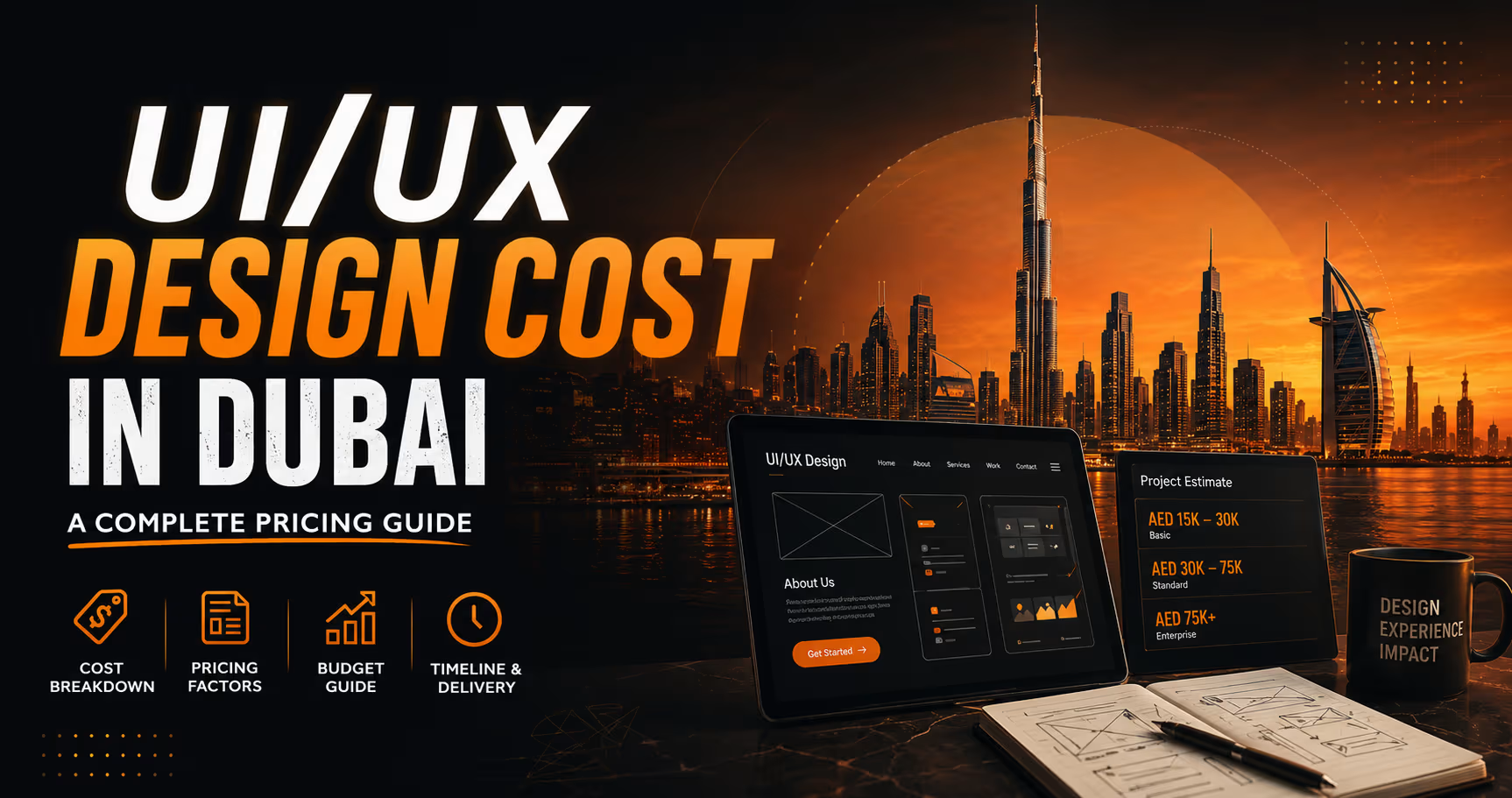
- UI/UX design in Dubai costs AED 6,000 to AED 550,000 or more, based on project scope.
- Freelancers bill AED 90 to 900 an hour; agencies bill AED 600 to 1,800 an hour.
- The three line items missing from a typical quote: VAT, screen states, and revision limits.
"How much does UI/UX design cost in Dubai?" is the question every founder asks before signing anything. The honest answer sits across a wide range. A single landing page screen in Dubai runs AED 6,000 to 20,000. A full SaaS platform with research, prototyping, and testing can cross AED 200,000.
Neither number is wrong. They describe two different jobs, and that gap is exactly why quotes look so different. Four studios can quote the same brief four different ways because they are rarely pricing the same project.
One assumes 10 screens. Another counts empty states, error states, and loading states, and lands on 40. One bill is AED 150 an hour from a freelancer working out of Sharjah. Another bill is AED 1,000 an hour from a Business Bay studio with a project manager sitting between you and the designer.
This guide breaks down real 2026 Dubai numbers: hourly rates, project pricing, VAT, and freelance permit costs. It also covers the hidden line items that swing a quote by 30% before anyone opens Figma. By the end, you will know what number to expect and why two quotes for the same brief can look nothing alike.
UI/UX Design Cost in Dubai
UI/UX design in Dubai costs anywhere from AED 6,000 for a single screen to AED 550,000 or more for a full enterprise platform. That range depends on screen count, platform, and how much research happens before the first frame gets built. The table below shows the spread by project type, pulled from live 2026 Dubai market data across freelancers, boutique studios, and full agencies.
Clutch's own directory of Dubai UI/UX agencies shows quotes clustering at similar points on this scale. That's a useful sanity check when a number feels off. If a vendor quotes AED 15,000 for what reads like a full SaaS platform, that price is missing something the brief asked for.
For the same breakdown in US dollars, plus freelancer and agency rates outside the Gulf, see the complete 2026 UI/UX design cost guide. It covers every market Orbix Studio has quoted work in, from New York to Dubai.
The project type sets the floor. Research depth, revision rounds, and platform count decide how far above that floor you actually land.
A number on a table means little without knowing what sits behind it. So what actually decides where your project falls on that scale?
UI/UX Designer Hourly Rates in Dubai 2026
A UI/UX designer in Dubai charges between AED 90 and AED 1,800 an hour in 2026. That gap comes down to who is holding the pen. A junior freelancer working solo and a senior art director inside a full-service studio are not selling the same hour. The invoice might use the same job title, but the work behind it is not comparable.
Upwork's own Dubai listings show this same spread among independent UX designers, from entry-level execution rates to senior specialists charging four figures a day. That range is not a pricing error. It reflects the market pricing in experience, speed, and how much hand-holding a project needs.
A AED 150-an-hour designer who finishes in three focused weeks often costs less than a AED 90-an-hour designer who drags the same brief across two months. Hourly rate and total project cost are two different numbers. Only one of them matters at invoice time.
That rate spread only tells half the story. The other half is who you are actually hiring: a solo freelancer, or a studio with layers of process behind them.

Freelancer vs Agency: Why the Gap Is Wider in Dubai
A freelancer and an agency in Dubai do not just charge different rates. They carry different cost structures, and Dubai's overhead makes that gap wider than in comparable Western markets. A Business Bay or DIFC studio pays commercial rent, staff visas, and a corporate trade license before a single design hour gets billed.
An independent freelancer working from a freelance permit carries almost none of that overhead. That difference alone explains why an agency quote can run 40% to 60% higher than a freelancer quote for a similar scope on paper.
None of that overhead is wasted by default. A project manager catches scope drift before it becomes a change order. A studio can also absorb a designer going on leave without your timeline slipping.
The question isn't which model is better. It's which risk you would rather carry yourself.
Neither option is the wrong choice by default. A freelancer vs agency comparison matters more than the price tag alone. The real question is what happens when the scope shifts mid-project, not what the first invoice says.
Founders who already have a designer on staff face a different version of this decision. Weighing an in-house design team against an outside studio usually comes down to one thing: whether the design work is continuous or project-based. SaaS teams weighing the same trade-off run into this at a larger scale, with more budget on the line.
The cheapest quote and the cheapest project are rarely the same thing once a scope change hits. So how does the price actually change once you move from a landing page to a full product?
UI/UX Design Cost by Project Type in Dubai
Project type is the single biggest lever on a Dubai UI/UX quote, bigger than hourly rate or even who you hire. A landing page and an enterprise dashboard are not the same job scaled up. Each one needs a different research depth, a different screen count, and a different testing cycle.
An MVP built for a first product launch typically needs 15 to 25 core screens. Count the empty states, error states, and onboarding flows, and that number often doubles. That is why a "simple app" quote and a real MVP quote can sit AED 40,000 apart for what sounds like the same brief.
Here's a pattern that shows up often: a brief quote for 20 screens grows to 35 once every state gets counted. The invoice grows right along with it. A SaaS dashboard or web platform costs more again, since data visualization, role-based views, and filter states each add their own design decisions.
A SaaS marketing website sits lower on the scale than a dashboard rebuild. A website's job is mostly to inform, not to manage ongoing workflows the way a dashboard does. A basic website redesign follows the same logic: fewer states, less complexity, lower cost.
Industry adds its own multiplier on top of project type. A healthcare product's website needs accessibility review and compliance-aware content structure the same way a fintech dashboard needs security-first flows. That review time shows up directly in the quote.
Sidenote: Ask any vendor to price a mobile app project by screen count alone and you'll get an artificially low number. Screens with three interaction states cost more than the count on the page suggests, and the gap only shows up once wireframes are underway.
Screen count sets the starting line. States, industry compliance, and platform count decide how far the final number moves from there.
Project type explains the largest share of the spread you see in quotes. The rest comes down to three factors nobody puts on the invoice.
What Actually Moves the Price in Dubai
Two cost factors are specific to Dubai and almost never show up in a generic pricing guide: VAT and freelance permit economics. Both change what a freelancer or studio can realistically charge before they even scope your project.
The UAE applies a standard 5% VAT on professional services, design included. According to the Federal Tax Authority, this rate has held steady since 2018. A registered studio adds this on top of the quote, while an unregistered freelancer under the AED 375,000 annual threshold often does not. That is one real reason a freelancer's headline rate looks lower before VAT status enters the picture.
Freelance permits carry their own cost, and that cost gets passed straight into freelancer rates. A first-year freelance permit package in Dubai, covering the license, establishment card, and visa, runs roughly AED 12,000 to 18,000. A freelancer carrying that overhead prices differently than one working through an offshore setup with no local permit at all.
Studio location adds a third variable on top of tax and permits. A Business Bay or DIFC address signals overhead the client indirectly pays for: prime commercial rent and a larger support team. It often means a more structured process too, and that structure isn't wasted money. Some projects genuinely need it, though a fast-moving MVP usually does not.
Put the three together and a AED 30,000 gap between two quotes for the same brief stops looking suspicious. It looks exactly what it is: one number that includes VAT, permit overhead, and a Business Bay lease, sitting next to one that doesn't.
Tip: Ask any Dubai vendor directly whether their quote is VAT-inclusive. It's a fair question, and a studio that hesitates to answer it clearly is worth a second look.
VAT, permit costs, and studio address explain more of the price gap between two "identical" quotes than design skill ever does.
Once you understand what moves the number, the next problem is making sure the quote in front of you actually reflects it. A vague quote fails that test before the project even starts.
How to Get a Quote You Can Actually Trust
A trustworthy UI/UX quote in Dubai names its assumptions instead of hiding behind a single number. If a vendor hands you one AED figure with no screen count, no revision limit, and no research scope attached, treat it with caution. That number will move the moment real work starts.
Before you request a quote, write down four things: your real screen count including states, your platform scope, and your research status. Add one more: how many revision rounds you expect per deliverable. Vendors pricing against a vague brief are guessing, and you pay for their guess either way.
A UX audit on an existing product is worth running before a full redesign quote. It tells you exactly which screens need rework instead of paying to rebuild ones that already work. Skipping this step is how a AED 60,000 budget turns into a AED 120,000 rebuild three months in.
Choosing between vendors gets easier once you know what to compare beyond the final number. A short framework for picking the right UI/UX partner matters more here than chasing the lowest bid. The lowest bid rarely stays the lowest once scope creep starts.
Ask two more questions before signing anything: who owns the final files, and what happens if the timeline slips on their side, not yours. A vendor who answers both without hesitation has done this before.
A quote without a screen count and a revision limit is not a quote. It is a placeholder that will change.
That's the framework for reading any quote you receive. Here's how Orbix Studio prices and delivers this same work in Dubai.
Why Orbix Studio for UI/UX Design in Dubai
Orbix Studio runs UI/UX design out of a Dubai studio on Al Twar Fourth. That team carries a 4.9 rating on Clutch from real client engagements. The MVP Design Package starts at roughly AED 11,000 fixed, covering wireframes, UI design, and an interactive Figma prototype. Developer handoff is included, delivered in two to four weeks.
For SaaS and mobile products that need continuous design support, the MVP development engagement scales into an ongoing partnership instead of a one-off delivery. That structure matters for founders still shaping their product after the first launch. It mirrors how SaaS design agency pricing works once a retainer replaces a single invoice.
One recent example: Orbix redesigned the UI/UX for SwiftWash, a laundry services app. The goal was a flow that felt intuitive and visually consistent across every screen a customer touches, from booking to pickup confirmation.
Two objections come up often enough to answer directly. The first: teams can find cheaper design talent outside Dubai. That's true, though it costs you same-timezone reviews and a designer who already knows UAE user behavior.
The second objection: the quote feels high for what's needed. Ask for the assumptions behind it before assuming the rate is the problem. Half the time the gap is scope, not price, and trimming the brief closes it faster than negotiating.
Fixed pricing with a clear scope, not an hourly guess, removes the exact ambiguity this guide has been walking through. If you want a real number instead of a range, a short scoping conversation gets you one faster than another round of quotes.
Frequently Asked Questions
How much does UI/UX design cost in Dubai?
UI/UX design in Dubai costs AED 6,000 for a single landing page screen up to AED 550,000 or more for an enterprise platform. A typical MVP mobile app runs AED 45,000 to 130,000. A SaaS dashboard runs AED 60,000 to 180,000, depending on screen count and research depth.
What is the hourly rate for a UI/UX designer in Dubai?
Hourly rates in Dubai range from AED 90 for junior freelancers to AED 1,800 or more for full-service agencies. Mid-level freelancers typically charge AED 220 to 450 an hour, and senior freelancers charge AED 450 to 900, depending on experience and delivery speed.
Is it cheaper to hire a freelance UI/UX designer or an agency in Dubai?
Freelancers are usually 40% to 60% cheaper than agencies for the same scope, since agencies carry office rent, staff visas, and project management overhead. Freelancers work best for a single, clearly scoped deliverable, while agencies fit better for multi-discipline or ongoing product work.
What factors affect UI/UX design pricing in Dubai?
Screen count including error and empty states, platform scope, research depth, revision limits, VAT registration, and studio location all affect price. Industry compliance needs, such as accessibility or fintech security requirements, add further review time on top of the base design work.
How much does mobile app UI/UX design cost in Dubai?
Mobile app UI/UX design in Dubai typically costs AED 45,000 to AED 130,000 for an MVP with 15 to 25 core screens. Complex apps with custom animations, multiple user roles, or full accessibility support can run AED 150,000 or more.
Do UI/UX design agencies in Dubai charge VAT?
Yes. The UAE applies a standard 5% VAT on professional design services, confirmed by the Federal Tax Authority. Studios registered for VAT add this on top of the quoted price, while freelancers under the AED 375,000 annual revenue threshold are often not VAT-registered.
How long does a UI/UX design project take in Dubai?
A landing page takes 1 to 2 weeks, and an MVP mobile app takes 6 to 12 weeks. A SaaS dashboard or enterprise platform can take 4 to 9 months. The exact timeline depends on research depth, revision rounds, and how many platforms the design needs to cover.
Get an Exact Number for Your Dubai Project
There is no single right number for UI/UX design in Dubai, only a right number for your specific screen count, platform, and research needs. The fastest way to get that number is a short scoping call, not another generic range.
Your next Dubai product sprint can start with a real quote instead of a guess. Book a call with Orbix Studio's Dubai team ->
.avif)

















.png)
