- Web Design vs Web Development: The Core Difference
- Which One Does Your Startup Actually Need First?
- Web Design vs Web Development: Side-by-Side Comparison
- What This Means for Dubai Startups Specifically
- One Agency, One Freelancer, or Two Specialists?
- Common Mistakes Dubai Startups Make
- Frequently Asked Questions
- Conclusion


.svg)

%201%201.svg)
Web Design vs Web Development in Dubai: What Startups Actually Need
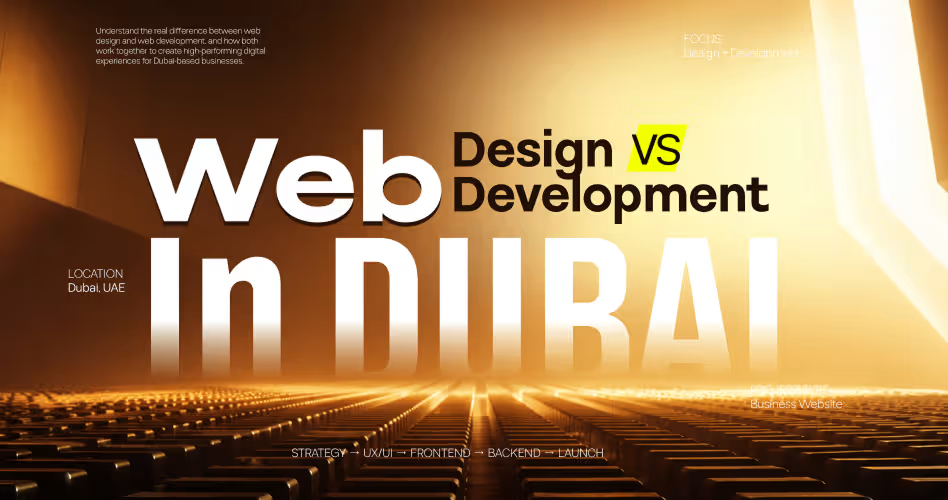
- Web design shapes how a site looks and flows. Web development builds the code that makes it run.
- Validating an idea needs design first. Launching and scaling needs development locked in early too.
- The costly mistake: hiring a developer before anyone has tested whether the design actually works.
"Web design vs web development" sounds like one question. It is actually two different hires, and mixing them up costs Dubai founders real time and real budget.
A design-only site looks sharp in a pitch deck and breaks the moment a customer tries to check out. A development-only build runs fast and looks like a spreadsheet made it. Neither one wins a customer on its own, and neither one is optional once real users show up and start clicking around.
Web design covers the layout, the visuals, and the path a visitor follows from homepage to signup. Web development covers the code, the database, and the server logic that makes that path actually function. Design decides what a visitor sees. Development decides what runs underneath it.
For a founder deciding where the first riyal or dirham goes, that split changes everything. It changes what you brief, who you hire, and in what order, long before the site ever goes live. Here is the real difference, and which one your Dubai startup needs first.
Web Design vs Web Development: The Core Difference
Web design and web development split along one clean line: design decides how a site looks and feels, development decides how it works and performs. Design covers layout, color, typography, and the flow a visitor follows from landing page to checkout. Development covers the code, the database, and the server logic that makes that flow function.
Figma turns a design idea into a clickable prototype before a single line of code exists. A founder tests the flow with five real users and catches the confusing step early. Fixing that same confusion after launch means paying a developer to rebuild code that already shipped.
WordPress works differently. It gives a founder a working site fast, built on templates a developer still needs to configure, secure, and connect to payment tools. The design layer sits on top of code someone else wrote, which is fast to launch and harder to make fully your own later.
Webflow sits between the two. It lets a designer publish real, responsive code without writing it by hand. That works well for a marketing site.
It hits a limit fast once you need custom logic like a booking system or a member login. That limit is exactly where development takes over, and no amount of design polish moves it.
Design decides if a visitor understands your site. Development decides if that site loads, loads fast, and survives real traffic.
A wireframe is not a website. It is the design skeleton that a wireframe, mockup, and prototype process turns into before any code gets written. Skip that step, and the cost shows up later as a rebuild instead of a revision.
So the two roles are not competing. They are sequential, and getting the order right is the actual decision a founder needs to make.
Which One Does Your Startup Actually Need First?
The order you hire depends on one question. Are you still testing whether people want this, or are you ready to build the real thing? Get that wrong, and you overspend on code nobody needs yet. Or you launch something too fragile to hold real users.
If You're Still Validating Your Idea
At this stage, design is the cheaper way to find out if your idea works. A clickable prototype in Figma or a no-code build in Webflow lets you test messaging, pricing, and flow with real people. No developer touches a database yet.
This is also the stage where Dubai founders are setting up their trade license alongside their first site. Both processes move faster running in parallel than back to back. Keep the MVP development cost low here.
Spend on brand design for startups instead of a custom backend nobody has tested yet. A prototype that gets rejected by real users costs a redesign. A backend that gets rejected costs a rebuild, and a rebuild is a different budget entirely.
If You're Ready to Launch and Scale
Once the idea is validated, development becomes the priority. Payment processing, user accounts, and database logic are development problems, not design ones. A checkout flow that looks perfect in Figma still needs real code to actually charge a card and store an order.
Stripe is a clear example of why this matters. Wiring up subscription billing might take an afternoon to sketch in Figma, but building and testing the logic behind it properly takes considerably longer.
This is where a full-stack development build earns its cost. If you already have a live site that converts poorly, a redesign is often faster than starting over. A website redesign that keeps the working backend and rebuilds only the front end saves real engineering time.
If You Need Both at Once
Funded startups with a launch deadline rarely get to choose one first. Design and development need to run together, with weekly syncs so the interface and the code do not drift apart from each other.
At Orbix Studio, the pattern we see in Dubai startup projects is a parallel sprint. Design ships a screen, development builds it the same week, and both sides test it together before moving to the next one.
A recent example is Bluecat's website rebuild. Design and development shipped on the same timeline there, instead of one side sitting idle while it waited on the other to finish first.
Knowing which stage you're in tells you what to hire. It does not yet tell you what each side actually costs, or how long each one takes to get there.
Web Design vs Web Development: Side-by-Side Comparison
Web design and web development use different tools, different skills, and different success metrics, even when the same person handles both. The table below breaks down where they split.
Page speed sits squarely on the development side of that table, and it is not a minor detail. According to Google's Core Web Vitals, load time and visual stability directly affect search ranking. They also decide whether a visitor stays past the first three seconds or leaves.
Timelines follow the same split. A design phase for a startup site usually runs two to four weeks, depending on how many screens and rounds of feedback are involved. Development typically takes four to ten weeks once the design is locked, longer if the build needs custom integrations like payments or multi-language support.
That performance number will not save a site with a confusing homepage. And a beautiful homepage will not save a site that takes six seconds to load on a phone. A startup that hires only one side of this table usually finds out the hard way. Months after launch, the other half quietly becomes the top complaint in every support ticket.
Picture two Dubai startups launching the same month. One spends its full budget on a designer and ships a beautiful site with a contact form that silently fails to send. The other spends it all on a developer and ships a fast site nobody can figure out how to navigate. Both lose the same deal for opposite reasons.
The founder who splits that budget across both columns, even a smaller amount on each, ends up with a site that actually converts. That split does not need to be even. It needs to match whichever stage the startup is actually in right now.
What This Means for Dubai Startups Specifically
Dubai adds two layers general web design guides skip entirely. Bilingual design requirements and a cost structure that does not match a US or UK quote both change how you plan the build.
Bilingual and RTL Requirements
Arabic reads right to left, and a site built only in English design patterns breaks the moment you add an Arabic version. Navigation, buttons, and forms all need to mirror correctly, not just translate word for word.
Google's guidance on mobile-first indexing makes this more than a design preference. Google indexes the mobile version of a site first, so a broken RTL layout on mobile is the version search engines actually see and rank.
Founders registering a business through UAE's official government portal are already handling paperwork in two languages. The website should not be the one thing left in English only.
Typical Costs: Design vs. Development vs. Both
Design-only work in Dubai, a full UI kit with no backend, typically costs less than a full build. There is no server logic, database, or third-party integration to account for. Full UI/UX design cost in Dubai scales with the number of screens and rounds of user testing involved, not with how the final site looks.
A combined build on a CMS sits in the middle. Custom full-stack development costs more, because every backend feature adds engineering hours a template cannot skip.
For a broader breakdown by project type, this UI/UX design cost guide walks through what drives each price bracket up or down. Read it before you request quotes, so a vague number does not sound cheap or expensive without context.
Budget alone will not tell you who to hire for it. That decision comes down to team structure, not price.
One Agency, One Freelancer, or Two Specialists?
Hire a freelancer when the job has one clear edge: a single landing page, one flow, one deliverable with a fixed scope. Hire an agency when the site needs to hold together across every screen as it grows. That kind of consistency needs a team thinking about the whole system, not one page at a time. Run a quick filter before you decide between the three, since the wrong hire here is the costliest mistake on this list to reverse.
Hire one team when design and build have to land together. That is what a web design and development agency is for. One scope, one timeline, no waiting for a developer to pick up the Figma file.
- One deliverable, fixed scope, tight deadline: freelancer
- Ongoing product across many screens and future updates: agency
- A strong internal product lead already coordinating both sides: two separate specialists
Two separate specialists, one designer and one developer working independently, work only when that internal lead already exists. Without that person, the agency vs freelancer handoff usually breaks down somewhere between the design file and the deployed code.
This is also the point where founders compare in-house design teams against agencies, and the answer depends on how many projects follow the first one. One-off builds rarely justify a full-time hire. Ongoing product work often does, since onboarding a new freelancer every quarter adds up faster than a retainer.
None of this needs deciding in a single afternoon. Talk to two or three teams, ask each one what they would build first with a limited budget, and notice how differently they answer. That one question tells you more about fit than any portfolio page does.
Before signing anyone, run through this guide to choosing a UI/UX agency as a startup. Check what agency pricing structures actually look like before comparing quotes side by side. A lower number sometimes means fewer revisions, not lower quality.
Common Mistakes Dubai Startups Make
Founders lose weeks on the same four mistakes, and every one of them is avoidable with the right order of operations. Catching these before signing a contract saves more budget than any single negotiation on price.
- Hiring a developer before testing the design. Code gets written against a screen nobody validated, so the rebuild happens after launch instead of before it.
- Skipping responsive design to save budget. A site that breaks on mobile loses the visitor before they see the pitch, and responsive design is not optional in a market where a broken mobile layout is often the first screen a visitor ever sees.
- Choosing the cheapest quote without checking scope. A quote that excludes revisions, RTL support, or hosting setup looks cheap until those items get billed separately later.
- Treating the website as a one-time project. A site launched and never revisited falls behind on speed, security patches, and content within a year, which quietly undoes the investment that built it.
Fix the order once, and every future project on the same site gets faster and cheaper to run. The founders who skip this list usually rebuild the same site twice within eighteen months. That second build costs more than getting the order right the first time ever would have.
Frequently Asked Questions
What is the difference between web design and web development?
Web design covers a site's layout, visuals, and user flow. Web development covers the code, database, and server logic that make that layout actually work. Design decides what a visitor sees and understands. Development decides whether the site loads, functions, and processes real transactions correctly.
What is web design and web development, in simple terms?
Web design is the plan for how a site looks and guides a visitor through it. Web development is the construction work that turns that plan into a live, working website. One is the blueprint. The other is the build that makes the blueprint real and functional for actual visitors.
Which is better, web design or web development, for a startup?
Neither is better on its own. A startup validating an idea benefits more from design first, since prototypes are cheaper to change than code. A startup ready to launch needs development locked in early, since payments, accounts, and data cannot run on a design file alone.
What is the difference between a web designer and a web developer?
A web designer focuses on layout, typography, and user experience using tools like Figma. A web developer writes the code, HTML, CSS, JavaScript, and backend logic, that makes the designed screens function as a real website. Their skill sets rarely overlap past a basic working knowledge of each other's tools.
Do I need both web design and web development for my business website?
Yes, almost every functional business site needs both. Design without development stays a static mockup that cannot process orders or logins. Development without design ships a working site visitors do not understand, and that confusion quietly kills conversion long before anyone reports a bug.
How much does web design and development cost in Dubai?
Cost depends on scope. Design-only work costs less since there is no backend involved. A combined build on a CMS sits in the middle. Custom full-stack development costs more, because every backend feature adds engineering hours a template cannot replace.
Can one agency handle both design and development for my startup?
Yes, agencies commonly staff both disciplines under one project lead. This keeps the design file and the shipped code aligned instead of handed off between two separate vendors. Check their portfolio for finished, live sites, not just mockups, before you sign anything.
Conclusion
Web design and web development are not a choice you make once. They are two different budgets, spent in the right order.
That order flips as your startup moves from validating an idea to running a live product. It is worth rechecking every time the startup reaches a new stage, not just at launch. Check where your startup actually stands before you write the next brief. That one decision saves more money than any quote comparison that follows it.
Want a second opinion on which one your Dubai startup needs first? Orbix Studio works with founders on exactly this decision. Explore our UI/UX design work ->



.svg)
.svg)


.svg)







.avif)



.svg)

